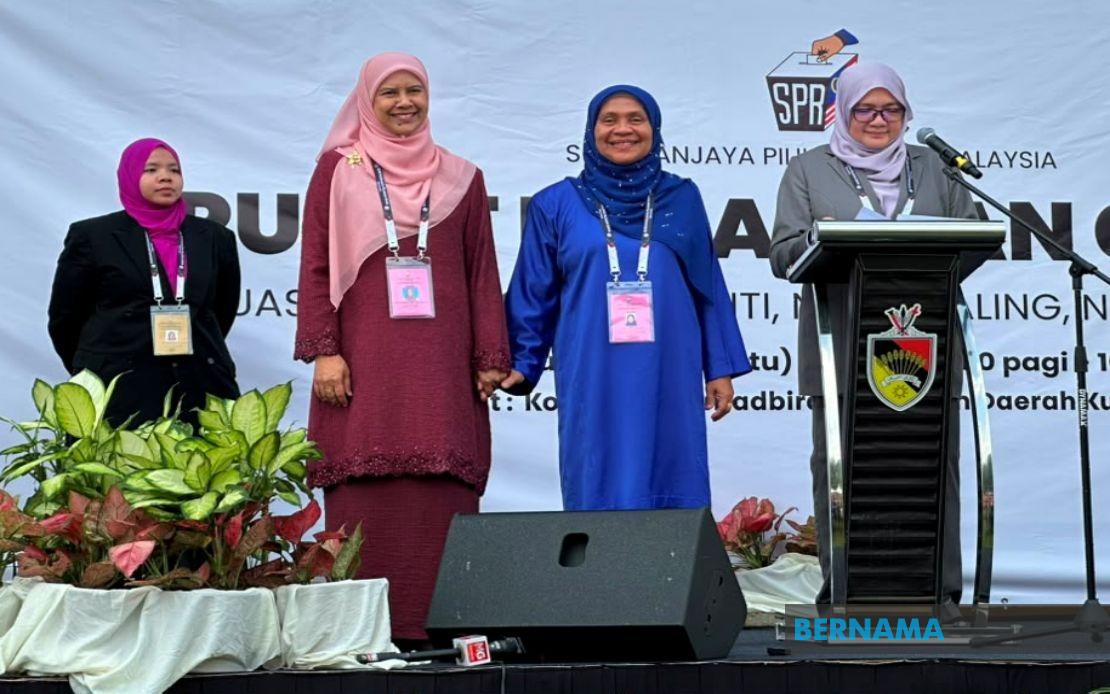
The Pilah state constituency in Negeri Sembilan is poised for a significant moment in the state's electoral history, with voters set to choose between two women candidates in what promises to be a closely watched race. Incumbent Datuk Noorzunita Begum Mohd Ibrahim, representing Pakatan Harapan, will defend her seat against Barisan Nasional's S. Leza Md Yasin following the formal close of nominations on July 18. The candidacy of both female representatives reflects the gradual shift towards greater female participation in Malaysian electoral politics, though women remain underrepresented in state assemblies across the country. The nomination process concluded in Kuala Pilah after both candidates submitted their papers in quick succession, with Noorzunita filing at 9.03 am and Leza following minutes later at 9.09 am.
The Pilah contest sits within the broader landscape of the 16th Negeri Sembilan State Election, which has produced a varied slate of contests across five key seats. While Pilah features the straightforward two-candidate format, other constituencies present more complex electoral scenarios. Three seats—Juasseh, Seri Menanti, and Senaling—will see three-way battles involving Pakatan Harapan, Barisan Nasional, and Bersatu, the latter representing the emerging political force that has fragmented the traditional binary contest structures seen in previous elections. The Johol seat, meanwhile, presents another straight fight between PH and BN candidates, suggesting an uneven distribution of Bersatu's electoral footprint across the state.
In Juasseh, the contest will pit Mohd Aidil Abdullah of Pakatan Harapan against the sitting assemblyman Datuk Ismail Lasim of Barisan Nasional, with Bersatu's Mohd Zuhami Md Yusof entering as a potential kingmaker in a fragmented result. The Seri Menanti seat features a similar three-cornered dynamic, where PH's Mohd Kamarul Arifin Mohd Wafa challenges incumbent Muhammad Sufian Maradzi of BN whilst Bersatu's Datuk Seri Megat D. Shahriman Zaharuddin seeks to capitalize on any split in the traditional vote. Senaling rounds out the three-way contests with PH's Mohd Hanis Mohd Alimin, BN's Mohamad Qayyum Abd Jalil, and Bersatu's Mohd Izzafi Khan competing for voter favour. The Johol straight fight between PH's Mohd Zailan Mohd Munawar and BN incumbent Datuk Saiful Yazan Sulaiman suggests either strong party cohesion in that area or limited Bersatu organizational presence.
The presence of federal ministers accompanying candidates during the nomination process underscored the national political stakes embedded in these ostensibly state-level contests. PKR Wanita chief Fadhlina Sidek, who doubles as Education Minister, personally escorted Pakatan Harapan nominees through the registration process, signalling the coalition's commitment to the state. Flanking her were Angkatan Muda Keadilan vice-chief Dr Mohammed Taufiq Johari, the Youth and Sports Minister, and Sim Tze Tzin, the Bayan Baru MP and Deputy Investment, Trade and Industry Minister. This deployment of ministerial firepower at the nomination stage reflects the broader Malaysian political convention of using state elections as proxies for assessing federal coalition stability and public sentiment.
Barisan Nasional's candidate escort team proved equally heavyweight, demonstrating that both major coalitions view Negeri Sembilan as politically significant. Deputy Home Minister Datuk Seri Dr Shamsul Anuar Nasarah, who also sits on UMNO's Supreme Working Council, joined BN nominees alongside Perak's Menteri Besar Datuk Seri Saarani Mohamad, the state UMNO chairman. The cross-state coordination evident in Saarani's presence hints at the wider Peninsular political dynamics at play, with Perak and Negeri Sembilan maintaining traditional political linkages. This level of federal engagement at the grassroots nomination stage illustrates how Malaysian state elections have become increasingly nationalized, with coalition credibility and ministerial prestige hanging on outcomes that technically concern only state assembly seats.
The timeline established by the Election Commission structures the campaign period across two key dates before the main polling day. Early voting has been scheduled for July 28, accommodating voters unable to participate on the main election day of August 1. This compressed timeline—roughly two weeks from nomination closure to polling—constrains the campaign period and potentially advantages better-resourced parties with established ground networks. In Negeri Sembilan, where Pakatan Harapan currently holds the state government, the incumbent coalition must defend its record whilst Barisan Nasional seeks to regain lost ground following the 2018 federal election realignment. Bersatu's presence as a spoiler in three contests introduces genuine unpredictability, particularly in constituencies where vote splits could dramatically alter outcomes.
The emergence of a female-only contest in Pilah carries symbolic significance for Malaysian politics, where women's representation in state legislatures has historically lagged behind their share of the electorate. Noorzunita Begum, as the sitting member, brings the advantage of incumbency and an established voter relationship. Her opponent Leza Md Yasin represents Barisan Nasional's effort to capitalize on any dissatisfaction with the current administration. The outcome in this seat will provide data points regarding voter attitudes toward female representation and whether gender plays a decisive role in electoral preference, or whether traditional party affiliation remains paramount. This contest may also serve as a bellwether for how Malaysian women voters respond to female candidates across party lines.
Negeri Sembilan's political positioning within Malaysian federalism adds another dimension to these polls. As a state with constitutional monarchy traditions and a relatively small electoral base compared to major states like Selangor or Johor, its elections often test national political strategies before deployment elsewhere. The state's proximity to Kuala Lumpur and its integration into the broader Klang Valley economic zone means voting patterns can influence perceptions of support for federal governments. A strong Pakatan Harapan result would reinforce the coalition's narrative of retaining voter confidence, whilst a Barisan Nasional recovery might suggest structural weaknesses in PH's federal positioning heading toward the next general election.
The three-way contests merit particular analytical attention, as they represent the fragmentation of Malaysia's traditionally bipolar electoral structure. Bersatu's decision to contest in multiple constituencies signals an attempt to establish itself as a meaningful third force rather than merely a spoiler. Whether Bersatu can convert its Sabah and Sarawak electoral base into Peninsular relevance remains an open question that Negeri Sembilan will help answer. In Juasseh, Seri Menanti, and Senaling, voters will effectively choose not only between coalitions but among competing visions of opposition politics. If Bersatu emerges with respectable vote shares, it validates the party's strategic positioning as an independent force capable of negotiation with either PH or BN. Conversely, poor showings would suggest that despite federal government status, Bersatu lacks organic grassroots support in traditional Peninsular constituencies.
The Negeri Sembilan election occurs within the context of Malaysian politics experiencing its most fluid period since the 2018 watershed moment. Coalitions remain unstable, with components regularly shifting positions and individual politicians maintaining multiple political options. State-level elections have become crucial testing grounds for coalition durability and voter sentiment regarding federal performance. The August 1 polls will generate headlines about which coalition retains control, but deeper analysis should examine whether individual parties gain or lose ground, whether vote shares suggest momentum toward the next general election, and whether emerging political forces like Bersatu can translate organizational capacity into electoral success. For Malaysian observers and regional analysts, Negeri Sembilan's outcome will provide early indicators of whether the political realignment processes initiated after 2018 have stabilized or continue shifting.

