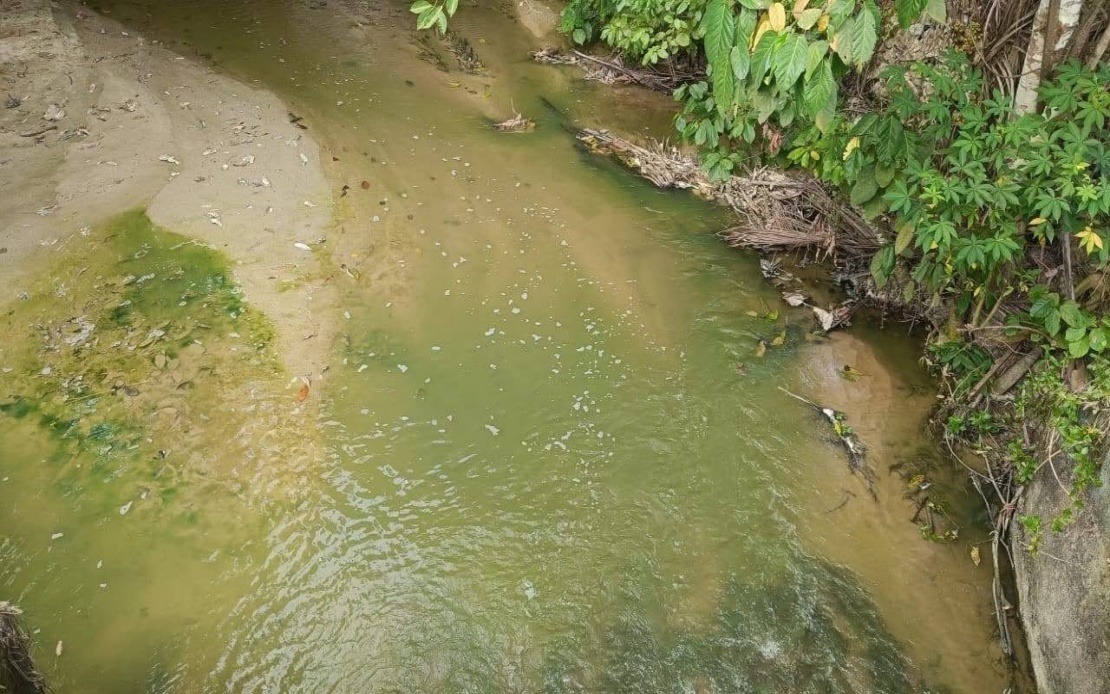
The Pertang River in Mukim Pertang, Jelebu, has taken on an unusual green hue in recent days, sparking concern among residents who took to social media with theories about industrial contamination. However, investigations by the Negeri Sembilan Department of Fisheries have revealed a natural explanation: the discoloration stems from algae blooms in nearby fish-breeding ponds intensified by extended hot weather and insufficient rainfall. The department's findings should provide reassurance to communities worried about potential environmental hazards affecting the waterway.
Dirty water turning green naturally raises public alarm, particularly in regions where industrial activity has historically impacted river systems. The swift circulation of photographs and videos on WhatsApp and social media amplified concerns that something more sinister—such as chemical discharge or waste contamination—had poisoned the river. These fears are understandable given Malaysia's history of water quality incidents affecting major tributaries. The Department of Fisheries' prompt investigation and transparent communication represent important steps in managing public perception during environmental incidents, regardless of their severity.
According to Kasim Tawe, the department's director, the culprit is green algae naturally present in the fish-farming ecosystem. The combination of elevated temperatures and reduced rainfall creates ideal conditions for algal proliferation. Fish ponds serving as breeding grounds for baung, red tilapia, and Lee Koh fish across approximately 29.54 hectares of former mining land have become particularly susceptible. The extreme weather conditions that have affected much of Malaysia recently have essentially created a perfect storm for algae expansion in shallow aquaculture systems. These environmental stressors, while concerning for fish farmers, do not inherently signal danger to the broader ecosystem.
The relationship between algae and fish farming presents a nuanced reality that warrants closer examination. Under normal conditions with appropriate management, algae provides tangible benefits to aquaculture operations. It generates oxygen through photosynthesis, supplies natural nutrition for farmed fish, and shields them from ultraviolet radiation, thereby reducing stress on the animals. Water quality improvement represents another advantage, as algae helps filter organic compounds. Many fish farmers in Southeast Asia have learned to cultivate and manage controlled algae blooms as components of sustainable aquaculture practices. The phenomenon itself is neither unusual nor inherently problematic when properly monitored.
However, uncontrolled algae proliferation poses genuine risks that cannot be dismissed. When algal density exceeds manageable levels, the decomposition process consumes dissolved oxygen at accelerating rates, particularly during night hours when photosynthesis ceases. Fish require consistent oxygen availability, and sudden depletion can prove catastrophic for stock. Additionally, excessive algae causes pH fluctuations that stress fish gill tissues and can lead to blockages impairing respiration. The department's acknowledgment of these potential complications reflects responsible environmental stewardship, as acknowledging risks enables preventative action before crises occur.
The Department of Fisheries has outlined practical measures that fish breeders should implement to manage algal growth effectively. Installing waterwheels, particularly for night-time operation when oxygen depletion risk peaks, helps maintain water circulation and oxygenation. Gradual water replacement, rather than sudden complete exchanges, minimises environmental shock to farmed populations. Reducing feeding quantities decreases organic matter that fuels algae proliferation. Shade netting limits sunlight exposure that drives rapid algal growth. The application of beneficial bacteria, or probiotics, introduces competing microorganisms that naturally suppress harmful algae while improving overall pond microbiology. Decreasing stocking densities gives remaining fish more space and reduces biological oxygen demand. These interventions represent established aquaculture techniques proven effective across Southeast Asia's fish-farming regions.
The Pertang River's situation exemplifies how monsoon patterns and climate variability directly impact agricultural operations across Malaysia. The current prolonged hot and dry conditions mirror broader climatic trends affecting the peninsula, with implications extending beyond single river systems. Fish farmers throughout Negeri Sembilan, Selangor, Pahang, and other states utilising similar pond systems face comparable challenges. Understanding these climate-algae-aquaculture connections becomes increasingly important as weather patterns grow more unpredictable. Agricultural agencies must develop enhanced early-warning systems and advisory protocols to help farmers adapt as environmental conditions shift.
The Department of Fisheries has committed to ongoing monitoring through the Jelebu District Fisheries Office in coordination with local police authorities. This sustained surveillance approach ensures that if conditions deteriorate, authorities can intervene rapidly. The partnership between fisheries specialists and law enforcement indicates seriousness about protecting both the aquaculture investment and broader environmental integrity. Regular monitoring also generates data about seasonal algae patterns, which can inform future policy and farmer education initiatives. Transparency about monitoring activities, including data sharing with local communities, builds public confidence in official responses and reduces misinformation spread through informal channels.
The viral social media response demonstrates how quickly unverified environmental concerns can spread in Malaysia's digitally connected communities. While public vigilance about water quality serves legitimate purposes, distinguishing between genuine pollution and natural phenomena requires scientific investigation. The Department of Fisheries' willingness to investigate, explain findings clearly, and provide technical guidance exemplifies how government agencies can address public anxieties constructively. Other state environmental departments might adopt similar models for rapid response and transparent communication when environmental anomalies occur.
Looking forward, the Pertang River incident underscores the interconnection between aquaculture practices and broader environmental management in Malaysia. Fish farming contributes significantly to national protein supply and rural livelihoods, yet intensive operations require careful stewardship. Supporting farmers through education about algae management, water quality monitoring, and climate-adaptive techniques strengthens both agricultural sustainability and environmental protection. The Department of Fisheries' current advisory role demonstrates that government can balance supporting agricultural productivity with ensuring environmental safeguards, provided agencies maintain adequate resources and expertise to monitor complex ecosystems effectively.

