The race for Negeri Sembilan's political future has begun in earnest, with nomination day marking the formal commencement of the state's 16th election cycle. Held across eight nomination centres in the state from 9 am onwards, the process will determine which candidates have officially cleared their candidature before voters head to the polls on August 1. Prospective candidates must submit their nomination papers to the Returning Officer by 10 am, after which the Election Commission will announce the final list of eligible contenders. This administrative gateway opens the door to the intensive 14-day campaign period that will stretch until 11.59 pm on July 31, giving political parties and independent candidates a compressed timeframe to connect with voters and present their platforms.
The election itself was triggered following the dissolution of the Negeri Sembilan State Legislative Assembly on June 5, approved by the Yang Dipertuan Besar of Negeri Sembilan Tuanku Muhriz Tuanku Munawir. Early voting has been scheduled for July 28, allowing certain eligible voters—including military personnel and their spouses, along with police personnel and their spouses—to cast their ballots ahead of the main polling day. This staggered approach has become standard practice in Malaysian elections, accommodating those whose duties or circumstances prevent them from voting on the designated date.
Election Commission figures released yesterday reveal substantial interest in contesting the state seats, with 464 nomination forms having been sold and 70 prospective candidates having already paid their required election deposits. These deposits serve as both a commitment mechanism and a financial threshold that filters out those without serious electoral intentions. The strong uptake of nomination forms suggests a competitive field is shaping up across the state's 36 constituencies, reflecting broader political dynamics and the shifting alignments that have characterised Malaysian politics in recent years.
The voter roll presents a substantial mandate to be won, with 889,490 registered voters eligible to participate in the election. This figure comprises 867,151 ordinary voters—the backbone of any electoral contest—supplemented by 16,884 military personnel and their spouses and 5,455 police personnel and their spouses. The inclusion of uniformed service members represents a distinct segment of the electorate, reflecting Malaysia's recognition of these groups as stakeholders in the electoral process despite their professional obligations. The scale of the voter base underscores the significance of Negeri Sembilan within the broader Malaysian political landscape.
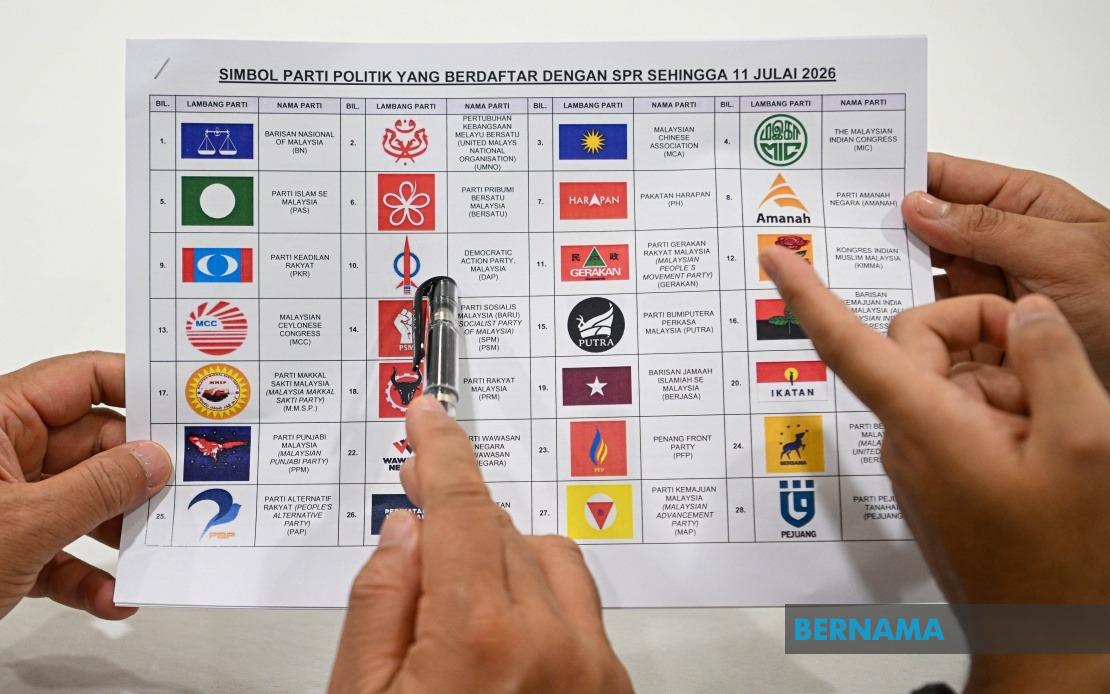
The three major political coalitions have each charted different strategies for the contest. Pakatan Harapan is mounting a full-scale assault, fielding candidates in all 36 state seats and positioning itself as a comprehensive alternative government. Barisan Nasional, traditionally dominant in state politics, is contesting 25 seats—a more selective approach that arguably reflects its current political positioning. Perikatan Nasional is mounting a more modest challenge with 11 candidates, focusing its resources on constituencies where it believes it has competitive strength. Additionally, several smaller parties have entered the fray: Parti Orang Asli Malaysia, the Socialist Party of Malaysia, and Parti Barisan Jemaah Islamiah Se-Malaysia each fielding a single candidate, while Bersatu is contesting 24 seats, including arrangements where two candidates from Parti Bersepakat Hak Rakyat Malaysia run under the Bersatu banner.
This fragmented field reflects the increasingly complex nature of Malaysian electoral politics, where coalition dynamics and inter-party arrangements create intricate webs of competition and cooperation. The presence of smaller parties represents the democratic right of diverse political voices to seek a mandate, though realistically their impact on the overall electoral outcome will likely be marginal. The contest between the three main coalitions will almost certainly determine the composition of the next Negeri Sembilan state government, but the existence of alternative voices contributes to the texture of electoral competition.
Security preparations for nomination day underscore the importance authorities attach to ensuring the election's smooth conduct. The Negeri Sembilan police have deployed 4,800 officers and personnel for the process, bolstered by an additional 1,373 from Bukit Aman headquarters. This substantial police presence reflects standard election-day protocols designed to maintain public order and prevent disruptions, particularly given the expected influx of party supporters and political figures accompanying their respective candidates to the various nomination centres. Large crowds are anticipated, and the police deployment aims to facilitate orderly proceedings while preventing any incidents that could undermine confidence in the electoral process.
The Election Commission has issued a clear directive to candidates and their supporters: comply with established rules and refrain from any provocation that might disrupt the nomination process. This appeal to restraint reflects ongoing concerns about maintaining the integrity and credibility of Malaysian elections at a time when political competition has intensified across the country. The emphasis on orderly conduct serves both immediate purposes—ensuring nominations proceed without incident—and broader goals of reinforcing public confidence in the electoral machinery.
Weather conditions could influence proceedings, with the Malaysian Meteorological Department forecasting generally fair conditions across most areas during the morning hours, with the exception of Port Dickson and Seremban where rain is anticipated. Afternoon thunderstorms are predicted statewide, potentially affecting candidate and supporter attendance later in the day. While weather itself is a neutral factor, its impact on voter turnout during nomination day and subsequent campaign activities could subtly influence momentum for various contenders.
The backdrop for this election is the outcome of the previous 2023 Negeri Sembilan state contest, which saw Pakatan Harapan emerge as the leading force with 17 of the 36 seats, followed by Barisan Nasional's 14 seats and Perikatan Nasional's five seats. That configuration has shaped the intervening political dynamics and will inform how parties approach the current race. For Pakatan Harapan, contesting all seats represents confidence in its position; for Barisan Nasional, the selective approach suggests recalibration following its relatively weaker 2023 showing; and for Perikatan Nasional, the expanded slate from five seats in 2023 to the current field indicates an attempt to broaden its footprint.
The nomination process unfolding today marks more than a bureaucratic milestone—it crystallises the political choices Negeri Sembilan voters will face. Over the coming two weeks, these candidates will traverse the state, articulating their parties' visions and platforms. The election itself on August 1 will determine which coalition gains the mandate to govern the state over the next five years, making today the symbolic beginning of a process that carries real consequences for Negeri Sembilan's political direction and policy trajectory.

