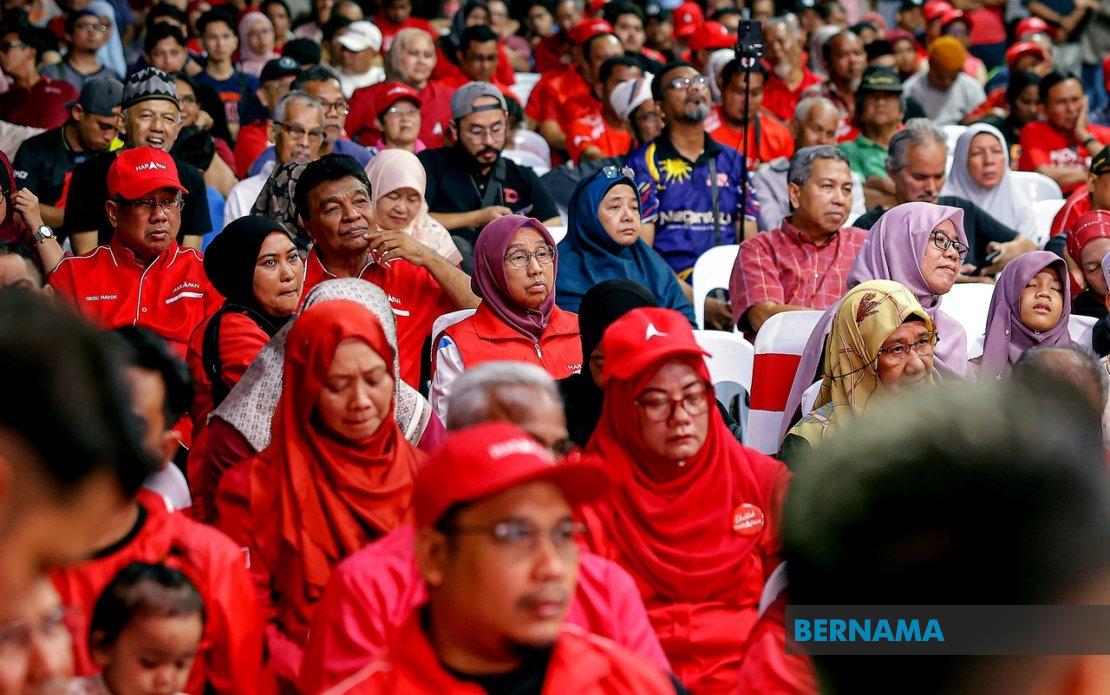
As the 16th Negeri Sembilan state election enters its final stretch, a coherent pattern has crystallised among the electorate: voters are not simply seeking representatives with access to power, but leaders capable of translating that access into genuine improvements in their daily lives. A grassroots assessment conducted during the campaign has revealed that constituents across the state value substantive engagement far more highly than traditional markers of political credibility.
The notion that candidates must hail from their constituencies or maintain deeply rooted family histories appears increasingly secondary to demonstrated capability and genuine responsiveness. Kamarulzaman Ab Aziz, a 64-year-old retired educator, articulates this shift in voter expectations bluntly: a leader brought in from outside the district can overcome that disadvantage through authentic community involvement and an open, accessible demeanour. Conversely, a candidate with lifelong connections to the area forfeits that advantage entirely if they maintain distance from constituents or prove difficult to approach. This represents a meaningful departure from traditional Malaysian political dynamics, where local lineage has historically carried substantial weight in candidate selection and voter preference.
The economic anxieties animating this election are neither abstract nor distant. Nurulainee Hamidon, a 37-year-old entrepreneur operating a food business in Linggi, Port Dickson, articulates the squeeze confronting small-scale traders with particular urgency. Rising input costs have compressed her profit margins relentlessly, forcing an impossible choice: absorb losses or risk alienating price-sensitive customers by increasing menu prices. This phenomenon extends across the state's commercial sector, affecting suppliers, retailers, and service providers alike. The next government's approach to inflation, supply chain costs, and support mechanisms for small businesses will substantially determine whether this cohort experiences relief or further deterioration in trading conditions.
Rural development has emerged as another pivotal concern for voters traditionally sidelined in infrastructure planning. M. Manisha, a 38-year-old housewife residing in an estate community, emphasises that development agendas formulated in urban centres frequently overlook the infrastructure gaps and service deficiencies affecting peripheral settlements. Access to quality facilities, reliable utilities, and genuine economic opportunity remains unequally distributed across the state, creating a two-tier system where rural residents face systematic disadvantages. The incoming administration's commitment to ensuring equitable development—not merely symbolic gestures but substantive resource allocation—will prove crucial to addressing this persistent inequality.
Employment quality and wage adequacy represent particularly acute concerns for younger voters entering the workforce. Mohammad Najmi Aiman, a 22-year-old college student preparing to vote for the first time in Paroi, underscores that job availability alone no longer suffices; compensation must genuinely reflect workers' educational attainment and professional capabilities. The disconnect between qualification levels and remuneration packages has created widespread frustration among graduates and skilled professionals who perceive their compensation as inadequate relative to their credentials. This demographic cohort represents a growing voting force with distinct policy priorities centred on creating a labour market that fairly values human capital.
The quality of democratic engagement itself has also surfaced as a voter concern, albeit less dramatically than bread-and-butter issues. Lim Kian, a 43-year-old private sector employee from Port Dickson, advocates for campaign conduct characterised by dignity and constructive debate rather than personal attacks and divisive messaging. While political competition remains inevitable and healthy in a functioning democracy, voters increasingly reject campaigns that rely on character assassination, divisive rhetoric, or the mobilisation of supporters for destructive purposes. This signals an electorate fatigued by corrosive political discourse and hungry for substantive policy debate focused on concrete solutions rather than performative outrage.
The electoral landscape encompasses substantial scale. The Election Commission has registered 889,490 eligible voters across Negeri Sembilan, distributed among three categories: 867,151 regular civilian voters, 16,884 military personnel and their family members, and 5,455 police officers and their spouses. This voter base will determine control of 36 state legislative seats, with 103 candidates competing across the constituencies. The electoral process will unfold across two stages: early voting scheduled for July 28, followed by the general polling day on August 1.
These voter preferences carry implications extending well beyond Negeri Sembilan's borders. The state's electorate articulates priorities—cost of living management, equitable rural development, quality employment, and principled political engagement—that resonate across Malaysia's broader political landscape. As other states contemplate their own electoral cycles, the messaging emerging from Negeri Sembilan's voters suggests that traditional campaign frameworks emphasising party machinery, seniority, or personal connections may increasingly prove insufficient. Candidates and parties that respond to these grassroots concerns with concrete policy commitments and demonstrated capacity for implementation are likely to find greater electoral resonance than those relying on established political hierarchies or aspirational rhetoric disconnected from daily economic realities.
The stakes of this election ultimately reflect a fundamental recalibration of voter expectations. Negeri Sembilan's electorate has clearly signalled that accessibility and delivery matter more than pedigree, that inclusive development trumps concentrated advantages, and that campaign behaviour reflects leadership capacity. The party or coalition securing the mandate to govern will inherit clear marching orders: address cost pressures on ordinary people, ensure rural communities participate equitably in development gains, create employment aligned with worker qualifications, and conduct governance with dignity and integrity. Whether incoming administrators can translate these voter expectations into concrete policy achievements will substantially determine whether this election represents a turning point in Malaysian politics or merely another cycle of unmet promises.

