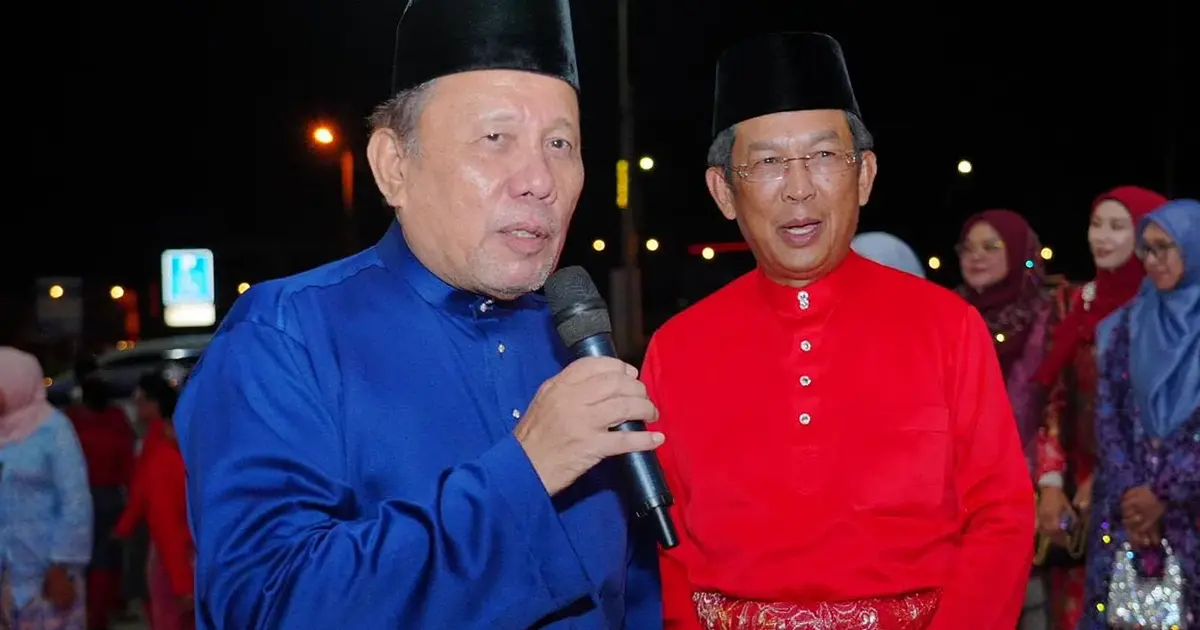
Political turmoil in Negeri Sembilan has deepened as the state's Umno leadership faces fresh accusations of orchestrating a high-stakes power play, allegations the party chief now vehemently rejects. Jalaluddin has denied any involvement in plans to remove the sitting menteri besar or weaken the constitutional position of the Negeri Sembilan ruler, responding to reports that have rattled the party apparatus in the state.
The controversy centres on claims suggesting Jalaluddin, in his capacity as Negeri Sembilan Umno chief, spearheaded efforts to compel the menteri besar to append his signature to documentation aimed at displacing the state's reigning monarch. Such assertions, if substantiated, would represent a dramatic escalation in intra-party machinations and would strike at the heart of constitutional governance frameworks that have historically defined Malaysian politics.
For Malaysian readers, this episode underscores the fragile balance between party machinery and state institutions. Negeri Sembilan's political ecosystem, like those across peninsular Malaysia, operates within a constitutional monarchy framework where the Sultan's role transcends mere ceremonial function. Any credible attempt to circumvent or diminish the ruler's position would constitute a serious constitutional violation, making the gravity of these allegations difficult to overstate regardless of their ultimate veracity.
Jalaluddin's categorical denial arrives at a moment when Umno's already-fractured unity faces further strain across multiple state-level battlegrounds. The party, which still commands considerable influence within the federal government structure, has grappled with internal divisions that periodically erupt into public disputes over leadership direction and resource distribution. Negeri Sembilan represents yet another flashpoint where factional tensions have surfaced in ways that threaten party cohesion.
The alleged pressure campaign targeting the menteri besar's signature carries additional intrigue given the procedural complexities involved. Constitutional arrangements in Malaysian states typically vest significant authority with the Sultan in matters concerning governmental formation and dissolution. Compelling any elected official to sign away institutional prerogatives would therefore require navigating extraordinarily complex legal and ceremonial terrain—terrain that remains partially uncharted in Malaysian constitutional jurisprudence.
For stakeholders monitoring Negeri Sembilan's political trajectory, the denial itself merits careful examination. Jalaluddin's blanket rejection of involvement operates in a context where photographic evidence, documentation, or witness testimony might emerge to either substantiate or refute the allegations conclusively. The competitive political environment within Umno sometimes produces rival factions willing to weaponise claims and counterclaims to advance competing agendas.
The timing of these accusations deserves consideration alongside broader regional political movements. As various Umno-affiliated groups jockey for influence within state administrations, the emergence of such allegations in Negeri Sembilan may reflect broader struggles over patronage networks and decision-making authority. These structural competitions between party factions occasionally manifest through sensationalised reports that may or may not survive serious scrutiny.
Regionally, developments in Negeri Sembilan carry implications for how Malaysian political parties manage leadership transitions and succession planning. The apparent willingness of party insiders to level serious constitutional allegations against one another signals a deterioration in traditional norms that once governed disputes within Umno's hierarchy. Such erosion of internal discipline potentially destabilises not merely state-level arrangements but also affects how Malaysia's federal government functions operationally.
The menteri besar's apparent vulnerability in this scenario highlights an asymmetry within Malaysian politics where elected executives sometimes find themselves exposed to pressures originating from party structures rather than electoral mandates. While party discipline remains important, the weaponisation of allegations concerning constitutional matters represents a troubling development for institutional stability across the federation.
Jalaluddin's rejection of the accusations comes as other Negeri Sembilan political figures remain conspicuously silent or have offered guarded responses. This divergence in communication strategies itself suggests fractionalised positions within party circles regarding both the substantive allegations and the appropriate manner of response. Whether silence indicates cautious distance-building or reflects agreement with Jalaluddin's position remains ambiguous from publicly available information.
As investigations or fact-finding exercises potentially proceed, Malaysian observers would benefit from clarity regarding documentation, witness accounts, and procedural details underpinning the allegations. Constitutional governance depends substantially upon transparency and accountability mechanisms functioning effectively—particularly when senior party leaders face serious accusations touching upon the integrity of state institutions.
The pathway forward for Negeri Sembilan Umno likely requires either substantive evidence emerging to validate or falsify the allegations, or some form of internal party reconciliation addressing the factional tensions that apparently generated these disputes. Without one or the other, the political uncertainty in the state risks intensifying, potentially constraining the menteri besar's governing capacity and destabilising administrative continuity across critical state functions.

