The upcoming 16th Negeri Sembilan State Election on August 1 will project a markedly different political terrain compared to five years ago, with a fundamental shift in how constituencies are contested. The transformation reflects broader patterns of political realignment across Malaysia, where the traditional two-coalition framework has fractured into a more complex multi-party competition that extends beyond the Peninsular heartland into state-level contests.
Of the 36 State Legislative Assembly seats available, only 11 will feature straight fights between two candidates—a dramatic decline from the 27 such contests recorded in the 2023 state election. This contraction underscores the growing difficulty either Barisan Nasional or Pakatan Harapan faces in maintaining consistent dominance across constituencies. Instead, 21 seats will now witness three-cornered contests, up sharply from just seven previously. The expansion signals that Perikatan Nasional and other political entities have successfully established competitive footholds in enough Negeri Sembilan divisions to disrupt traditional bipolar contests, forcing multiple candidates into direct competition.
The election commission has introduced a completely new phenomenon to Negeri Sembilan state politics: two constituencies will feature five-cornered contests, a scenario that did not occur during the 2023 election. Additionally, two seats will see four-way battles. This fragmentation reflects the state's growing openness to alternative political vehicles, whether Bersatu, smaller coalition partners, or independent candidates willing to challenge the established order. The proliferation of multi-candidate contests raises questions about vote-splitting dynamics and whether voters will consolidate support or remain dispersed across numerous options.
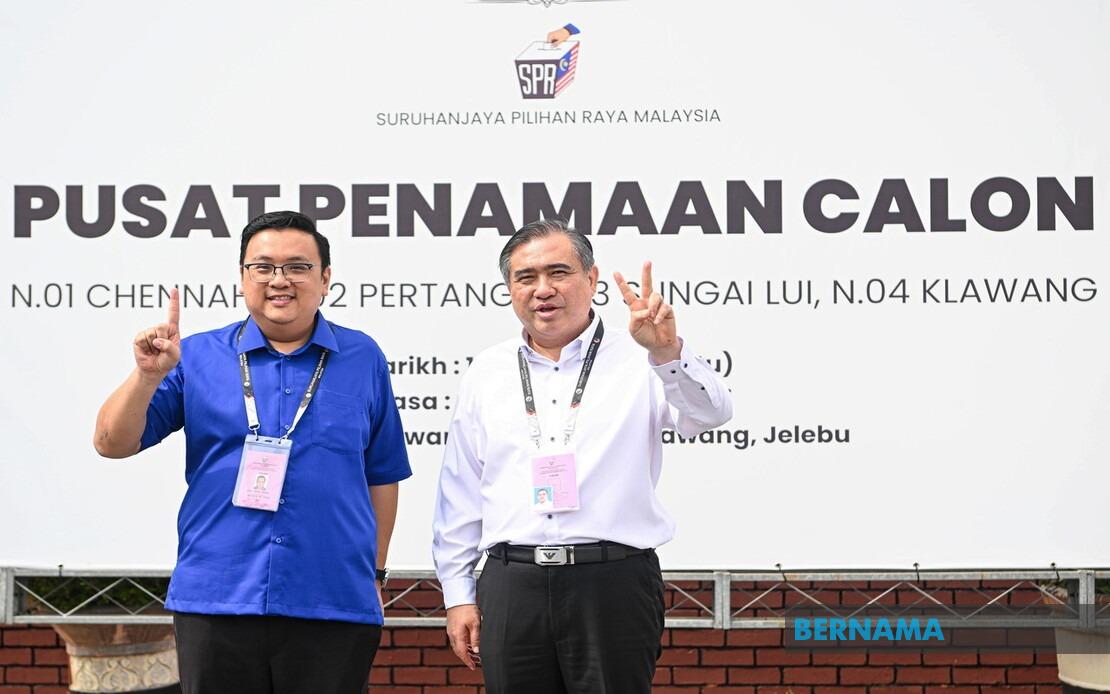
Several high-profile federal politicians are making their mark on the Negeri Sembilan contest, lending the election national significance. Transport Minister Anthony Loke, who holds the position of DAP secretary-general, will contest the Chennah seat under Pakatan Harapan colours against Barisan Nasional's Siow Kong Choon in a straight fight. In Rantau, another straight contest pits UMNO deputy president and Foreign Minister Datuk Seri Mohamad Hasan against Pakatan Harapan's Dr Azizul Hakim Mahdi. These matchups between federal heavyweights suggest that both the federal government and opposition perceive the Negeri Sembilan election as consequential beyond state boundaries.
The contest for the Menteri Besar position will effectively be decided in the Linggi state seat, where incumbent Datuk Seri Aminuddin Harun of Pakatan Harapan and PKR will defend against Barisan Nasional's Datuk Mohd Faizal Ramli and Bersatu's Zamri Md Said in a three-way clash. This particular contest exemplifies the new competitive environment, where Aminuddin cannot take his seat for granted despite holding the Chief Minister's office. The presence of Bersatu in this race reflects the party's strategic focus on establishing presence in key state positions, particularly in constituencies where it believes it can credibly challenge either Pakatan or Barisan incumbents.
Other prominent three-cornered contests include Pertang, where Negeri Sembilan UMNO Liaison Committee chairman Datuk Seri Jalaluddin Alias faces challengers from both Pakatan Harapan and Bersatu. The Klawang seat introduces Danni Rais, son of veteran politician Tan Sri Rais Yatim, as a Perikatan Nasional candidate challenging incumbent Datuk Bakri Sawir of Pakatan Harapan and a Bersatu challenger. The emergence of such family political legacies alongside newer political movements demonstrates how Negeri Sembilan's electoral landscape accommodates both established patronage networks and novel competitive entry points.
The two four-cornered contests inject even greater complexity into the electoral calculus. Jeram Padang will see incumbent Datuk Mohd Zaidy Abdul Kadir of Barisan Nasional challenged by candidates from Pakatan Harapan, Bersatu, and the newly prominent Parti Orang Asli Malaysia, reflecting indigenous representation concerns. Rahang features an incumbent from Pakatan Harapan, Siaw Meow Keong, facing opposition from Barisan Nasional, Parti Sosialis Malaysia, and Bersatu—a genuinely ideologically diverse slate of contenders.
The two five-cornered constituencies represent the election's most striking feature. In Nilai, incumbent J. Arul Kumar of Pakatan Harapan must fend off candidates from Barisan Nasional, Bersatu, Barisan Jemaah Islamiah Se-Malaysia, and an independent. Similarly, in Sri Tanjung, incumbent Datuk Dr G. Rajasekaran faces candidates from Barisan Nasional, Bersatu, and two independent candidates. These contests potentially offer windows for unexpected outcomes, where vote fragmentation across five directions could produce unintuitive results that might not reflect any clear voter mandate for a particular party.
The emergence of multiple smaller parties and independent candidacies reflects deeper shifts in Malaysian electoral behaviour. Rather than viewing these elections as contests between two blocs, voters across Negeri Sembilan now confront genuinely complex ballots where regional and issue-based alternatives have established sufficient credibility to mount serious challenges. This fragmentation could prove advantageous for minority parties capable of mobilising specific constituencies, whether based on religious concerns, indigenous affairs, or alternative political philosophies.
The Electoral Commission has scheduled early voting for July 28, with a total of 889,490 electors eligible to participate. This figure comprises 867,151 ordinary voters, alongside 16,884 military personnel and their spouses, and 5,455 police personnel. The significant military and police voter presence means that these groups' electoral preferences could carry outsized weight in closely contested seats, a factor both coalitions will seek to influence through targeted campaigning and messaging.
For Malaysian observers and analysts, the Negeri Sembilan election offers an instructive case study in how political fragmentation is reshaping state-level competitions. The transition from 27 straight fights to merely 11 suggests that parties cannot assume automatic victory based on historical dominance. The simultaneous increase in three-way contests and the unprecedented emergence of five-cornered battles indicates that Malaysian voters, at least in Negeri Sembilan, are willing to support alternative political vehicles that can articulate distinct agendas. How these dynamics translate into seat allocation and whether they foreshadow similar patterns in future national elections remains a crucial question for Malaysian political forecasters.

