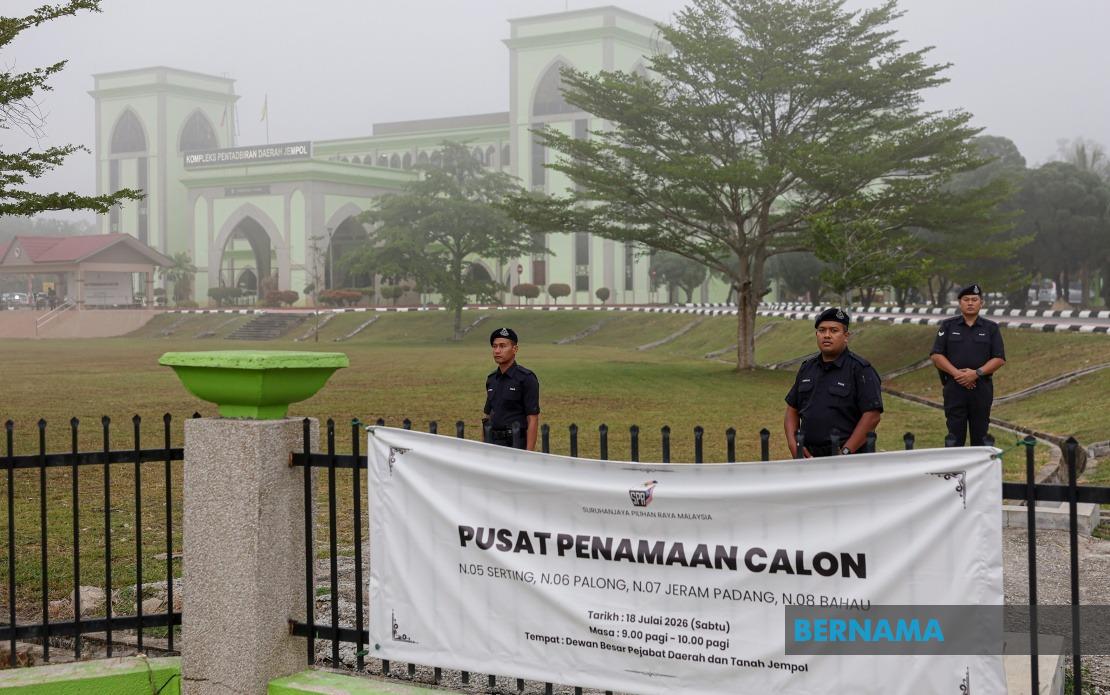
The 16th Negeri Sembilan state election moved into its formal candidate registration phase on Thursday as all eight nomination centres began accepting nominations precisely at 9 am, marking the official start of the electoral process. The one-hour window for candidate registration will conclude at 10 am, followed by the returning officers' announcement of eligible candidates cleared to contest the election. This tightly scheduled nomination day sets the machinery in motion for what promises to be a significant political contest in the state, with weather conditions reported as favourable across all seven districts.
The campaign phase has been calibrated to run for 14 days commencing immediately after the official candidate announcement and concluding at 11.59 pm on July 31. This duration provides political parties and independent candidates with a defined timeframe to conduct their voter outreach, though the relatively compressed period—compared to federal election campaigns—reflects the state-level nature of the contest. The Election Commission has established August 1 as polling day, with early voting scheduled for July 28 to accommodate military personnel, police officers, and their spouses.
The electoral register presents a significant mobilisation challenge for all contending parties. Negeri Sembilan has recorded 889,490 registered voters eligible to participate, comprising 867,151 ordinary voters alongside 16,884 military personnel and their spouses and 5,455 police personnel designated as early voters. These figures, compiled from the Election Commission's rolls as of June 4, 2026, provide the baseline for candidate strategies and party resource allocation during the campaign period.
State security preparations have been comprehensive ahead of nomination day. Datuk Alzafny Ahmad, the Negeri Sembilan police chief, confirmed deployment of 2,393 police personnel across all eight nomination centres to maintain order, peace, and security throughout the registration process. This substantial police presence underscores official commitment to ensuring the nomination process proceeds without disruption and reflects standard practice for major electoral events in Malaysia.
The election was triggered by the formal dissolution of the Negeri Sembilan State Legislative Assembly on June 5, following receipt of consent from Tuanku Muhriz Tuanku Munawir, the Yang Dipertuan Besar of Negeri Sembilan. This constitutional step is the procedural requirement that transforms electoral possibility into formal necessity, establishing the legal framework within which nomination, campaigning, and voting must occur.
The competitive landscape remains shaped by the outcomes of the previous state election held in 2023. Pakatan Harapan demonstrated considerable strength by securing 17 of the 36 state seats, establishing itself as the dominant force in the legislature. Barisan Nasional retained a respectable presence with 14 seats, whilst Perikatan Nasional's five seats provided it with a foothold in the chamber. These results suggest that whilst PH commands a working majority, the opposition maintains sufficient representation to mount meaningful scrutiny and debate.
For Malaysian observers, the Negeri Sembilan election carries relevance beyond the state itself, as it occurs against the backdrop of ongoing political realignment at both state and national levels. The performance of each coalition will provide indicators regarding voter sentiment in a state that has historically served as a barometer of broader political trends. The comparative strength demonstrated by PH in 2023 suggests the ruling coalition retains substantial support, though the intervening three years may have generated shifts in voter preferences around economic conditions, development priorities, or governance performance.
The nomination process represents the crucial formal gate through which political ambitions must pass. Whilst candidates must meet constitutional and administrative requirements—including age, citizenship, and financial deposit criteria—the registration process itself typically encounters limited drama in Malaysian elections. The real intensity emerges during the campaign phase, when parties deploy their organisational machinery, messaging strategies, and candidate visibility efforts to mobilise voters across the seven districts that comprise Negeri Sembilan's electoral geography.
For political parties, the coming fortnight will demand disciplined execution of campaign plans. With fewer than 900,000 voters spread across a state spanning multiple districts, the election presents a manageable scale where targeted ground operations, community engagement, and candidate accessibility can meaningfully influence outcomes. Regional factors—including economic development concerns, infrastructure projects, and local governance issues—will likely feature prominently in campaign messaging alongside national political themes.
The Election Commission's coordination of this exercise reflects Malaysia's established electoral infrastructure and procedural consistency. The simultaneous opening of all eight centres, the standardised one-hour window, and the predetermined announcement timing demonstrate the bureaucratic rigour that characterises Malaysian electoral administration. This procedural predictability provides all stakeholders—parties, candidates, observers, and voters—with clear frameworks within which to operate and plan their participation in the democratic process.

