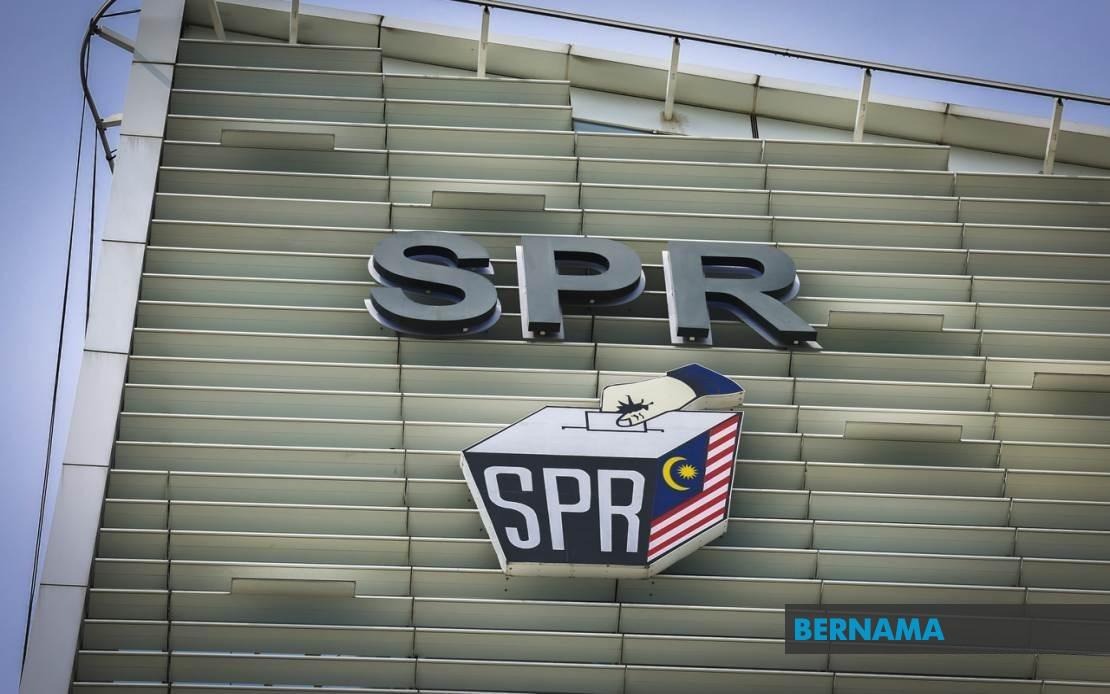
The political temperature in Negeri Sembilan will spike tomorrow as the 16th state election officially enters its campaign phase, with nomination day marking the formal start of a 14-day push towards the August 1 polling date. Eight nomination centres scattered across the state will process candidate submissions between 9 am and 10 am, after which returning officers will announce the final roster of contenders cleared to compete for the 36 state seats. This compressed timeline—combined with early voting set for July 28—creates an unusually intense electoral schedule that will test the organisational capacity of all participating parties across the peninsula's smallest state by population.
The Election Commission has registered 889,490 eligible voters in Negeri Sembilan, a figure that encompasses 867,151 ordinary voters alongside 16,884 military personnel and their family members, plus 5,455 police officers and their dependents. This expanded voter base reflects Malaysia's formal integration of security force personnel into state-level electoral processes, a shift that has gradually reshaped campaign dynamics in several states over the past decade. The composition of the electorate matters considerably here, as military and police voting blocs can influence outcomes in marginal constituencies, particularly those near major security installations or garrison towns within the state.
Pakatan Harapan has committed to a maximalist strategy, fielding candidates across all 36 seats with carefully calibrated distribution among its three component parties. The coalition deploys 16 PKR candidates, 11 from DAP, and nine from Amanah, attempting to leverage its 2023 victory when it secured 17 seats to establish itself as the state's dominant political force. This full-slate approach signals confidence in the coalition's organisational machinery and suggests confidence that fragmentation within opposition ranks will benefit the incumbent administration. The PKR allocation reflects the party's role as the coalition anchor in Negeri Sembilan, where it has consolidated significant grassroots infrastructure since the 2023 contest.
Barisan Nasional's reduced candidate count—25 nominees across 36 available seats—represents a strategic retreat from the coalition's traditional all-or-nothing approach. The lineup comprises 16 UMNO contenders, seven from MCA, and two from MIC, with the notably limited MCA and MIC participation underscoring the persistent marginalisation of BN's non-Malay component parties in peninsula state elections. By declining to contest 11 constituencies, BN appears to be preserving resources for genuinely competitive three-way battles and avoiding costly secondary fights where party machinery cannot realistically deliver victories. This selective engagement may also reflect internal calculations about which seats remain winnable given demographic shifts and changing urban-rural voting patterns across the state.
Perikatan Nasional's approach reveals both ambition and internal fragmentation, with the coalition confirming 11 candidate slots distributed among multiple partners. PAS will field five candidates, while Gerakan and the Malaysian Indian People's Party each contribute one, alongside four from Parti Wawasan Negara—a relative newcomer to PN's coalition making its electoral debut in a state contest. The limited Wawasan representation suggests both the party's nascent status within the coalition and questions about its ability to field viable candidates across multiple constituencies. Meanwhile, Bersatu's decision to contest independently under its own party logo rather than as a PN member complicates the opposition's unified positioning and may signal ongoing strain within the coalition structure, particularly as the party attempts to rebuild electoral credibility following its controversial political manoeuvring during the 2022-2023 period.
Beyond the three major blocs, the electoral field includes several minor parties pursuing niche political positioning. Parti Sosialis Malaysia and Parti Orang Asli Malaysia each field single candidates, likely targeting specific constituencies or seeking to establish presence ahead of future contests. Parti Barisan Jemaah Islamiah Se-Malaysia has announced plans to field seven candidates, potentially pursuing Islamist-adjacent voters dissatisfied with PAS or competing for the conservative Muslim ballot. Notably, MUDA, Pejuang, and Bersama—parties that have demonstrated varying degrees of electoral viability in previous contests—have opted not to contest, likely due to resource constraints or strategic decisions to focus efforts on other states or federal politics. This withdrawal reduces overall fragmentation on the ballot while clarifying the principal competitive axes.
The 2023 results provide essential context for interpreting tomorrow's contests and subsequent campaign narratives. Pakatan Harapan's 17-seat majority, achieved in a state that has traditionally tilted towards the ruling coalition nationally, established a significant psychological advantage reinforced by administrative control of the state apparatus. Barisan Nasional's reduction to 14 seats marked a notable decline from its historical dominance in Negeri Sembilan politics, while Perikatan Nasional's five seats suggested limited breakthrough capacity despite its coalition status nationally. These baselines mean that PH's core objective involves defending its majority while denying BN recovery, even as PN seeks the seat gains necessary to emerge as a kingmaker in closely balanced outcomes.
Election Commission procedures have been reinforced through advance preparations designed to streamline the nomination process and prevent administrative chaos on the crucial first day. The EC has actively encouraged candidates to pre-check nomination papers at returning officer offices and to settle election deposits ahead of submission, efforts that should reduce queueing delays and processing errors. Early voting scheduled for July 28 allows security personnel and military voters to cast ballots before the main election, a feature that becomes strategically significant if contests prove tightly decided. The compressed timeline means campaign messaging must crystallise rapidly, with parties having limited time to introduce unfamiliar candidates or respond to unexpected political developments.
Weather conditions forecast for nomination day carry practical implications for turnout and campaign logistics. The Malaysian Meteorological Department predicts generally fine conditions across most of the state during Saturday morning, with exceptions only in Port Dickson and Seremban where rain is anticipated, and afternoon thunderstorms expected statewide. While not prohibitive, wet weather can suppress voter interest in campaign rallies and reduce foot traffic at nomination centres, potentially affecting the spectacle and momentum parties seek to generate at the formal campaign launch. Parties will likely schedule their major nomination-day announcements and candidate presentations for morning slots to capitalise on clearer weather conditions.
The dissolution of the Negeri Sembilan State Legislative Assembly on June 5 by the Yang Dipertuan Besar of Negeri Sembilan, Tuanku Muhriz Tuanku Munawir, triggered the constitutional cascade leading to tomorrow's formal campaign launch. The two-month interregnum between dissolution and nomination day provided ample time for parties to conduct internal selections, negotiate candidate allocations across coalition partners, and prepare campaign infrastructure. This relatively generous preparation window contrasts with some previous state elections where compressed timelines have disadvantaged certain parties and generated accusations of unfair selection processes. Negeri Sembilan's proceeding at a measured pace reflects the state's constitutional arrangements and the leadership preferences of its traditional ruler.
The Negeri Sembilan contest assumes heightened significance within Malaysia's contemporary political landscape, occurring at a moment when federal and state political dynamics remain in considerable flux. The outcome will partly determine which coalition possesses momentum heading towards potential federal parliament dissolution and general elections likely within the next two years. A PH victory would reinforce the coalition's claim to represent viable governance alternatives nationally, while BN success would signal resurgence of the traditional ruling structure despite federal government formation complexities. PN advances could demonstrate the coalition's capacity to leverage Islamist and Malay-focused messaging in urban and semi-urban constituencies. The state's manageable size and relatively transparent electoral dynamics make it an important barometer for assessing shifting voter sentiment across Malaysia's peninsula heartland.

