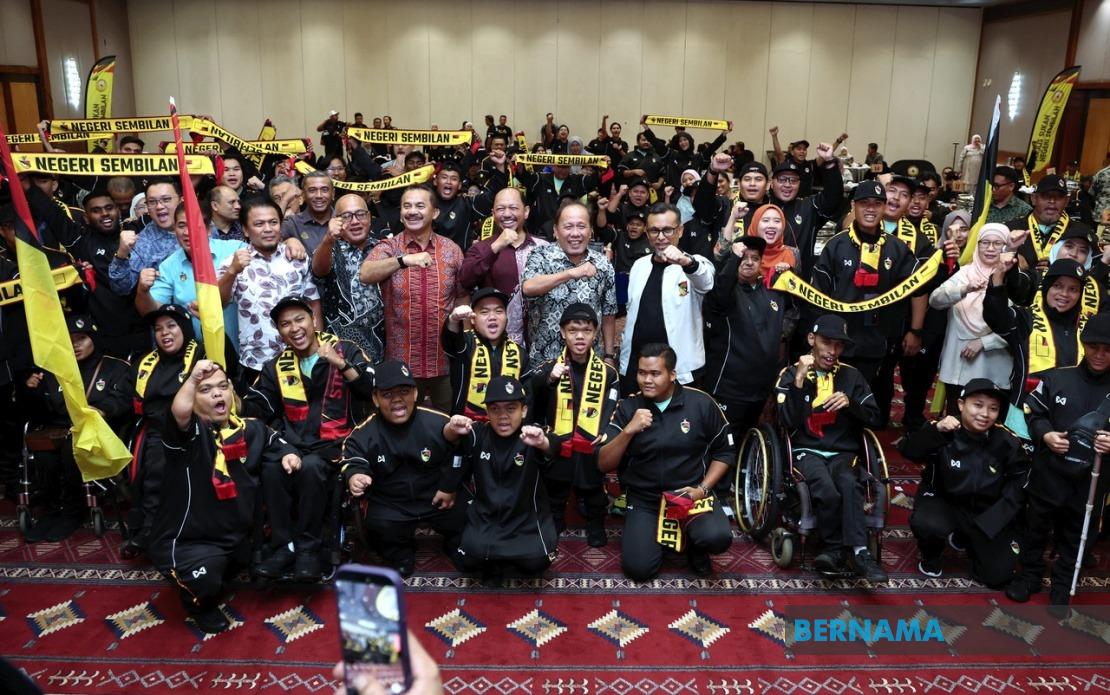
Negeri Sembilan's leadership is banking on a strong showing at the 2026 Para Malaysia Games in Selangor, which kicks off on September 5, setting a target of 12 gold medals from its contingent of 80 para athletes. The state's Menteri Besar Datuk Ismail Lasim framed the objective as crucial recovery following a disappointing performance at the regular SUKMA 2026 championships, which concluded earlier this week with Negeri Sembilan capturing only seven gold medals from a total haul of 48.
The contrast with previous Para SUKMA performances underscores the competitive pressure facing the state delegation. At the 2024 Para Malaysia Games held in Sarawak, Negeri Sembilan's para athletes delivered substantially stronger results, accumulating 14 gold, 19 silver and 20 bronze medals. That earlier success raises questions about whether the new 12-gold target represents genuine confidence or a modest recalibration downward following the recent setback at the main Games.
Datuk Ismail Lasim articulated the philosophical underpinning of the target during a flag handover ceremony for the Para SUKMA delegation, emphasizing that the numerical goal transcends mere statistics. He positioned it as a reflection of the rigour, dedication and systematic preparation that athletes have invested during training cycles. This framing attempts to shift focus from raw medal counts to the process and effort that underpin competitive outcomes, a common approach in sports management when previous results disappoint.
The Menteri Besar expressed considerable confidence in the calibre and mental resilience of Negeri Sembilan's para athletes, characterizing them as individuals possessing extraordinary determination. He suggested that a strong Para SUKMA campaign could rehabilitate the state contingent's standing after their relatively weak showing at SUKMA 2026, where they won only seven golds compared to 19 two years previously—a significant decline that appears to have prompted soul-searching within state sports circles.
Financial incentives feature prominently in the state's motivation strategy for Para SUKMA. Datuk Ismail Lasim confirmed that medal winners would receive monetary rewards, a practice designed to provide tangible recognition beyond the prestige of victory. Such schemes are common across Southeast Asian regional games, reflecting the importance placed on para sports development and the need to sustain athlete commitment given that para sports typically receive less media attention and sponsorship than mainstream athletics.
The event's timing holds significance for Malaysian para sports development more broadly. The Para Malaysia Games operates on a two-year cycle aligned with major domestic sporting calendars, providing regular competitive platforms for athletes with disabilities. This cyclical structure allows for systematic talent progression and regular assessment of program effectiveness, though it also means that underperformance at one iteration creates immediate pressure for redemption at the next.
Geographically, hosting the 2026 Para Malaysia Games in Selangor positions the event within Malaysia's economic heartland, potentially facilitating spectator attendance and media coverage. Selangor's infrastructure and sports facilities generally meet international standards, allowing para athletes to compete in appropriate venues suited to diverse disability classifications and sporting disciplines.
The involvement of State Youth and Sports Development Action Committee chairman Datuk Mustapha Nagoor and Negeri Sembilan Sports Council director Marhizah Abdul Razak in the flag handover ceremony signals institutional commitment across multiple administrative levels. This multi-layered engagement suggests that achieving the 12-gold target has become a coordinated effort spanning government, sports authorities and athlete support systems rather than an isolated aspiration.
For Malaysian readers, the Negeri Sembilan target reflects broader dynamics within Southeast Asian para sports. Malaysia has positioned itself as a regional leader in disability sports development, and state-level performance at Para SUKMA serves as a barometer for national competitiveness. A strong Negeri Sembilan showing would contribute to overall national medal success should Malaysia compete at international paralympic events, making these domestic games strategically important beyond mere state pride.
The shift from seven golds at SUKMA 2026 to a targeted 12 golds at Para SUKMA 2026 represents ambitious recalibration, though it remains slightly below the 14-gold achievement from 2024. This trajectory suggests either that 2024 represented a performance peak that proves difficult to replicate, or that the 2026 target reflects a realistic assessment of current squad depth and training outcomes. Sports analysts will be watching whether Negeri Sembilan can narrow the gap between its regular SUKMA decline and its para sports ambitions, as sustained success in para sports can offer valuable lessons for overall athletic program development.
The confidence expressed by state leadership appears anchored in specific training preparation and athlete selection, though detailed analysis of whether the contingent addresses previous technical deficiencies remains unavailable. Para SUKMA 2026 will test whether Negeri Sembilan's institutional commitment translates into the competitive outcomes needed to restore the state's sporting reputation after the recent SUKMA disappointment.

