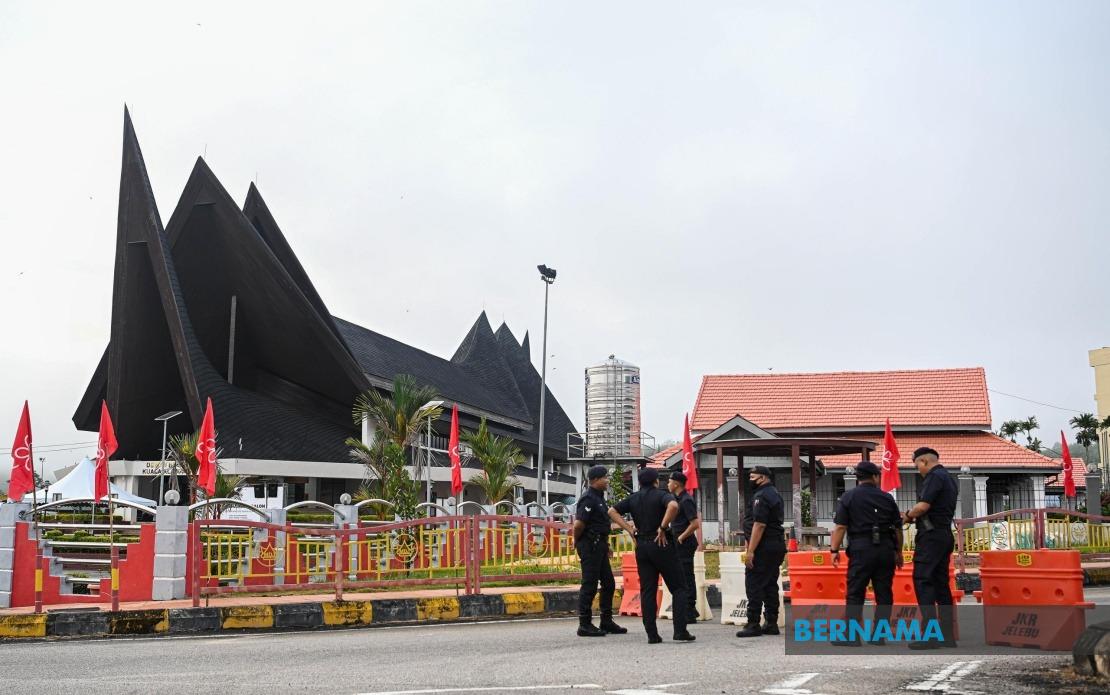
The nomination process for Negeri Sembilan's 16th state election unfolded without incident on July 18, with Election Commission officials reporting that favorable weather conditions helped facilitate the orderly registration of candidates across the state. The eight nomination centres operated as scheduled between 9 am and 10 am, allowing political parties to formally submit their candidacies ahead of polling day on August 1. This condensed window has become standard practice in Malaysian electoral cycles, ensuring the administration maintains tight control over the filing period while giving all contenders equal opportunity to present their chosen representatives.
The atmosphere surrounding the nomination process reflected mounting interest in the Negeri Sembilan contest, with media personnel gathering before dawn to position themselves at strategic vantage points. Party supporters arrived in growing numbers throughout the morning, creating visible demonstrations of enthusiasm outside each nomination centre. These scenes underscore how state-level elections have become increasingly competitive platforms where coalitions vie for control of legislative assemblies, particularly when the composition of parliament itself remains subject to ongoing realignments and factional negotiations at the federal level.
The electoral landscape for this contest presented a fragmented picture that mirrored broader political dynamics across Malaysia. Pakatan Harapan committed to fielding candidates in all 36 constituencies, positioning itself as the only coalition attempting comprehensive statewide coverage. This ambition contrasts sharply with Barisan Nasional's decision to contest only 25 seats, signalling a more selective approach that likely reflects internal calculations about competitive viability in specific districts. Meanwhile, Perikatan Nasional allocated resources to 11 seats, maintaining its presence without attempting to match larger coalitions' reach, while three smaller parties—Parti Orang Asli Malaysia, Parti Sosialis Malaysia, and Parti Barisan Jemaah Islamiah Se-Malaysia—each fielded solitary candidates to preserve their organizational status and messaging platforms.
The most complex participation arrangement involved Parti Pribumi Bersatu Malaysia, which entered as an independent contestant while simultaneously accommodating Parti Bersepakat Hak Rakyat Malaysia through a seat-sharing arrangement. Bersatu's decision to contest 24 seats represented a substantial commitment that positioned it alongside established coalitions in terms of scale, though its organizational independence distinguished it from both Pakatan Harapan and Barisan Nasional structures. These technical arrangements—wherein smaller parties operate under larger parties' electoral symbols—reflect the practical compromises that have become necessary in Malaysia's multi-party system, where electoral thresholds and strategic calculus require partnerships that often blur traditional coalition boundaries.
The dissolution of the previous state assembly on June 5 had triggered this electoral sequence, with the Election Commission subsequently establishing July 28 as the date for early voting. This compressed campaign timeline compressed between nomination day and polling day compressed campaigning into a roughly two-week window, a duration that has become increasingly consequential as political communications have shifted toward digital channels and rapid-response messaging. Candidates and party machinery must therefore consolidate their advantage quickly, leveraging whatever organizational strength and public recognition they can mobilize during this necessarily brief period.
Demographic realities will shape the contest's outcome, as the eligible electorate comprises approximately 889,490 voters distributed across multiple constituencies. The voter roll includes 867,151 ordinary civilians, along with 16,884 military personnel and their spouses—a cohort historically considered sensitive in electoral calculations—and 5,455 police officers. The military and police vote has long occupied a distinctive position in Malaysian electoral sociology, with these groups' institutional loyalties and voting patterns sometimes diverging from civilian populations, a dynamic that strategists monitor carefully when assessing competitive prospects in particular districts.
The previous state election in 2023 provided the immediate historical context for this contest. Pakatan Harapan captured 17 of the 36 seats, securing the largest bloc in the assembly, while Barisan Nasional claimed 14 seats and Perikatan Nasional won five. These results meant no single coalition possessed an outright majority, a configuration that placed significant emphasis on post-election negotiations and potential defections or realignments. Whether the intervening period has altered voter preferences sufficiently to produce a different majority will largely determine whether the next Negeri Sembilan administration extends the current governing arrangement or shifts toward an alternative power structure.
For Malaysian and Southeast Asian observers, the Negeri Sembilan election represents a continuing test of Pakatan Harapan's organizational capacity and electoral appeal beyond the 2022 federal breakthrough that returned it to government formation relevance. The coalition's decision to contest comprehensively across all 36 seats suggests confidence in its ground operations and candidate quality, yet maintaining momentum across multiple electoral cycles remains perpetually challenging for coalitions seeking to consolidate earlier gains. Barisan Nasional's more conservative seat allocation, meanwhile, perhaps reflects acknowledgment of its struggling organizational profile in certain constituencies while preserving resources for districts where it retains traditional strength.
The nomination day's smooth execution provided no indication of the competitive intensity that characterizes actual campaigning, yet the breadth of participation across multiple coalitions and independent candidates ensures the campaign period will feature substantive contestation. With early voting scheduled for July 28 and polling day fixed for August 1, the window for candidate engagement with voters remained remarkably compressed, potentially advantaging incumbents and established political machinery over challengers requiring time to build name recognition and policy differentiation.
Looking ahead, the Negeri Sembilan result will likely influence calculations concerning federal-level coalition dynamics, particularly if the outcome produces unexpected shifts in any coalition's relative strength. Malaysia's electoral system, wherein state assemblies operate as distinct units yet interconnect with national political narratives, means that regional contests frequently signal broader shifts in public sentiment or organizational capacity that ripple through subsequent electoral cycles. The Negeri Sembilan election therefore commands attention extending well beyond the state's immediate boundaries, functioning as a meaningful barometer of coalition health and voter preferences during this fluid period of Malaysian politics.

