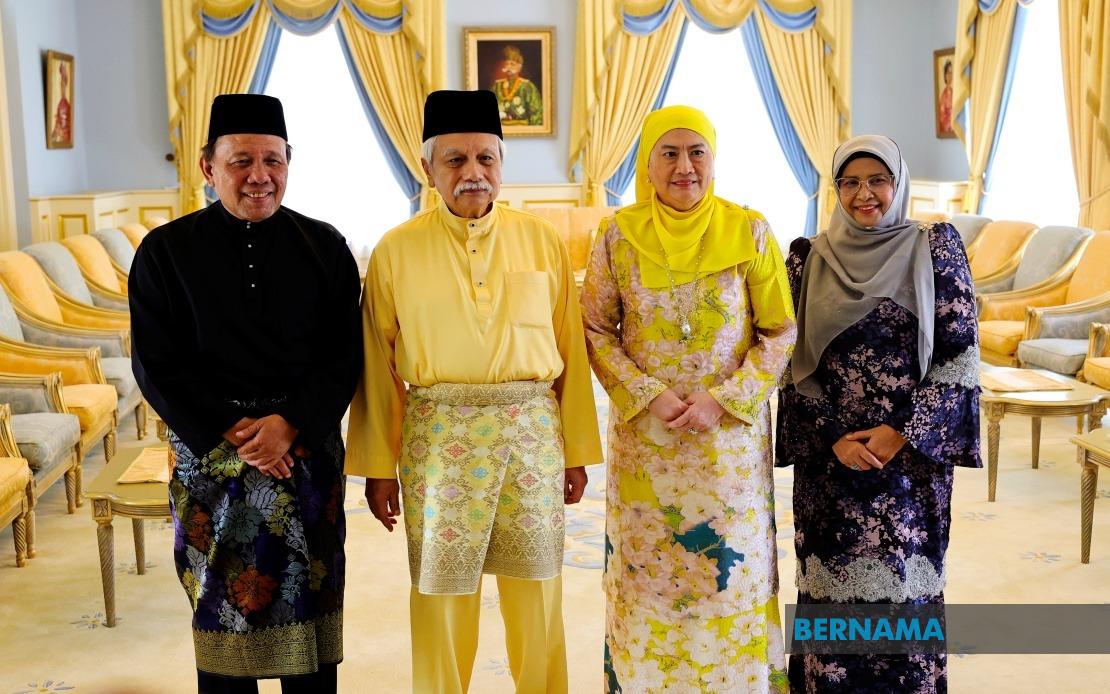
Negeri Sembilan has a new administrative leader committed to preserving the state's cultural and constitutional foundations. Datuk Ismail Lasim, the Juasseh assemblyman, took his oath of office as Menteri Besar before Yang Dipertuan Besar Tuanku Muhriz Tuanku Munawir at Istana Besar Seri Menanti, formally receiving the Ruler's consent to lead the state administration. At a press conference following the ceremony, Lasim outlined his government's foundational priorities, signalling continuity in institutional respect and stakeholder cooperation.
The protection and promotion of the royal institution form the cornerstone of Lasim's stated vision for Negeri Sembilan's governance. He characterised this commitment as a collective responsibility transcending political office, positioning it as integral to the state's identity and stability. According to Lasim, all citizens of Negeri Sembilan must grasp the significance of the state's unique customs and traditions—a reference to the state's distinctive Minangkabau-influenced heritage and its constitutional arrangement where power is shared between the Ruler and the legislative assembly. This understanding, he suggested, underpins the harmonious relationship between the monarchy and the state administration, a relationship that historically distinguishes Negeri Sembilan from other Malaysian states.
Lasim articulated that maintaining institutional respect requires proactive conflict management and the cultivation of productive dialogue between branches of government. His emphasis on finding "appropriate ways to minimise conflicts" suggests an awareness of the complexities inherent in a system where royal and executive functions must operate in tandem. For a state where constitutional conventions demand particular sensitivity to the Ruler's constitutional role, such assurances carry weight in signalling that his administration will navigate potential tensions through established protocols rather than confrontation. This stance reflects a recognition that stability in Negeri Sembilan depends on mutual deference between institutions.
Beyond institutional matters, Lasim positioned his administration within the broader Unity Government framework. He underscored that Barisan Nasional, which forms part of Negeri Sembilan's state government, remains a federal-level component of the Unity Government—a coalition that includes Pakatan Harapan and other parties. This framing seeks to legitimise continued cooperation between Negeri Sembilan and Kuala Lumpur despite potential political differences within the ruling coalitions at state and federal levels. For Malaysian readers, this reflects the pragmatic political reality that state administrations increasingly must balance partisan loyalty with the necessity of inter-governmental coordination on shared challenges.
Lasim's approach to federal-state relations emphasises continuity and mutual benefit rather than confrontation. His statement that he sees "nothing unusual" in maintaining cooperation signals an intention to move beyond any partisan positioning and to focus on service delivery and resource allocation. Given that Negeri Sembilan is a smaller state dependent on federal grants and cooperation for infrastructure and development projects, this collaborative posture carries practical implications. States that cultivate workable relationships with the federal government typically access funding streams more readily and negotiate more effectively on issues ranging from land development to federal services.
The new Menteri Besar also addressed the transition from his predecessor's administration by committing to evaluate and preserve beneficial policies regardless of their origin. This pragmatic stance suggests that Lasim's government will not engage in wholesale reversal of existing programmes solely for political reasons. Policies that demonstrably serve Negeri Sembilan's residents—whether in health, education, local economic development, or infrastructure—will continue, he indicated. Such an approach can reduce administrative disruption and maintain service continuity, factors that often matter more to ordinary citizens than partisan changes at leadership level.
For Southeast Asian observers, Negeri Sembilan's governance model offers instructive lessons in managing constitutional monarchy within a federal democratic system. The state's requirement to balance strong royal prerogatives with elected representation creates recurring tensions that demand maturity from political actors. Lasim's inaugural commitments suggest he recognises this delicate balance. His emphasis on the Ruler's role and his acknowledgment that respecting the royal institution is foundational governmental business demonstrates awareness that state stability depends on honouring constitutional arrangements, particularly in a polity where such arrangements have deep historical roots.
The swearing-in ceremony itself, conducted before Tuanku Muhriz, ritually reaffirms the constitutional supremacy of the Ruler in appointing the Menteri Besar. Unlike some federal systems where the chief executive derives legitimacy primarily from electoral processes, the Malaysian arrangement places the Ruler's formal approval at the centre of executive authority. Lasim's public emphasis on this aspect signals respect for constitutional conventions and potentially reassures the institution that his administration will not attempt to marginalise or subordinate the monarchy to electoral majorities.
Looking forward, Lasim's inaugural statements establish baseline expectations for his administration: deference to institutions, constructive federal-state cooperation, policy continuity where justified, and conflict resolution through appropriate channels. These commitments may appear conventional in a Malaysian context, yet they carry significance given the political churn that has characterised the state in recent years. Whether his administration successfully translates these principles into concrete governance outcomes will become apparent as it addresses Negeri Sembilan's development priorities, fiscal management, and sectoral challenges in agriculture, manufacturing, and services.
The broader Malaysian political landscape will also monitor Negeri Sembilan's trajectory under new leadership. As one of thirteen state governments, Negeri Sembilan contributes to the complex patchwork of federal-state relations and inter-party dynamics that characterise Malaysian governance. A Menteri Besar who commits publicly to institutional respect and federal cooperation may offer a model of pragmatic administration that prioritises development over partisan advantage—an increasingly valuable commodity in Malaysian politics where electoral competition often threatens administrative stability.

