Negeri Sembilan FC is embarking on an ambitious campaign to reshape its fortunes in Malaysia's top-flight football competition this season. The club's hierarchy has set a clear objective: secure a top-five finish in the Super League, marking a significant improvement from last season's seventh-place standing. This target reflects the organization's determination to establish itself as a competitive force in Malaysian football, following years of inconsistent performances.
Chairman Datuk Ismail Lasim articulated the club's aspirations during the Negeri Sembilan Football Day held in Seremban, emphasizing that the new ambitions are underpinned by fresh leadership and renewed commitment. The appointment of Spanish head coach Daniel Gimenez Alcaniz represents a strategic shift toward bringing international expertise to the squad. According to Ismail, the overarching philosophy centers on building a cohesive unit capable of delivering consistent performances across the season's demanding schedule.
Yet the chairman was cautious in his assessment, acknowledging that it remains premature to make definitive judgments about whether the revamped roster can genuinely compete for a top-five position. He emphasized that the true measure of the team's potential would emerge through match performances rather than preseason declarations. This measured approach contrasts with the ambitious targets, suggesting that club leadership recognizes the substantial gap between aspirations and execution in professional football.
Financial stability emerged as a critical concern in Ismail's remarks. The chairman stressed that maintaining healthy club finances is essential for retaining quality players and ensuring the squad remains competitive throughout a grueling league campaign. Malaysian football clubs frequently face budgetary constraints that limit their ability to retain talent, and Negeri Sembilan appears determined not to fall victim to the financial pressures that have derailed other clubs' campaigns. The emphasis on financial discipline and player retention signals a longer-term vision beyond immediate results.
Internal harmony and team cohesion were highlighted as equally vital. Ismail explicitly rejected the notion of tolerating internal conflict, recognizing that squad divisions have historically undermined Malaysian clubs' performance. This focus on unity suggests the organization has learned from previous seasons' challenges, where reports of dressing-room friction may have contributed to inconsistent results. The cultivation of a collaborative environment, where players work seamlessly together, is viewed as foundational to achieving the stated objectives.
The international recruitment strategy underpins much of the club's optimism. Negeri Sembilan has secured South Korean player Park Yi-Young alongside four Japanese athletes: Takumi Sasaki, Kei Oshiro, Yuichi Hirano, and Mio Tsuneyasu. Additionally, Bosnian-Herzegovinian midfielder Jovan Motika joins the squad. This diverse recruitment reflects a shift toward tapping Asian markets for talent, potentially offering better cultural integration and cost-effectiveness compared to European or African imports. The influx of players from neighboring regions suggests the club believes quality football talent is accessible throughout Asia.
Coach Gimenez Alcaniz brings valuable experience from outside Malaysian football. Spanish coaches have increasingly influenced Asian football systems, and his appointment signals an attempt to introduce tactical innovations and training methodologies that might distinguish Negeri Sembilan from competitors. However, the success of foreign coaching appointments in Malaysia has proven mixed, depending on factors including language adaptation, cultural understanding, and the quality of local player development systems.
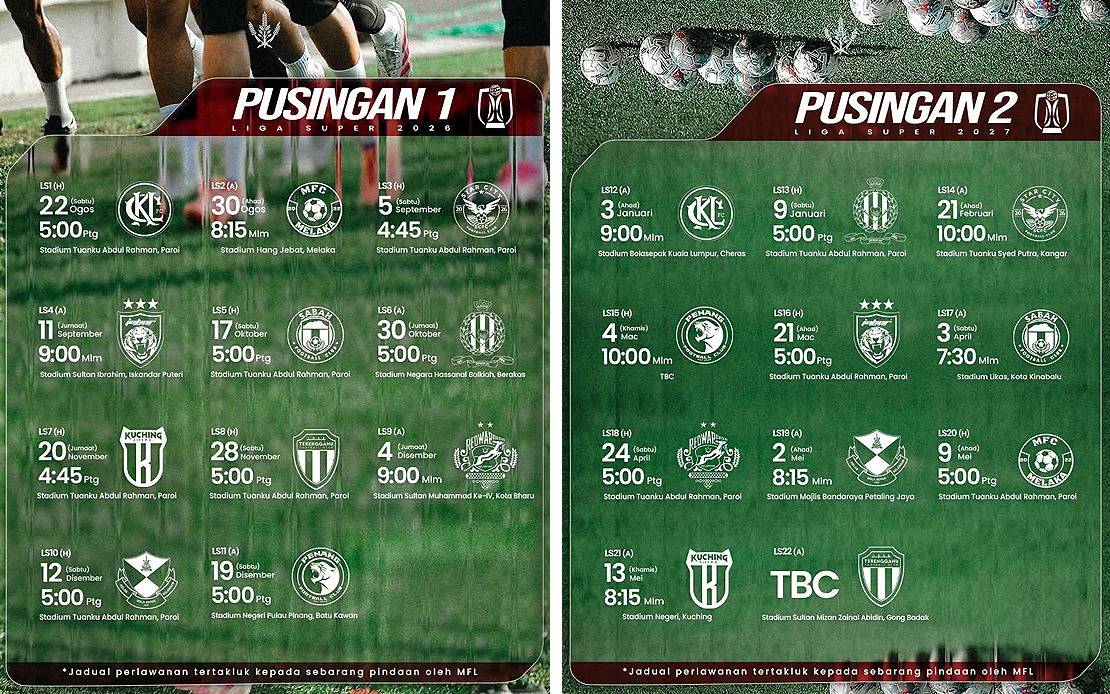
A logistical challenge that deserves attention is the Super League's scheduling quirks. Afternoon fixtures, increasingly common in Malaysian football, present genuine obstacles to player performance and recovery. Ismail voiced legitimate concerns about the physical and psychological toll of afternoon matches, particularly given Malaysia's tropical climate and the reality that many supporters work standard office hours. This observation reflects a practical understanding that player preparation and fan engagement are interdependent elements of sporting success.
The scheduling issue extends beyond mere comfort. Playing in high afternoon temperatures can significantly impact player fitness levels, potentially negating benefits gained from pre-season conditioning. It also complicates fan attendance, as working supporters face logistical difficulties attending midday matches. These structural factors, beyond the club's direct control, could ultimately determine whether the top-five objective proves achievable or becomes an aspirational casualty of administrative decisions.
Supporter engagement represents another pillar of the club's revival strategy. The Menteri Besar appealed to Negeri Sembilan's fan base to maintain stadium attendance throughout the season, recognizing that home-ground advantage driven by vocal supporters can significantly influence match outcomes and psychological momentum. Malaysian clubs benefit substantially when supporters create intimidating atmospheres for visiting teams, and consistent crowd support translates into tangible competitive advantages.
The club's transformation represents a broader narrative within Malaysian football, where strategic planning and international recruitment are increasingly viewed as pathways toward competitive improvement. Negeri Sembilan's willingness to invest in coaching expertise, diversify the squad composition, and address underlying organizational issues suggests a serious attempt to escape the mediocrity that has characterized many Malaysian clubs in recent seasons.
Ultimately, whether Negeri Sembilan achieves its top-five ambition will depend on factors extending far beyond the stated objectives. Player adaptation to the league's pace and physicality, injuries to key personnel, and the unpredictable nature of tournament football all play decisive roles. The club has positioned itself ambitiously; now comes the challenge of translating preparation and investment into consistent, winning performances across the entire Super League season.

