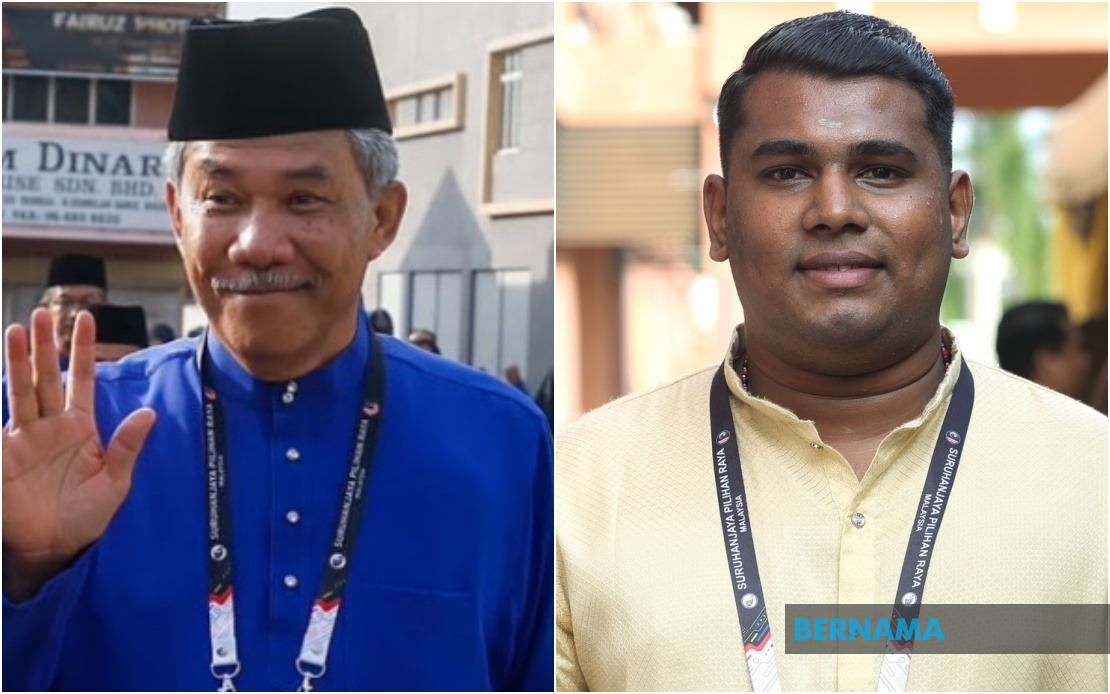
The forthcoming 16th Negeri Sembilan state election is drawing attention for its stark generational contrasts, with M. Leevineshwaraan emerging as the youngest aspirant in the competition at just 23 years old. The Bersatu representative is throwing his hat into the ring for the Sri Tanjung state seat, entering a crowded five-way contest that will test his political credentials against more established rivals. His candidacy signals shifting demographics within Malaysian politics, as younger voices increasingly seek entry into state legislatures alongside veteran lawmakers.
Leevineshwaraan's path to the ballot represents a notable development for Bersatu, which has been working to broaden its appeal and strengthen its grassroots presence across Malaysia. The party's selection of such a youthful candidate reflects broader attempts within the political landscape to engage younger voter blocs who seek representation from politicians closer to their own age and perspective. However, his relative inexperience places him at a considerable disadvantage in a competitive race where seasoned operators hold considerable sway over local issues and community networks.
The young candidate's principal obstacle materializes in the form of Datuk Dr G. Rajasekaran, the sitting Pakatan Harapan assemblyman who retained the Sri Tanjung seat in the previous election by a margin of 3,996 votes. Rajasekaran's incumbent status provides him with substantial advantages, including name recognition, established constituency infrastructure, and a demonstrated ability to mobilize voter support. For Leevineshwaraan to upset this dynamic, he must articulate a compelling vision that resonates with voters seeking change or feel inadequately represented by the current officeholder.
The Sri Tanjung contest sits within the Port Dickson parliamentary division, where 19,590 registered voters hold the electoral power to determine the outcome. This voter population encompasses diverse demographic segments and competing interests that Leevineshwaraan must navigate skillfully to build a winning coalition. The scale of the constituency presents a formidable organizational challenge for a first-time candidate lacking the support infrastructure that established parties can mobilize.
Contextualizing Leevineshwaraan's youth candidacy requires examining recent trends in Malaysian electoral contests. In the previous Negeri Sembilan election during 2023, Muhammad Syakir Fitri Sadri previously held the distinction of youngest contestant, contesting the Paroi seat as an Independent candidate while aged 25. That Leevineshwaraan now occupies this position at 23 suggests a gradual lowering of the typical age threshold for first-time state-level candidates, potentially reflecting growing youth activism within political party structures.
At the opposite end of the demographic spectrum, two septuagenarian politicians command attention as the election's most senior contenders. Barisan Nasional deputy chairman Datuk Seri Mohamad Hasan and Pakatan Harapan's Abd Latif A Tambi both entered their seventies and bring decades of political experience to their respective races. Mohamad defends the Rantau seat, situated within the Rembau parliamentary constituency containing 34,831 eligible voters, while Abd Latif contests Gemencheh in the Tampin parliamentary division with 24,916 registered voters. Each confronts a two-way contest that will determine whether accumulated political capital withstands current voter sentiment.
Comparisons to previous election cycles highlight how age profiles among candidates continue evolving. The 15th state election featured Bujang Abu as the oldest candidate at 72 years old, running as an Independent contender. Notably, Bujang's absence from the current election—resulting from his failure to submit required documentation to the Election Commission—removes this previous record holder from consideration. The absence underscores how administrative requirements and personal circumstances can reshape candidate dynamics between elections.
Gender representation among the candidate pool demonstrates modest but measurable growth. Nine of the 103 total candidates contesting the state election are women, marking a slight increase from the previous cycle when eight of 83 candidates were female. Pakatan Harapan has prioritized female candidate nominations most extensively, fielding four of the nine women participants. This incremental progress reflects ongoing efforts within Malaysian political parties to enhance women's parliamentary representation, though absolute numbers remain substantially below parity with male candidates.
The expanded candidate pool of 103 individuals across 16th state seats represents the democratic machinery at work in Negeri Sembilan, offering voters multiple choices across the political spectrum. The composition spans established parties, newer entrants, and Independent contenders, each pursuing electoral advantage through distinct campaign strategies and messaging. Geographic distribution of candidates across constituencies ensures that rural and urban areas alike receive political attention, though resource disparities between parties inevitably shape campaign intensity and reach.
The Election Commission has established a structured timeline for the election process that provides candidates and parties with defined parameters for campaign activities. Early voting begins on July 28, allowing those unable to vote on the primary polling day access to electoral participation. The official polling day falls on August 1, when the full registered electorate across all constituencies will cast ballots determining Negeri Sembilan's state assembly composition. This timeline permits approximately two weeks of intensive campaigning following candidate nomination, a window within which Leevineshwaraan must establish voter awareness and support while competing against better-resourced opponents.
For Malaysian voters and political observers, the Negeri Sembilan election encapsulates broader national trends regarding political engagement, generational succession, and demographic representation. Leevineshwaraan's candidacy embodies efforts to inject youthful perspectives into state governance, while Mohamad Hasan and Abd Latif represent continuity of political leadership among established figures. The interplay between these competing visions will shape not only Negeri Sembilan's political direction but also signal broader patterns within Malaysian democracy regarding how different generational cohorts navigate electoral competition and institutional power.

