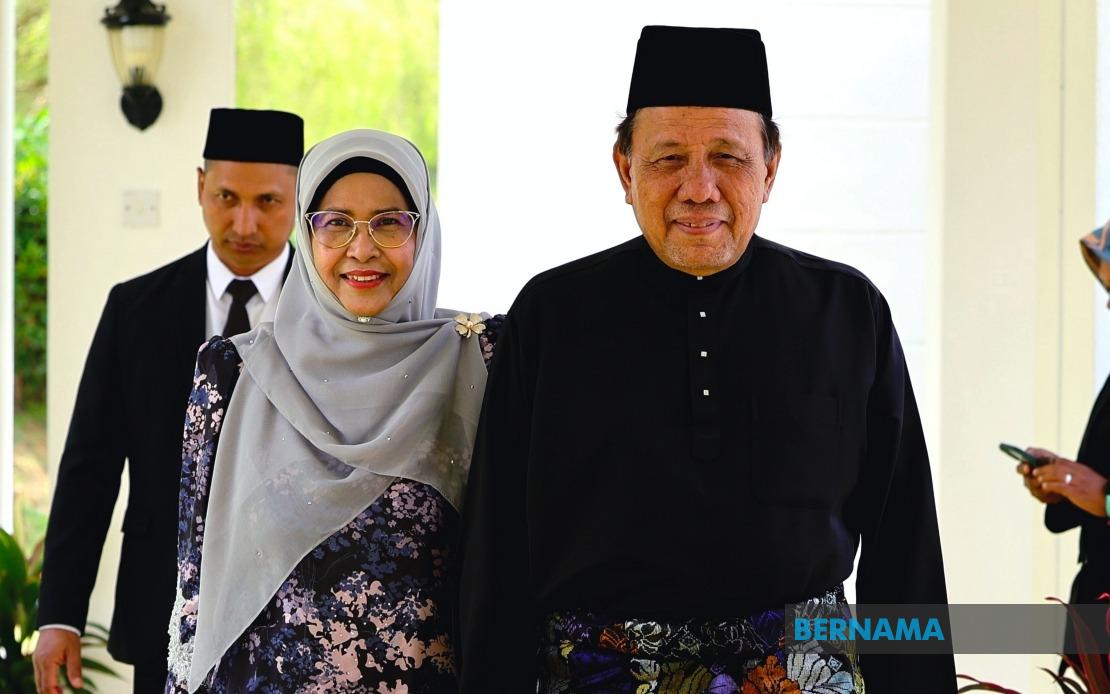
Negeri Sembilan will observe an additional public holiday on August 3, marking a gesture of appreciation from the state government towards residents and all stakeholders who participated in the recently concluded 16th state election. The decision carries the formal approval of Tuanku Muhriz Tuanku Munawir, the Yang Dipertuan Besar of Negeri Sembilan, and represents one of the first policy announcements from the newly appointed leadership.
Menteri Besar Datuk Ismail Lasim, 67, made the announcement during his inaugural press conference following his swearing-in ceremony at Istana Besar Seri Menanti in Kuala Pilah. The timing of the declaration underscores the government's intention to signal unity and acknowledge the electoral process that concluded on August 2. Ismail's decision to secure royal consent before making the announcement reflects the constitutional importance of the Yang Dipertuan Besar's role in state governance, a principle that remains central to Malaysia's federal structure.
The gesture carries particular significance given the electoral context. Voters in Negeri Sembilan had participated in a competitive campaign that tested both major political coalitions, with the outcome determining the composition of the state legislature. By offering a day of rest immediately following the election, the Menteri Besar acknowledged what many observers recognised as voter fatigue and the substantial effort required to organise and participate in such elections. This approach reflects pragmatic governance that recognises the public's contribution to democratic processes.
The 16th state election delivered a decisive outcome for the governing coalitions. Barisan Nasional captured 18 of the 36 contested seats, while Perikatan Nasional secured seven seats, giving the two coalitions a combined representation of 25 seats—substantially above the 19-seat threshold required for a two-thirds majority. This configuration enables significant legislative manoeuvring and provides stability for the government during its five-year term. The election involved 103 candidates competing across the entire state, representing a broad range of political perspectives and local interests.
Ismail's appointment as Menteri Besar represents a significant leadership transition in the state. His public expression of gratitude to Tuanku Muhriz—both for the royal appointment and for consent to declare the holiday—demonstrates the ceremonial protocols that govern state politics in Malaysia's constitutional monarchy system. These formal courtesies are not merely procedural; they reinforce the partnership between elected representatives and hereditary leadership that characterises Malaysian federalism.
The practical rationale for the holiday extends beyond ceremonial acknowledgment. Election day activities typically involve extensive public participation, campaign activities, and the administrative machinery required to conduct voting and counting across multiple constituencies. Poll workers, election observers, and engaged voters invest considerable personal time and energy during campaign periods. A day of rest allows communities to recover while simultaneously serving as a public recognition of their civic participation.
For Malaysian regions following similar electoral patterns, Negeri Sembilan's approach offers a template for post-election governance. The decision signals that newly elected governments can balance celebration of victory with practical consideration for constituent welfare. This becomes particularly relevant in Malaysia's context, where state elections occur at different times across the federation, meaning that variations in post-election practices can be observed and evaluated across different jurisdictions.
The electoral outcome itself reflects the current state of political competition in Malaysia's peninsular states. The coalition structure—combining Barisan Nasional's traditional strength with Perikatan Nasional's regional influence—represents a significant development in Malaysian coalition politics. This arrangement in Negeri Sembilan adds to the complexity of Malaysia's political landscape, where different states maintain different governing configurations based on their respective electoral outcomes.
Ismail's inaugural press conference as Menteri Besar will likely be scrutinised for indications of policy direction and governance priorities. His emphasis on gratitude and rest, rather than immediate policy announcements, suggests a measured approach to the transition. This measured tone may reflect strategic communication, allowing the new administration time to consolidate its position before unveiling more substantial policy initiatives.
The holiday declaration also carries implications for the broader Malaysian economy and business sector. Additional public holidays affect commercial planning, workforce scheduling, and tourism patterns. Negeri Sembilan's decision immediately follows the federal calendar of established public holidays, potentially creating a mini-break that could influence consumer behaviour and holiday travel patterns within the state and potentially throughout the Klang Valley metropolitan region that extends into Selangor and Kuala Lumpur.
Looking forward, the stability provided by the two-thirds majority should allow the Negeri Sembilan government to pursue legislative agendas without constant concern about maintaining basic parliamentary arithmetic. This breathing room typically enables more coherent long-term planning compared to narrow-majority governments that must carefully manage every legislative vote. For residents and business communities in Negeri Sembilan, this stability may translate into more predictable governance over the coming years.

