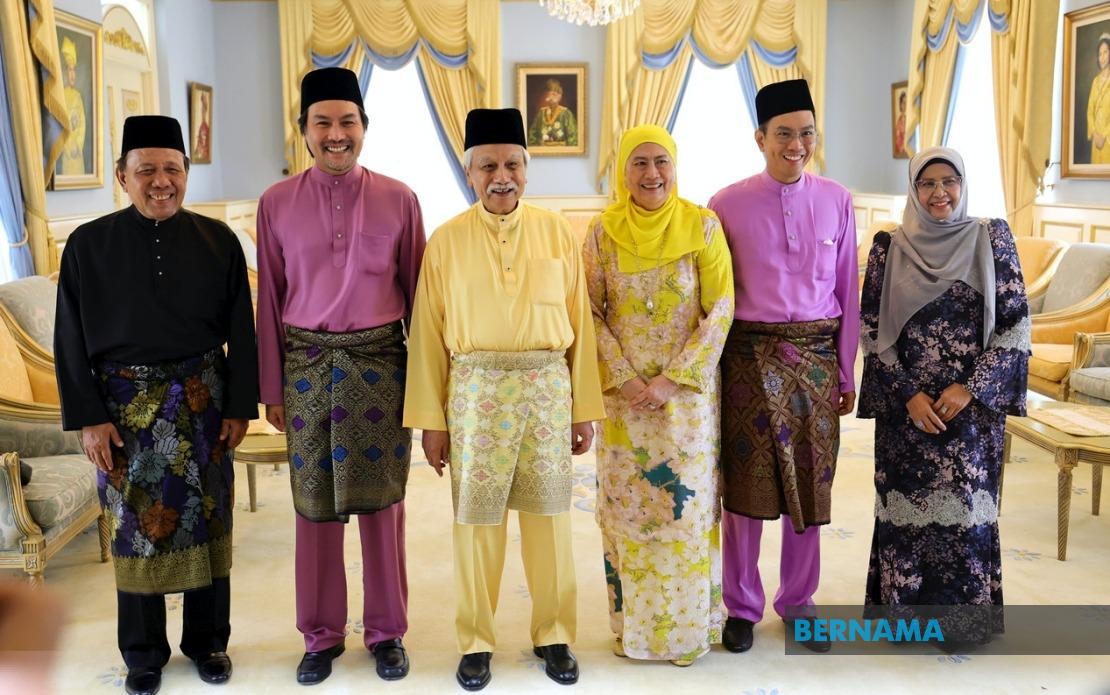
Negeri Sembilan's newly sworn-in Menteri Besar Datuk Ismail Lasim has signalled that the composition of the state executive council should be resolved within days, with Friday emerging as the target deadline for presenting the finalised structure to the Sultan. Speaking at his inaugural press conference in Kuala Pilah on August 2, Lasim indicated that the process would first require alignment with Barisan Nasional leadership before the proposed appointments are formally submitted to Yang Dipertuan Besar Tuanku Muhriz Tuanku Munawir for royal consent.
The timeline reflects both procedural necessity and the urgency expressed by the palace itself. Lasim noted that Tuanku Muhriz has made clear his preference for swift resolution of the administrative matter, recognising that government formation remains incomplete without a functioning executive council. The compressed schedule underscores the practical pressure facing a new administration to establish its operational framework and begin addressing constituent needs without prolonged institutional limbo.
Lasim, who represents Juasseh in the State Legislative Assembly, took his oath of office earlier on August 2 at Istana Besar Seri Menanti before the Sultan in a formal ceremony. His elevation follows Negeri Sembilan's state election held on August 1, in which the Barisan Nasional coalition secured 18 of 36 contested seats while Perikatan Nasional won seven seats, collectively enabling both coalitions to command a commanding two-thirds majority in the assembly. The election involved 103 candidates competing across 36 constituencies, establishing a clear mandate for BN-led governance with PN support.
Crucially, Lasim plans to meet separately with UMNO president Datuk Seri Dr Ahmad Zahid Hamidi to discuss potential inclusion of Perikatan Nasional representatives in the executive council lineup. This consultation signals the coalition arrangement's nuances—while BN dominates assembly numbers, the architectural accommodation of PN members in the state cabinet would reflect negotiated power-sharing and signal coalition cohesion to broader Peninsular Malaysian politics, where such arrangements carry implications for federal-level cooperation.
The composition of Negeri Sembilan's cabinet will necessarily account for representation across BN's component parties, not solely UMNO but also MCA and MIC, whose assembly members require appropriate consideration in portfolio allocation. These dynamics introduce a layer of complexity beyond simple majority arithmetic; cabinet formation becomes an exercise in maintaining internal BN unity while simultaneously demonstrating goodwill toward PN partners. Lasim's repeated emphasis on consultative processes reflects awareness that missteps in portfolio distribution could create friction within or between coalitions.
On the question of executive council size, Lasim expressed a preference for maintaining the established 10-member structure rather than expanding the administrative apparatus. This represents a pragmatic governance stance, suggesting that effective state administration need not require unwieldy cabinet expansion. The decision to retain the proven model also economises on ministerial salaries and avoids the appearance of bloated government during a period when economic pressures affect ordinary Malaysians. Such restraint carries symbolic value in demonstrating responsible stewardship of public resources.
Portfolio allocation remains another critical variable still under discussion. Lasim emphasised that specific ministerial assignments would emerge only after consultation with party leadership has concluded, suggesting that existing power brokers retain significant influence over which assemblymembers receive which portfolios. This consultative framework, while potentially time-consuming, helps prevent the sense that a newly appointed Menteri Besar unilaterally wields executive prerogative—a perception that could generate resentment within coalition structures where multiple power centres demand recognition.
The relationship between this state-level cabinet formation and broader Malaysian politics warrants attention. Negeri Sembilan's election result, in which BN recovered significant ground while PN maintained presence, mirrors broader electoral patterns across recent Malaysian contests. The state's willingness to embrace PN participation in executive functions, rather than excluding the opposition entirely, suggests a maturing political culture where coalitions pragmatically seek stability through inclusive rather than purely adversarial approaches. This contrasts with some other state formations and may reflect lessons from earlier federal-level coalition experiments.
Lasim's articulated priorities emphasise placing popular welfare at the centre of his administration's agenda. As a government freshly endorsed through electoral processes, the implicit social contract demands responsiveness to constituent concerns—a principle Lasim presented as foundational to long-term state development strategy. This framing positions the cabinet formation not merely as an internal political exercise but as instrumental to delivering tangible improvements in public services, infrastructure, and economic opportunity across Negeri Sembilan's districts.
The August 1 election results themselves suggest Negeri Sembilan voters sought clear BN leadership while maintaining PN as a secondary force—a nuanced verdict that neither party can entirely dismiss. By accommodating PN within the executive structure, Lasim honours that electoral balance and potentially strengthens cabinet resilience. Should either coalition component face internal turbulence, the presence of both reduces vulnerability to sudden parliamentary instability. Conversely, the inclusive approach signals to voters that winning coalitions can govern maturely without vindictive exclusion of substantial opposition groups.
With the finalisation timeline approaching, Negeri Sembilan's political machinery now faces a compressed decision-making cycle. Multiple consultative layers—Barisan Nasional party discussions, UMNO presidential input, Yang Dipertuan Besar's approval process, and Perikatan Nasional coordination—must sequence effectively to meet the Friday deadline. Any slip in these interconnected discussions could extend the formation process into the following week, delaying the administration's capacity to pivot toward substantive governance. The institutional pressure to deliver timely results adds urgency to ongoing negotiations behind the scenes.
The Negeri Sembilan formation process ultimately illustrates how contemporary Malaysian politics requires coalition builders to balance multiple competing pressures—party loyalty, coalition partner expectations, royal institutional preferences, and electoral mandates. Lasim's navigation of these crosscurrents during his first days as Menteri Besar will establish templates for how the new state government approaches governance more broadly. Should cabinet formation progress smoothly and meet the stated timeline, it would establish momentum for broader administrative implementation and enhance public confidence in the coalition's organisational competence.

