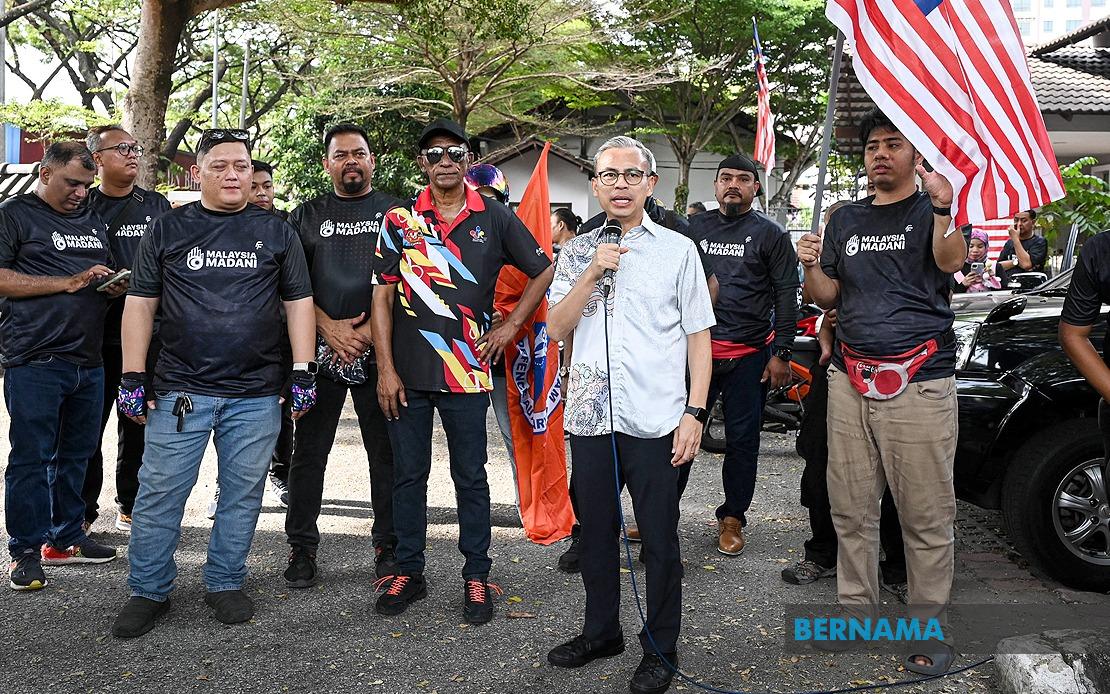
Nearly 300 motorcyclists converged on Kuala Lumpur's Lembah Pantai constituency on the eve of Malaysia's National Day for a spirited convoy celebrating unity and national pride. The Lembah Pantai Kembara Merdeka Convoy represented a deliberate effort by local leadership to harness the symbolic power of collective movement—both literally and metaphorically—to bind together the diverse residents of one of the capital's most cosmopolitan parliamentary districts.
Communications Minister Datuk Seri Fahmi Fadzil, who represents Lembah Pantai, framed the event as more than a ceremonial ride. He positioned the convoy as a demonstration of Malaysia's multicultural identity at a moment when national celebrations often emphasise symbols of unity. The minister's emphasis on bringing "people from diverse backgrounds" together resonated with the historical makeup of Lembah Pantai, a constituency that has long served as a microcosm of Malaysia's plural society, encompassing urban settlements, kampung communities, and a significant cross-section of the nation's ethnic and religious groups.
Fahmi's remarks during the programme highlighted a recurring theme in Malaysian political discourse: the notion that friendship and shared purpose can transcend ethnic and religious lines. He stressed that residents of Lembah Pantai maintain genuine friendships across communal boundaries, suggesting that such relationships provide a foundation for broader national cohesion. This emphasis on the personal dimension of unity—friendships rather than merely constitutional or institutional arrangements—reflects a grassroots approach to nation-building that extends beyond official proclamations.
The convoy's physical route traced a deliberate path through Lembah Pantai's diverse neighbourhoods, beginning at Taman Seri Sentosa and winding through five designated pit stops before terminating at Bangsar LRT station. The inclusion of Kampung Pasir, IWK Eco Park, and Vista Angkasa in Kampung Kerinchi ensured that the procession moved through both established residential areas and developing communities, symbolically affirming that national celebrations and patriotic sentiment belong equally to all residents regardless of their neighbourhood's economic status or demographic composition.
A particularly symbolic element of the convoy involved the distribution of the Jalur Gemilang, Malaysia's national flag. At each pit stop, participants handed over flags to representatives of Resident Representative Councils and community leaders, transforming what could have been a routine ceremonial gesture into a deliberate transfer of patriotic responsibility. This decentralised distribution acknowledged that patriotism cannot be imposed from above but must be embraced and championed by local communities themselves. By placing flags into the hands of neighbourhood representatives, the event implicitly recognised the role of grassroots leadership in sustaining national spirit.
The choice of motorcyclists as the primary participants merits consideration beyond mere logistical convenience. Motorcycles represent an accessible mode of transportation across Malaysian society, neither exclusive to the wealthy nor inaccessible to those of modest means. The participation of nearly 300 riders therefore reflected a cross-section of Lembah Pantai's working and middle-class residents, lending the convoy an authenticity that might be absent from events dominated by corporate floats or official motorcades. The motorcycle community's visible presence on Malaysian streets also signalled that patriotism encompasses the everyday lives of ordinary Malaysians, not merely ceremonial occasions attended by political elites.
Fahmi's expressed hope that the bonds forged during the convoy would extend into sustained community programming reflects awareness that single events, however well-intentioned, rarely produce lasting social cohesion. His emphasis on future collaborative activities—both celebratory and welfare-oriented—suggested recognition that unity requires repeated reinforcement through regular interaction and shared purpose. The minister's commitment to ongoing initiatives encompassing both festive occasions and practical community assistance indicated an understanding that patriotism flourishes when paired with tangible improvements to residents' daily lives.
The Merdeka eve timing carried particular significance. As Malaysia prepares to commemorate its National Day, constituencies across the country undertake their own celebrations and reflections. Events like the Lembah Pantai convoy remind Malaysians that Independence Day observances need not remain confined to official ceremonies or mass gatherings in city centres. Instead, grassroots celebrations conducted within specific parliamentary constituencies allow residents to connect national pride with local identity, recognising that Malaysia's sovereignty encompasses countless communities, each with its own character and composition.
For observers monitoring social cohesion in urban Malaysia, the Lembah Pantai convoy exemplifies the ongoing challenge of maintaining unity amid rapid urbanisation, demographic change, and occasional communal tensions. That a communications minister would personally lead such an initiative underscores government acknowledgement of the importance of regular, visible commitment to intercommunal engagement. The convoy's format—highly visible, accessible to ordinary residents, explicitly celebrating diversity—offers a model that other constituencies and communities might adapt or replicate.
The event also reflects broader patterns in Malaysian political culture, wherein parliamentary representatives increasingly organise local programmes designed to strengthen constituency bonds and project imagery of unity. As Malaysia navigates polarisation on various issues, efforts to build tangible community connections at the neighbourhood level carry weight beyond their immediate symbolic value. The Lembah Pantai convoy thus stands as one modest but meaningful manifestation of the ongoing effort to translate Malaysia's constitutional commitment to unity into lived experience among residents of diverse backgrounds sharing common urban space.

