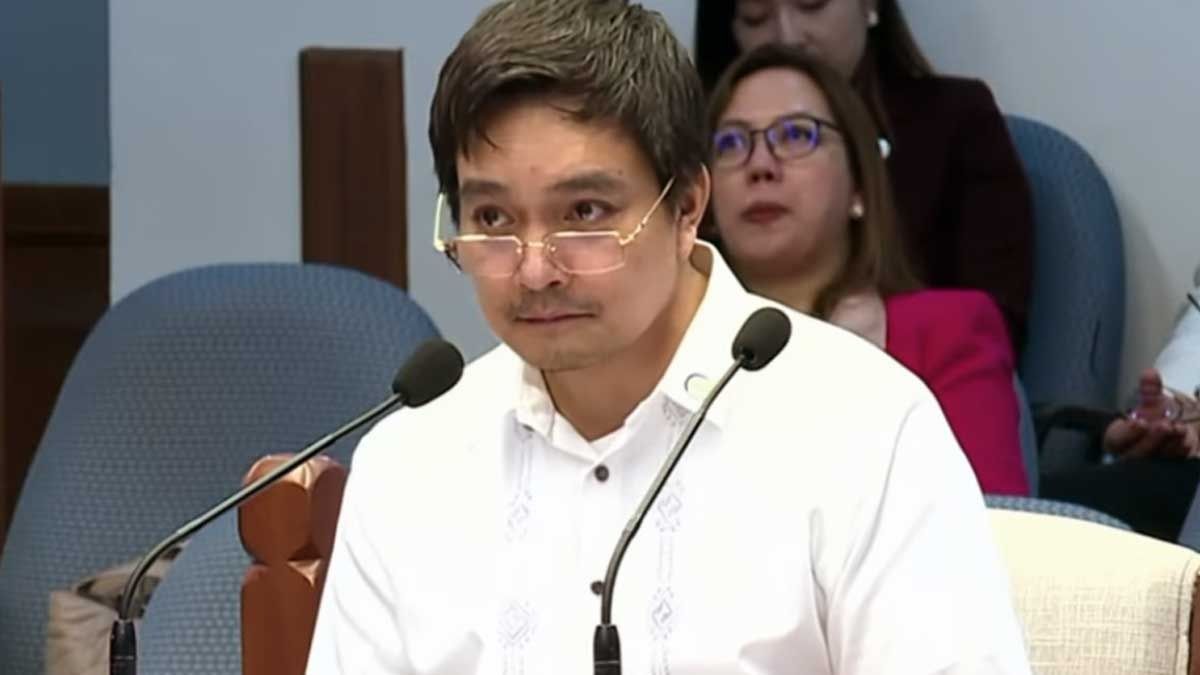
The head of the National Bureau of Investigation's Crime Division returned to the witness stand in Vice President Sara Duterte's impeachment trial on Tuesday to defend his investigative findings, arguing that evidence collected during his agency's probe pointed to her involvement in contracting someone to assassinate President Ferdinand Marcos Jr., despite conceding he possessed no eyewitness account of such an arrangement.
Jeremy Lotoc's testimony centred on statements Duterte made during a public online media briefing on November 23, 2024, when she made remarks about harming the president, first lady Liza Araneta-Marcos, and former House Speaker Martin Romualdez. Those comments became the basis for the fourth article of impeachment lodged against her. Throughout a pointed cross-examination, Duterte's defence lawyer Mark Vinluan attempted to establish that Lotoc's conclusions exceeded what the actual evidence could support, a tactic that eventually prompted the trial's presiding officer to intervene in the increasingly contentious exchange.
When pressed directly by Vinluan about whether he possessed personal knowledge that Duterte had engaged someone to kill the president, Lotoc acknowledged the distinction between his investigative belief and what he could testify to from direct observation. "We do believe that the Vice President had contracted [someone], but I don't have personal knowledge, if that is the personal knowledge you want to know about," he stated. However, he immediately qualified this admission by emphasizing that the NBI's belief rested upon evidence the agency had accumulated through its investigation, suggesting that circumstantial findings rather than direct testimony formed the foundation of the prosecution's case.
The courtroom proceedings became increasingly heated when Vinluan questioned whether Duterte's various corruption allegations mentioned in the same video against named individuals were factually accurate. Lotoc confirmed the "existence of those utterances," leading Vinluan to suggest the witness had thereby admitted that certain congressmen were corrupt. This apparent trap triggered objections from private prosecutor Amando Ligutan, who characterized Vinluan's interpretation as a "foul side remark" that twisted the witness's words. The intervention by Senator Francis "Chiz" Escudero, who presided over the trial, underscored growing frustration with the adversarial tactics, prompting him to remind both counsels: "This is not a college debate."
The tension escalated further when Vinluan pressed Lotoc on the logical consequence of his own testimony. If the NBI investigator lacked personal knowledge that Duterte made assassination threats, then by extension, he also possessed no personal knowledge that she had contracted an assassin. Lotoc initially attempted to reference the Vice President's own remarks in the video, but Vinluan cut him off, demanding a simple yes or no response. After Escudero again intervened to restore order and direct the witness to answer directly, Lotoc complied, acknowledging the defence's point. Yet he immediately reasserted that he did believe Duterte's statement about contracting someone based on "the pieces of evidence that we've gathered."
The distinction between belief grounded in circumstantial evidence and proof beyond reasonable doubt appeared to be the central battleground. Lotoc's position essentially rested on an inferential chain: the Vice President made statements about harming specific individuals; the NBI's investigation gathered materials suggesting she possessed the means and intent to act on those statements; therefore, the evidence supported an inference that she had contracted someone to carry out the threats. However, this argumentative structure left room for Vinluan to exploit, highlighting that inference is not equivalent to direct evidence of criminal conspiracy.
Senate President Sherwin Gatchalian subsequently probed Lotoc about what specific evidence demonstrated that Duterte possessed the capability to execute her alleged threats. The witness's initial response—that her position as Vice President itself constituted relevant capability—drew immediate pushback from Gatchalian, who reasoned that holding high office does not automatically confer capacity to commit murder. Pressed further on what concrete evidence the NBI had assembled to support its conclusions, Lotoc pivoted to introducing the international legal troubles of Duterte's father, former President Rodrigo Duterte. The elder Duterte currently faces charges before the International Criminal Court regarding alleged extrajudicial killings perpetrated during his administration's aggressive war on drugs.
By invoking the ICC case against her father, Lotoc attempted to establish that Sara Duterte's family background and her father's documented involvement in extrajudicial operations provided circumstantial evidence of her own capability and willingness to resort to violence. This argumentative move revealed the prosecution's strategy of building a character-based inference about the Vice President's propensity for harm, rooted in her family's historical associations with controversial law-and-order operations. However, it also underscored a fundamental weakness: the case against Duterte appeared to rest significantly on inference, insinuation, and contextual factors rather than direct evidence of conspiracy.
The impeachment trial has attracted considerable attention throughout the Philippines and the region given the extraordinary nature of the proceedings and the dramatic statements that triggered them. The trial represents a rare constitutional mechanism for addressing allegations against a sitting Vice President, placing the Philippine Senate in the unusual position of serving as both judge and jury in a case involving the nation's second-highest elected official. For Malaysian observers and other Southeast Asian watchers, the trial illustrates the volatile dynamics that can emerge within presidential systems when executive dysfunction and personal animosity between top office-holders threaten institutional stability.
The evidence question continues to occupy centre stage as the trial progresses. Duterte's defence team has consistently challenged the prosecution's ability to translate her controversial statements into actionable proof of criminal conspiracy. The distinction between intemperate remarks made in anger or during political disputes, even remarks concerning harm to specific individuals, and actual contractual agreements to commit assassination remains legally and factually significant. Courts across common-law jurisdictions have long recognized that inflammatory speech, however dangerous or inappropriate, does not automatically constitute conspiracy or solicitation of murder absent some corroborating evidence of actual agreement or substantial steps toward execution.
Lotoc's testimony, while asserting investigative confidence in the links between Duterte and an alleged kill plot, simultaneously revealed the prosecutorial challenge in transforming statements and contextual circumstances into proof sufficient to sustain impeachment charges. The NBI director's repeated acknowledgment that he lacked personal knowledge of any assassination contract, combined with his reliance on inference and family background to establish capability, suggests the prosecution may struggle to overcome the reasonable-doubt standard that typically applies in criminal proceedings, even within the House of Representatives' impeachment framework.
As the trial continues, the fundamental question persists: whether Duterte's shocking public statements, combined with investigative findings about her circumstances and family history, constitute sufficient grounds for her removal from office. The Senate's eventual judgment on this matter will have implications not only for the Philippines but for broader questions about executive accountability and the proper uses of impeachment power within regional presidential democracies.

