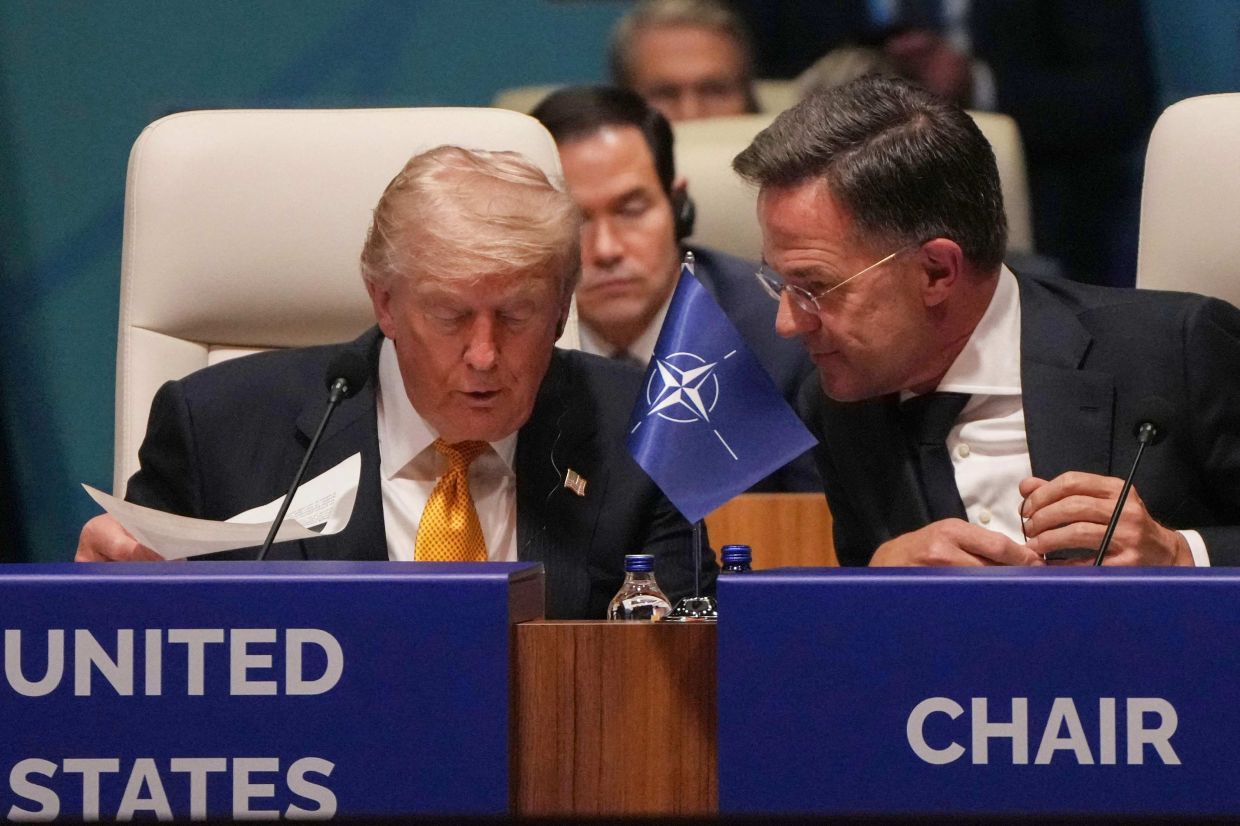
NATO Secretary General Mark Rutte has moved to project an image of unprecedented alliance unity following this week's summit in Ankara, Turkey, even as underlying tensions over defence spending and strategic priorities continue to simmer between Washington and its transatlantic partners. Speaking after the North Atlantic Council meeting of leaders on Wednesday, Rutte acknowledged that the gathering had produced tangible security outcomes, including procurement commitments exceeding US$50 billion designed to help NATO members meet an ambitious defence spending target of five per cent of GDP by 2035—a benchmark established at last year's summit in The Hague.
These substantial investment commitments span a comprehensive modernisation agenda across all operational domains. Member states have pledged funds to enhance deep precision strike capabilities, integrated air and missile defence systems, autonomous and uncrewed platforms, artificial intelligence applications, and advanced intelligence-gathering infrastructure. The alliance is also prioritising the development of interoperable warfighting systems that allow American and European forces to operate seamlessly together, alongside the adoption of sophisticated AI models for military planning and operations. In total, NATO members have committed €70 billion (US$80 billion) in military equipment, training assistance, and operational support, alongside reaffirmed backing for Ukraine's ongoing defence against Russian invasion.
Rutte's characterisation of Trump as a transformative leader who has strengthened NATO's resolve reflects a deliberate diplomatic strategy aimed at managing the US president's well-documented scepticism towards the alliance. Trump has repeatedly expressed frustration with what he views as insufficient European contributions to collective defence, repeatedly emphasising that the United States has invested "trillions" of dollars in NATO operations and infrastructure. The summit conversation was further complicated by the US administration's broader strategic interests beyond Europe. Trump sought allied support for potential military action against Iran and for efforts to reopen the Strait of Hormuz following Iranian blockade measures, yet found little enthusiasm from NATO partners for direct involvement in Middle Eastern confrontations.
The allies' reluctance to support Washington's Iran strategy, combined with the US announcement of a comprehensive review of American troop deployments across Europe, has created visible friction within the alliance structure. Trump made no secret of his dissatisfaction, telling assembled leaders that he was "not happy" with their unwillingness to commit resources to American regional priorities. Rutte's response emphasised that these kinds of "forceful debates" are normal within NATO's 32-member structure and should not be misinterpreted as fundamental discord. He argued that Trump's persistent demands for increased European military spending have paradoxically strengthened the alliance by creating incentives for serious defence investment across the continent.
The formal declaration issued by NATO leaders sought to address Iran concerns through diplomatic language rather than military commitment. Member states reiterated their position that Iran must never acquire nuclear weapons and called on Tehran to respect international freedom of navigation obligations in the Strait of Hormuz. However, notably absent from the declaration was any NATO-wide commitment to military involvement in efforts to enforce those principles. Rutte sidestepped direct questions about whether NATO should escalate involvement in Iran-related conflicts, instead emphasising that American military operations benefit from European military infrastructure and bases that serve broader US strategic interests by helping contain threats such as Russian expansionism.
Rutte's diplomatic approach reflects his broader objective of keeping the Trump administration fully engaged with NATO structures and commitments. Analysts have noted that the Secretary General appears keenly aware that Trump could reduce or withdraw American military support for Europe, an outcome that would fundamentally weaken the alliance. Consequently, Rutte has adopted a strategy of validating Trump's core complaint—that European nations have historically underfunded defence—while simultaneously reframing this as a collective opportunity rather than an alliance failure. He described Trump's pressure on defence spending as a "huge encouragement" that has united member states in recognising their security obligations.
The summit also addressed broader geopolitical questions extending beyond the traditional European theatre. When questioned about Trump's statements regarding Greenland—which the US president has suggested should be under American control—Rutte acknowledged Trump's underlying point that Russia and China pose genuine security risks through Arctic access routes. Rather than dismissing the Greenland comments as fanciful, Rutte reframed the discussion around Arctic security cooperation, emphasising NATO's responsibility to ensure the region remains secure through enhanced coordination among Arctic member states.
Perhaps most significantly for Indo-Pacific nations and for regional stability, Rutte articulated a vision of NATO that increasingly extends beyond Europe's geographical boundaries. When addressing the notable absence of most Indo-Pacific Four leaders—Australia, Japan, South Korea, and New Zealand—Rutte argued their physical presence at the summit was unnecessary. However, he emphasised the "important" and growing interconnection between European and Indo-Pacific security challenges. He highlighted his meeting with South Korean President Lee Jae Myung as exemplifying the alliance's expanding reach, suggesting that NATO's future involves closer defence industrial cooperation, technology standardisation alignment, and defence spending coordination across both regions.
This Indo-Pacific pivot reflects a fundamental shift in NATO's strategic outlook. The alliance increasingly recognises that security challenges in Europe and Asia are interconnected, particularly regarding threats from China and Russia. Rutte envisioned a future where NATO members collaborate on defence industry priorities, innovation standards, and military spending approaches that address challenges spanning multiple geographic theatres. This represents a significant expansion of NATO's traditional remit and carries particular relevance for Southeast Asian nations concerned about regional stability and the intersection of great power competition.
Rutte's framing of the summit outcome as "NATO 3.0" encapsulates his vision of continuous alliance adaptation and modernisation. He emphasised that the alliance's core function—protecting approximately one billion people across member territories—remains paramount, but the methods and structures through which NATO operates must evolve continuously. The concept of a "stronger Europe in a stronger NATO" suggests that enhanced European military capability and defence investment need not undermine American leadership but rather create more capable allies that can shoulder greater responsibility for their own security.
For Malaysia and other Southeast Asian nations, the implications of NATO's evolution carry multiple dimensions. The alliance's increasing focus on Indo-Pacific security dynamics, supply chain resilience, and emerging technologies like artificial intelligence suggests that transatlantic security decisions will increasingly influence regional stability. Additionally, NATO's emphasis on alliance interoperability and standardised defence systems may shape global military procurement patterns and technology standards that affect Southeast Asian countries' own defence planning and equipment acquisition decisions.
The Ankara summit ultimately reveals an alliance that remains fundamentally cohesive on core security commitments—particularly regarding Russia and collective defence obligations—yet increasingly fractured on peripheral questions regarding defence spending distribution, Middle Eastern strategy, and the geographic scope of NATO's responsibilities. Rutte's role in managing these tensions, particularly his navigation of Trump's mercurial leadership style, will remain critical to NATO's stability and effectiveness throughout the coming years.

