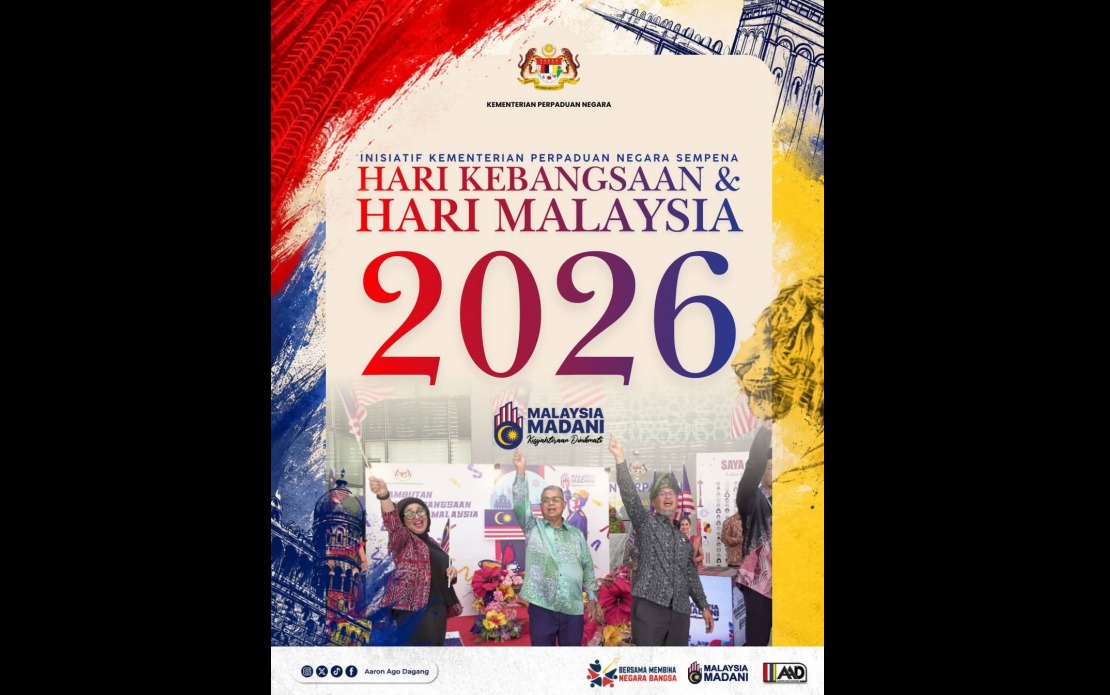
The National Unity Ministry has unveiled an ambitious calendar of 11 programmes designed to mark Malaysia's 2026 National Day and Malaysia Day celebrations with a focus on deepening patriotism and reinforcing national cohesion. Minister Datuk Aaron Ago Dagang outlined the comprehensive slate of events, which encompasses activities centring on the nation's founding principles, historical narratives and cultural heritage. The initiative reflects the ministry's strategic priority of using commemorative occasions as platforms to strengthen the bonds of citizenship across Malaysia's ethnically and religiously diverse population.
Among the centrepiece programmes are the 2026 National Unity Integration Movement, positioned as a flagship engagement initiative, and Malaysia's Merdeka Children Celebration, which targets younger generations as custodians of national values. The ministry is also developing an Exhibition on Independence, a dedicated programme honouring Tun Abdul Razak, the nation's first Prime Minister and architect of early nation-building, and the Pesta Bola Merdeka Exhibition. These activities form part of a deliberate strategy to root contemporary identity-building efforts in historical memory and institutional continuity.
The slate also includes cultural and intellectual engagement formats such as a Night at the Museum programme and the Rukun Negara Oratory Competition. The latter element carries particular significance, as public speaking contests centring on the Rukun Negara—Malaysia's foundational social compact emphasizing belief in God, loyalty to the King, upholding the Constitution, the rule of law, and goodwill towards fellow citizens—offer a mechanism for younger Malaysians to articulate and internalize the nation's constitutional framework. These formats move beyond passive commemoration toward active participation and deliberation.
The timing of these initiatives is contextually important for Malaysia's political and social landscape. With 2026 marking both National Day and Malaysia Day celebrations, the unified promotional effort suggests an intentional effort to reinforce federal cohesion and the inclusive foundations of the Malaysian state. National Day commemorates independence from British colonial rule on August 31, 1957, while Malaysia Day on September 16 marks the formation of the Malaysian federation in 1963 with the incorporation of Sabah, Sarawak and Singapore. Bundling programmes around both occasions allows the ministry to address narratives of national formation across different temporal moments and territorial configurations.
Datak Aaron Ago Dagang's framing of these initiatives emphasizes alignment with broader nation-building aspirations, specifically targeting what the ministry identifies as critical dimensions of citizenship: national identity, a sense of belonging, and patriotic attachment to the Malaysian project. By explicitly stating a commitment to embracing Malaysia's diversity of ethnicities, religions, cultures and regions, the ministry signals that strengthened national identity need not come at the expense of pluralism. This rhetorical positioning attempts to address a persistent tension in Malaysia's post-independence trajectory—how to build overarching national symbols and shared civic values without marginalizing or homogenizing the distinct communities that constitute the nation.
The Rukun Negara itself carries historical weight in this context. Formulated in the aftermath of the 1969 racial riots, the Rukun Negara represented an attempt to establish consensual principles that could transcend communal divides. Its prominence in the 2026 calendar—both through the oratory competition and implicit reference in the minister's statement—suggests the ministry is consciously drawing on this framework as a unifying reference point. For Malaysian readers, this emphasis may evoke both the stability the Rukun Negara has provided and ongoing debates about whether it adequately addresses contemporary social grievances and inequalities.
For Southeast Asian observers, Malaysia's strategic investment in heritage-based nation-building through government-organized programmes reflects a broader regional pattern. Similar initiatives exist across ASEAN states, though the specific configuration—blending historical commemoration, youth engagement, and civic education—reflects Malaysia's particular constitutional and demographic circumstances. The emphasis on integration and unity programming also speaks to Malaysia's concern with maintaining cohesion amid periodic communal tensions and political polarization, challenges that other Southeast Asian nations navigate differently.
The ministry's commitment to making further information available through digital platforms, specifically Facebook, indicates an awareness of how younger citizens access information and engage with public messaging. This multimodal approach—combining in-person exhibitions, competitions and cultural events with digital promotion—reflects contemporary practice in public engagement around national identity. However, the effectiveness of such programmes in reaching digitally marginalised populations or in translating patriotic messaging into sustained civic engagement remains an open question that Malaysian policymakers continue to grapple with.
From a governance perspective, the coordination of 11 distinct initiatives under unified thematic umbrellas requires significant administrative capacity and cross-sectoral coordination. The National Unity Ministry will need to work with cultural institutions, educational bodies, local authorities and potentially private sector partners to execute this calendar. Such coordination offers opportunities for demonstrating whole-of-government commitment to unity-building but also presents execution risks, particularly given Malaysia's experience with ambitious national programmes that sometimes encounter implementation delays or uneven quality across regions.
The programmes outlined also implicitly acknowledge that national identity and patriotism require continuous cultivation rather than remaining self-sustaining. By dedicating substantial resources to anniversary celebrations specifically framed around strengthening attachment to nation, the ministry operates from a premise that active, repeated engagement with national narratives, history and symbols remains necessary to maintain civic cohesion. This reflects broader recognition across governments that post-independence generations require different engagement strategies than those who lived through the independence struggle directly.
For Malaysian citizens, the 2026 initiatives represent an opportunity to engage with official narratives of national history and identity while also offering venues for individual and community participation in defining what national belonging means. The inclusion of competitive and performative elements—the oratory competition, exhibitions and celebrations—creates spaces where citizens can voice their understanding of Malaysian identity rather than passively receiving ministerial messaging. The success of these programmes will partly depend on their capacity to balance top-down nation-building aspirations with genuine space for grassroots expression and critical engagement with national narratives.
Looking forward, the scale and scope of the 2026 programming suggests that the National Unity Ministry views the anniversary celebrations as pivotal moments for reinforcing civic commitment and national cohesion. As Malaysia navigates ongoing social, economic and political transitions, such deliberate investment in identity-building and heritage commemoration reflects official priority-setting around what binds the nation together. Whether these programmes ultimately strengthen attachment to nation or remain largely ceremonial will depend on their implementation quality, reach across diverse communities, and resonance with citizens' lived experiences of Malaysian citizenship.

