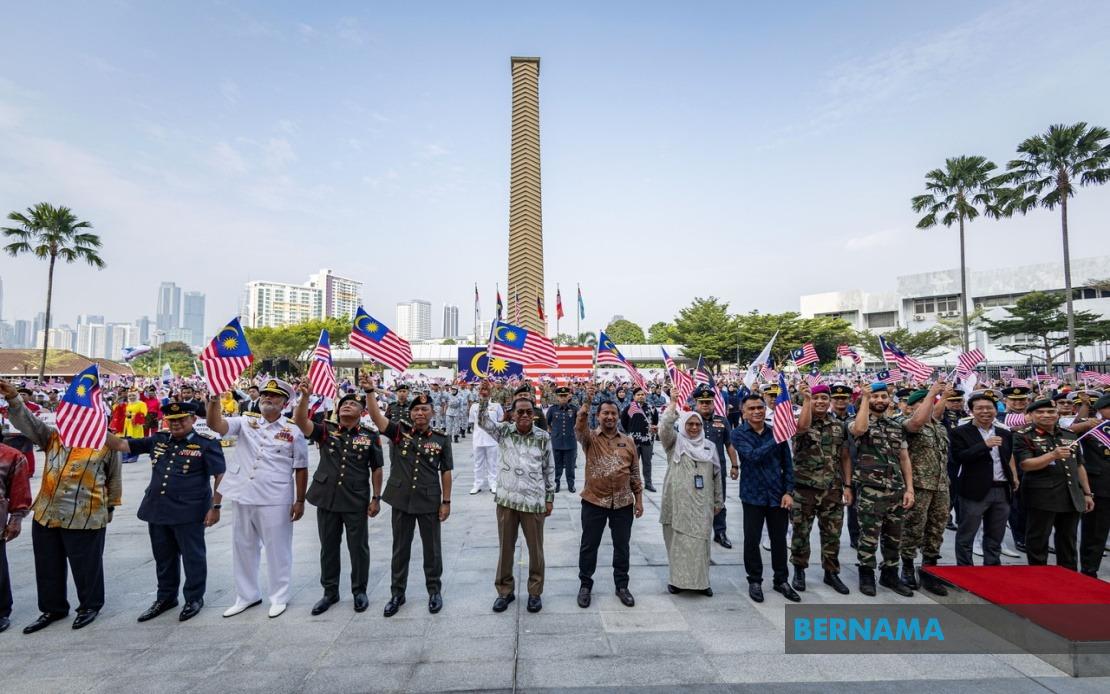
Defence Minister Datuk Seri Mohamed Khaled Nordin has cautioned against weaponising Malaysia's National Day and Malaysia Day celebrations for political purposes, urging citizens instead to use these occasions as moments to reaffirm their bond with the nation. Speaking at the Defence Ministry's launch of National Month and Fly the Jalur Gemilang campaign in Kuala Lumpur on August 27, Mohamed Khaled drew a distinction between genuine patriotic expression and the politicisation of national symbols, warning that allowing festivities to become platforms for grievances undermines their fundamental purpose.
The Defence Minister's intervention reflects growing concerns within government circles that commemorative occasions are increasingly being co-opted by various groups to advance specific agendas rather than serve as unifying moments. His comments appear directed at civil society organisations and advocacy groups that have called for boycotts of the celebrations, citing unresolved issues they contend demand government attention. By framing such boycotts as emotionally-driven rather than principled, Mohamed Khaled suggests that national celebrations should transcend the day-to-day political disagreements that inevitably characterise any functioning democracy.
Mohamed Khaled specifically referenced the Rohingya humanitarian crisis as an example of an issue being conflated with National Day observances, indicating that even pressing humanitarian concerns should not overshadow the broader imperative to celebrate national identity. This positioning reflects a deliberate choice to prioritise national cohesion over what officials view as narrow grievance politics. The stance raises important questions about the relationship between patriotic expression and the airing of legitimate public concerns—a tension that remains unresolved in Malaysia's political landscape.
Central to the Defence Minister's argument is the assertion that Malaysia represents a distinctive model of peaceful coexistence built through compromise and mutual respect among its diverse ethnic and religious communities. He emphasised that these foundational values must be continuously reinforced through deliberate acts of national affirmation. From this perspective, allowing National Day to become fragmented along lines of political disagreement risks eroding the very consensus that permits Malaysia's multiethnic society to function. The invocation of harmony and mutual understanding serves as both a reminder of past achievements and an implicit warning against forces that might threaten this delicate balance.
The call to fly the Jalur Gemilang with pride and gratitude takes on additional significance given recent years' debates about national symbols and their meaning. For some Malaysians, the flag represents unqualified patriotism and national pride. For others, particularly those critical of government policies, displaying national symbols can feel complicated by concerns about what they represent in practice. Mohamed Khaled's emphasis on gratitude alongside pride suggests an understanding that patriotism encompasses appreciation for the country as it exists, with all its imperfections, rather than as a platform for demanding change.
The Defence Minister's remarks also function as a call for respect and recognition of security personnel and armed forces members who serve at Malaysia's borders. By linking National Day observance to remembrance of these sacrifices, he situates patriotic celebration within a framework of national security and defence. This connection implicitly suggests that questioning government policies or organising boycotts, however legitimate such actions might be in a democratic context, risks undermining morale and public support for the security establishment. The framing thus creates a hierarchy in which security concerns supersede other considerations.
Mohamed Khaled's intervention occurs against a backdrop of Malaysia's ongoing political turbulence and competing visions for the nation's direction. Various stakeholders—from Islamist parties to secular reformists, from rural constituencies to urban centres—hold differing views about what Malaysia should become. National Day, theoretically above such partisan division, increasingly becomes a battleground where these competing visions clash. The Defence Minister's attempt to reclaim the celebration as a space for unity rather than contestation reflects official anxiety about national fragmentation along ideological lines.
The practical implications of such messaging are mixed. While calls for national unity undoubtedly resonate with many Malaysians who fear the consequences of deepening polarisation, others contend that pressing social and political issues cannot simply be bracketed during national celebrations. Human rights advocates and humanitarian organisations argue that moments of national gathering provide opportunities to highlight overlooked injustices and mobilise public opinion. From this perspective, the Defence Minister's position amounts to asking certain groups to suppress legitimate concerns for the sake of national optics.
For Malaysian readers and Southeast Asian observers, Mohamed Khaled's remarks illustrate the ongoing tension between nation-building and democratic expression in plural societies. How Malaysia navigates this balance—whether through integration of dissent into national narratives or through compartmentalisation that protects ceremonial occasions from political contestation—will shape both the country's internal cohesion and its regional standing. The region watches closely as established democracies grapple with these questions, particularly given rising authoritarian pressures elsewhere in Asia.
Looking ahead, the Defence Ministry's National Month campaign will likely emphasise themes of unity, sacrifice, and shared Malaysian identity across ethnic and religious lines. Such campaigns serve important functions in reminding citizens of common ground, yet their effectiveness depends partly on whether ordinary Malaysians perceive them as genuine invitations to collective reflection or as attempts to suppress legitimate grievances beneath a veneer of patriotism. The success of Mohamed Khaled's appeal ultimately rests on whether government demonstrates through concrete actions that national unity and responsiveness to citizen concerns are not mutually exclusive objectives.

