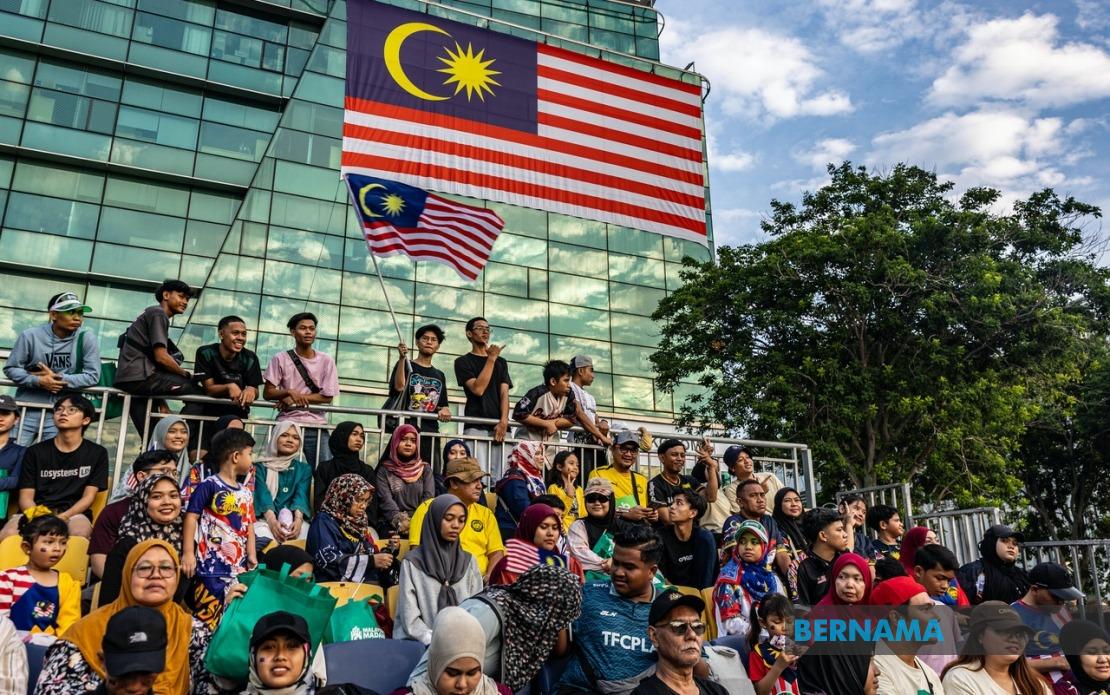
Putrajaya hosted a resounding success on August 31 as the 2026 National Day celebration drew a crowd exceeding all expectations, with over 100,000 Malaysians gathering to mark the nation's 69th year of independence. Communications Minister Datuk Seri Fahmi Fadzil, who chairs the 2026 National Day and Malaysia Day Main Committee, revealed that attendance surpassed the initial projection of 80,000, reflecting substantial public enthusiasm for the occasion despite no major promotional push beyond standard channels.
The gathering represented a cross-section of Malaysian society, with visitors journeying from distant corners of the nation to participate in the festivities. Fahmi specifically acknowledged attendance from Sandakan in Sabah, Johor Bahru in the south, and Jeli in Kedah, highlighting how the event succeeded in drawing Malaysians from peninsula and East Malaysia alike. This geographical diversity underscores the National Day's continued resonance as a unifying occasion across the country's vastly dispersed population, particularly in an era when attendance at national events requires genuine commitment and travel investment from participants.
The successful execution of such a large-scale gathering reflected meticulous coordination among multiple government agencies and departments. Fahmi emphasised that the Department of Environment, Malaysian Meteorological Department and National Disaster Management Agency had worked closely to ensure not only public safety but also optimal conditions for celebration. One particularly notable preparation involved contingency measures such as cloud seeding, demonstrating the level of operational planning required to protect an outdoor event of this magnitude from weather disruptions. The favourable atmospheric conditions throughout the day, achieved partly through these technological interventions, contributed significantly to attendees' comfort and the overall experience.
The parade itself constituted an elaborate demonstration of national unity and institutional pride. Seventy-six contingents marched through Putrajaya, accompanied by twenty-two marching bands and eleven decorated vehicles, collectively representing over 10,800 participants drawn from government agencies, military and uniformed services, government-linked companies, educational institutions from schools through universities, and organised civil society groups. This composition ensured that multiple sectors of Malaysian public life received representation and visibility, reinforcing the message that National Day belongs to all Malaysians regardless of their professional or institutional affiliation.
Several debuts marked this year's parade as particularly distinctive. The Royal Johor Military Force made its first appearance in a National Day celebration, a notable development given Johor's historical significance and the military force's regional prominence. Additionally, a dedicated contingent representing the SEA Games 2027 provided a forward-looking dimension, reminding spectators of Malaysia's upcoming hosting responsibilities and the nation's international sporting commitments. An Orange Economy Sustainability cluster also participated, reflecting the government's emphasis on environmental and economic transition themes beyond traditional national celebration symbolism.
The cultural and artistic components of the celebration showcased Malaysia's rich heritage through contemporary interpretation. A segment titled "Gema Inovasi MADANI" featured percussion performances that merged traditional instruments such as rebana and kompang with innovative arrangements, performed by 150 percussionists and supported by 1,500 human graphic performers. This fusion of traditional and modern reflected deliberate curatorial choices to demonstrate how Malaysia's cultural foundations could adapt and thrive within contemporary contexts, resonating with the broader MADANI framework emphasising harmonious development.
The celebration operated under the unifying theme of "Malaysia MADANI: Kesejahteraan Dinikmati", which translates to shared prosperity and well-being. This messaging served as the ideological centrepiece for the occasion, communicating government priorities regarding development that benefits all Malaysians irrespective of background or status. The emphasis on prosperity distribution rather than mere economic growth rates represented a subtle but significant rhetorical shift in how national achievements were being framed to the public during the celebration.
Beyond the formal parade and ceremonial components, organisers had invested effort in creating an accessible, family-oriented atmosphere that extended the celebration's appeal beyond those primarily interested in institutional pageantry. Anjung Floria hosted displays of national defence assets, allowing visitors to engage directly with military equipment and personnel. The Riuh Merdeka programme at Monumen Alaf Baru provided entertainment and interactive elements. Multiple food vendors scattered throughout the venue offered dining options, transforming the celebration into a broader experiential event that justified families investing time and transport costs to attend.
The finale featured performances by Royal Malaysian Air Force squadrons, with fighter jets, transport aircraft and helicopter formations providing a dramatic aerial conclusion. The closing cultural performance, "Rentak MADANI, Paluan Tradisi", brought together 2,350 participants, ensuring the celebration ended with a substantial demonstration of coordinated performance and national pride. This theatrical architecture, progressing from morning civic ceremonies through day-long activities to an evening climax, reflected contemporary event design principles aimed at maintaining audience engagement throughout extended celebrations.
Fahmi's post-celebration remarks emphasised that the event's success derived from the cooperation of multiple stakeholders and the enthusiasm of ordinary Malaysians who chose to participate. He expressed hope that the celebration would deepen national attachment and commitment to unity among the populace. The absence of reported incidents or disruptions was noted as particularly significant, suggesting that coordinated security and crowd management had functioned effectively despite the substantial attendance. For Malaysian readers, the celebration's success offered tangible evidence of the nation's capacity to organise large public events during a period when such demonstrations of organisational competence carry political significance.
The 2026 National Day celebration ultimately demonstrated that public appetite for participation in national observances remains substantial, provided organisers create accessible, diverse, and family-friendly environments. Attendance exceeding expectations by 25 percent indicates that when celebrations move beyond purely ceremonial components to incorporate entertainment, food, interactive elements, and cultural diversity, Malaysians across geographical and demographic categories will invest their time and resources. This formula may offer instructive lessons for future national events and celebrations, particularly regarding how government communications and civic messaging can reach broad audiences through experiential rather than merely broadcast channels.

