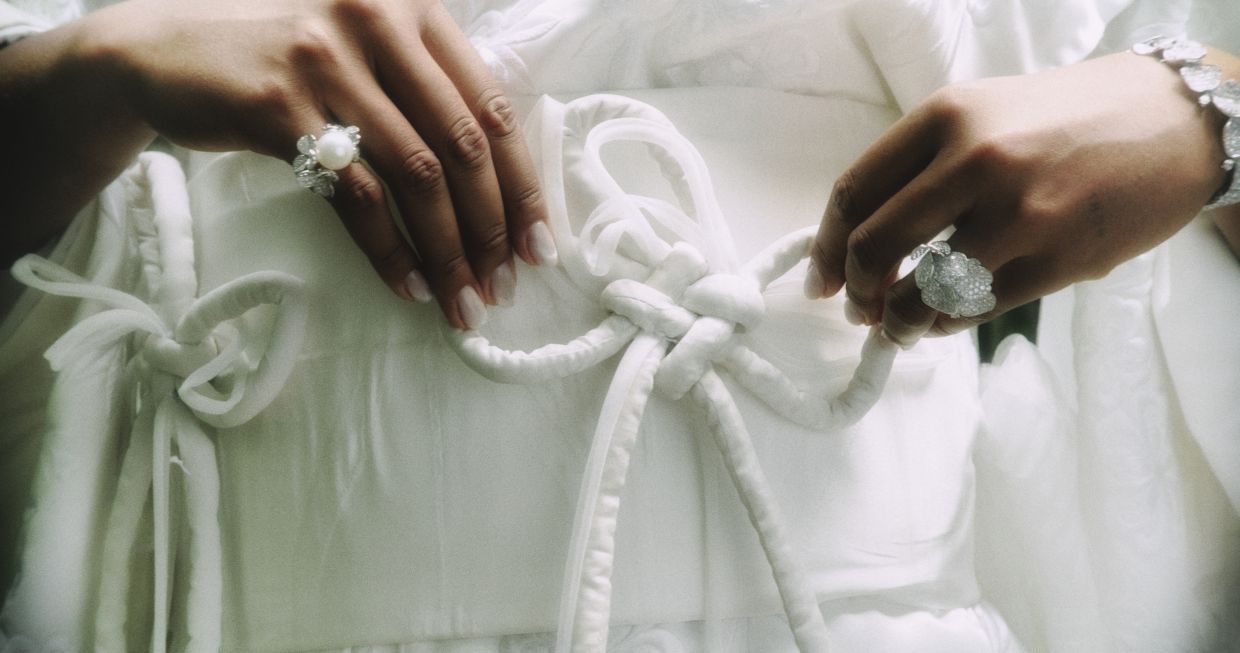
Naomi Osaka has redefined how professional athletes approach tournament presentation, treating her walk-on moments as carefully choreographed fashion statements that rival the competitive drama of the matches themselves. At Wimbledon on June 29, despite navigating a foot injury that cast doubt on her participation, the 14th-seeded competitor—and former world number one—stepped onto Centre Court in a striking all-white ensemble by Hana Yagi, an emerging independent designer from Japan. The gown, titled "Evolving Ceremony," represents far more than standard competition attire; it embodies a deliberate strategy to weave personal identity, cultural significance, and modern design into the very fabric of her tournament presence.
The Wimbledon look drew inspiration from Japan's sartorial heritage, with its silhouette modelled on both the traditional kimono and the junihitoe, the elaborate 12-layer court dress worn by noblewomen during the Heian period between 794 and 1185. What elevated the design beyond mere historical reference was its construction from seven different textiles salvaged and upcycled from vintage kimonos, traditional shiromuku wedding attire, and deconstructed wedding garments. This commitment to sustainability reflects a broader pattern in Osaka's tournament wardrobe decisions, signalling her alignment with environmental consciousness at a time when luxury fashion faces mounting scrutiny over waste and ethical production. Complementing the walk-on dress was a custom Nike performance piece adorned with Japanese kirigami-inspired floral appliques and micro-pleated detailing, which sold out before the tournament commenced, demonstrating the commercial magnetism her fashion choices generate.
The Japanese jeweller Mikimoto provided pearl jewellery to complete the look, creating a comprehensive aesthetic statement that reinforced Osaka's deliberate celebration of her Japanese identity. In a statement, Osaka articulated the philosophy underpinning these choices: "Working with Hana allowed us to celebrate Japanese history and craftsmanship while creating something that feels entirely modern. I love that it feels both powerful and delicate at the same time." This balance between strength and elegance mirrors her positioning within professional tennis—a sport where physical dominance and artistic expression increasingly intersect. The dress design prioritised movement, recognising that any tournament entrance piece must facilitate the explosive athleticism that follows within minutes.
The Wimbledon appearance represents the third chapter in an intentional narrative arc that commenced at the Australian Open in January. When Osaka emerged for that tournament, she wore a Robert Wun creation resembling a jellyfish, complete with a butterfly hat evoking metamorphosis and motherhood—Osaka having become a mother in recent years. The jellyfish aesthetic suggested transformation and vulnerability beneath a striking exterior. Subsequently, at the French Open, she adopted a black corset and dramatic ballgown skirt designed by Kevin Germanier, which nodded to the Eiffel Tower while incorporating upcycled Nike training pieces from her personal archive. Collectively, these three tournament looks establish clear thematic coherence that elevates them beyond individual outfit choices into a deliberate curatorial project.
Across this trilogy of entrances, three substantive themes crystallise with increasing clarity. The first emphasises sustainability, directly addressing mounting environmental concerns within luxury fashion industries by prioritising upcycled and vintage materials. The second involves leveraging her platform to elevate emerging designers—particularly independent creators and what her stylist Marty Harper describes as "new kids on the block." Yagi, now in her twenties, launched her Tokyo-based company after becoming a finalist in the International Talent Support competition in Italy in 2019, and Osaka's collaboration provides precisely the kind of global visibility that smaller design houses struggle to access. The third theme constitutes perhaps the most sophisticated dimension: Osaka is instrumentalising fashion as a personal branding mechanism with greater sophistication than nearly any of her competitors, transforming the tunnel walk from functional pre-match procedure into a narratively charged cultural moment.
The technical execution of these tournament looks involves complexities that casual observers rarely consider. Each gown must simultaneously satisfy contradictory demands: it must project haute couture quality visible from stadium nosebleeds whilst being completely removable within three minutes, and ideally in under one minute, allowing Osaka to transition from fashion moment to competitive readiness as other players unzip warm-up jackets. For the Wimbledon piece, Yagi engineered nine separate dress segments as independently detachable components, with each section carefully designed to shed smoothly and recombine in alternative configurations throughout the tournament progression. This allowed the visual narrative to literally evolve alongside Osaka's advancement through rounds, embodying Yagi's stated concept that "the look would evolve as Naomi progresses."
Yagi's ingenious solution to the extreme time constraint involved strategic deployment of Velcro fasteners, a material choice that demonstrates how practical problem-solving can integrate seamlessly into haute couture construction. The dress incorporates an adjustable train measuring nearly ten feet, an element particularly crucial at Wimbledon where outer courts position players far from the lounge facilities—a distance substantial enough to threaten delicate materials during transit. Such considerations reveal that Osaka's tournament fashion represents not merely aesthetic expression but intricate logistical choreography requiring collaboration between athlete, stylist, and designer to execute within the precise temporal and spatial constraints of professional tennis.
Osaka's approach to tournament presentation has fundamentally shifted the competitive calculus at major championships. Regardless of how any individual tournament concludes, her entrance strategy has already secured what might be termed the attention championship—capturing global focus and media scrutiny before the first serve is struck. This represents a distinctive form of competitive advantage within modern sports, where personal branding increasingly determines sponsorship opportunities, cultural influence, and commercial viability extending far beyond tournament prize money. For Malaysian and Southeast Asian audiences, Osaka's model demonstrates how athletes from the region can similarly weaponise cultural identity and design collaboration to forge distinctive global presences.
The broader implications of Osaka's fashion strategy extend into territory increasingly relevant for sports management and athlete development throughout Asia. By positioning herself as curator rather than mere wearer of designer creations, and by intentionally elevating emerging designers who might otherwise struggle for international recognition, Osaka articulates a vision of sports celebrity that transcends conventional sponsorship relationships. She has effectively established a platform where fashion becomes simultaneously personal expression, cultural commentary, environmental statement, and designer patronage. For emerging markets within Southeast Asia, this template suggests how athletes can leverage their platforms not simply to sell products but to foster creative ecosystems and support independent design communities.
The evolution of Osaka's tournament fashion reflects broader transformations in how competitive sports engage with aesthetics, sustainability, and personal branding in the contemporary moment. Where previous generations of athletes, including tennis legends like Serena Williams, used fashion primarily for personality expression or brand alignment, Osaka has elevated the practice into something resembling curated artistic practice. Her collaborations demonstrate that the pre-match tunnel walk need not function solely as functional uniform change; it can instead operate as a sophisticated medium for storytelling, heritage celebration, and designer promotion. As professional athletes across all sports increasingly recognise the commercial and cultural potency of their entrance moments, Osaka's approach has effectively redefined the competitive field itself, establishing new standards for what championship-level presentation might accomplish beyond the actual athletic contest.

