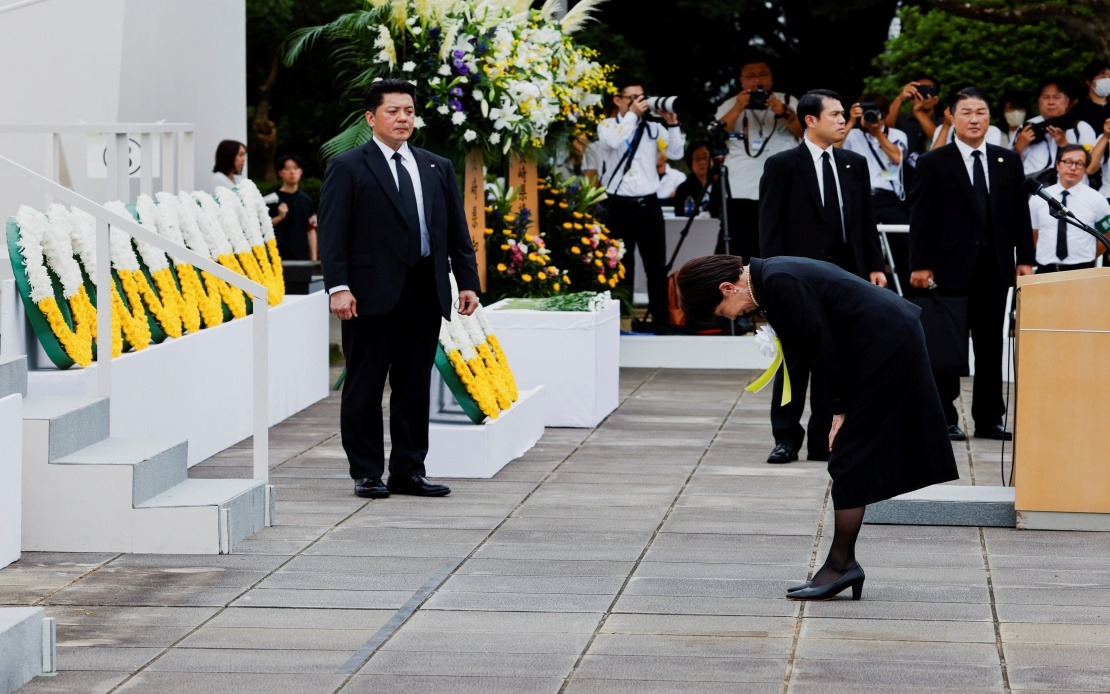
Japan's southwestern city of Nagasaki observed the 81st anniversary of the atomic bombing that devastated the city on August 9, 1945, an occasion that has become increasingly freighted with contemporary significance as nations grapple with questions about nuclear weapons in an era of heightened geopolitical rivalry. The commemoration, which unfolded on Sunday, occurred against a backdrop of intensifying global debate over whether nuclear deterrence remains a viable security strategy or whether the world must redouble efforts to prevent the proliferation of atomic weapons. For many observers across Asia and beyond, the ceremony served as a sobering reminder of nuclear warfare's catastrophic human toll while simultaneously highlighting the complicated calculus nations face when balancing security concerns with the imperative to prevent nuclear conflict.
The solemn observance included a moment of silence at 11:02 a.m., marking the precise moment when the "Fat Man" plutonium device was released from a US bomber and detonated over the city. This timing carries profound symbolic weight, as Nagasaki remains the only place on earth to have experienced nuclear attack during wartime. Mayor Shiro Suzuki used the platform to make an impassioned appeal to world leaders, urging them to pursue genuine nuclear disarmament and emphasizing the incompatibility between human civilization and nuclear weapons. The mayor's words echoed long-standing Japanese advocacy for a nuclear-free world, a position that has defined Japan's diplomatic stance since 1945, when two cities were reduced to ash within the span of three days.
Prime Minister Sanae Takaichi's presence at the ceremony underscored the political significance of the commemoration. Her participation reflected the solemnity with which Japan's government treats this historical milestone, though her remarks also carried contemporary political weight given ongoing domestic debate about Japan's three non-nuclear principles, which have prohibited the country from producing, possessing, or permitting nuclear weapons on its territory since the postwar era. Following the Hiroshima ceremony just three days prior, Takaichi affirmed that the government remains committed to maintaining these principles, a statement that carried particular importance given strategic discussions in certain quarters about whether Japan should reconsider its nuclear posture amid Chinese military modernization and North Korean weapons development. The UN Secretary-General Antonio Guterres, unable to attend in person, conveyed a statement that was read aloud during the proceedings, signaling international acknowledgment of the occasion's significance.
The immediate aftermath of the Nagasaki bombing illustrated the weapon's unprecedented destructive capacity. Approximately 74,000 people perished in the city by year's end in 1945, with countless others suffering severe injuries and long-term health consequences from radiation exposure. The bombing came just three days after Hiroshima's destruction and galvanized Japan's decision to surrender unconditionally on August 15, 1945, effectively ending World War II. These twin catastrophes became the defining symbols of nuclear warfare's indiscriminate brutality, shaping global consciousness about atomic weapons and catalyzing the subsequent international movement toward nuclear non-proliferation.
The timing of this anniversary ceremony coincided with broader international frustrations regarding nuclear weapons control. In May, the Nuclear Non-Proliferation Treaty's review conference, a gathering held once every five years to assess progress on nuclear disarmament commitments, concluded without consensus for the third consecutive time following a month-long meeting in New York. The inability to reach agreement at this crucial forum reflected deepening divisions among nuclear and non-nuclear powers over how to balance security interests with disarmament obligations. For nations like Malaysia and other Southeast Asian countries that have committed to the Association of Southeast Asian Nations' nuclear weapon-free zone treaty, these international stalemates underscore the difficulty of maintaining global momentum toward reducing nuclear arsenals.
Japan's reaffirmation of its non-nuclear principles assumes particular significance within the Asian strategic context. The country faces genuine security challenges from North Korea's advancing missile and nuclear programs, as well as the broader implications of China's military modernization and Russia's willingness to invoke nuclear rhetoric. Despite these pressures, successive Japanese governments have resisted calls to develop nuclear weapons, instead relying on the US security umbrella while maintaining diplomatic pressure for disarmament. This stance reflects deep societal aversion to nuclear weapons rooted in the Nagasaki and Hiroshima experiences, a position that commands broad public support and shapes Japan's foreign policy.
The hibakusha, or atomic bomb survivors, represent living connections to this historical tragedy. Officially recognized survivors now number in the hundreds of thousands across Japan, with an average age exceeding 86 years. These individuals and their supporters have undertaken the crucial work of documenting and transmitting testimonies about the bombings' human cost to younger generations. Their efforts have become increasingly urgent as the passage of time reduces the number of those capable of bearing witness to these events. Educational initiatives, museum exhibitions, and survivor testimony programs serve as mechanisms through which the abstract statistics of death and destruction acquire human dimension and emotional resonance. For Malaysian and regional audiences, these survivor accounts offer profound insights into warfare's civilian toll and the enduring consequences of weapons of mass destruction.
The geopolitical context surrounding this anniversary reflects a world still divided over nuclear weapons policy. While non-aligned and non-nuclear nations continue advocating for total disarmament, nuclear powers maintain arsenals ostensibly for deterrence purposes. This fundamental tension has only intensified amid current great power competition, with nations viewing nuclear capabilities as essential components of strategic deterrence. Japan's commitment to its non-nuclear principles, maintained despite significant security pressures, stands as a notable counterpoint to this trend. The country's example demonstrates that even nations facing serious security challenges can eschew nuclear weapons development, instead seeking security through alliance relationships, robust conventional military capabilities, and sustained diplomatic engagement.
For Southeast Asia, particularly given Malaysia's status as a non-aligned nation and its commitment to regional nuclear-free principles, Japan's steadfast adherence to nuclear disarmament advocacy carries instructive value. The region's own experience with great power competition, combined with concerns about potential weapons proliferation, makes nuclear non-proliferation a matter of direct strategic interest. Nagasaki's annual commemorations, amplified through international media coverage and official statements, contribute to maintaining global consciousness about nuclear weapons' humanitarian costs. This continued visibility helps sustain international pressure for disarmament even as geopolitical realities complicate efforts to achieve comprehensive nuclear arms reduction.

