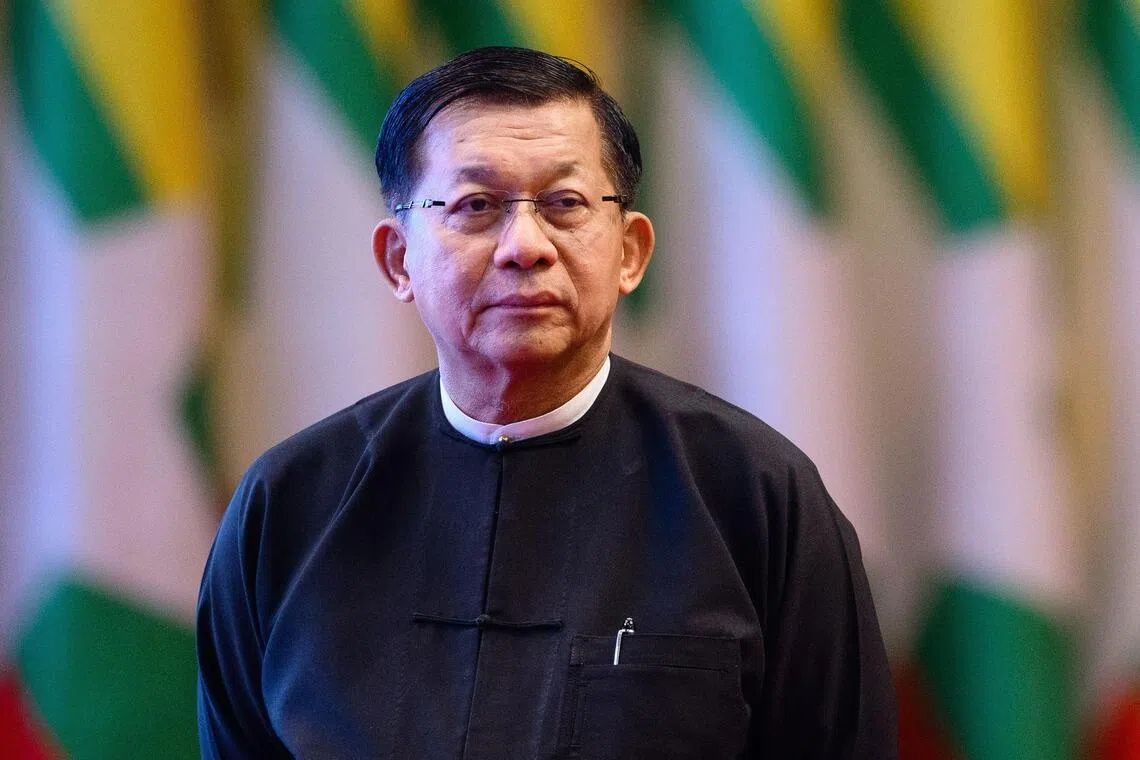
Myanmar's Min Aung Hlaing is heading to Bangkok this week in what amounts to a carefully choreographed diplomatic venture intended to signal his country's willingness to re-engage with Southeast Asia after years of isolation. The visit marks his inaugural trip to Thailand since shedding his military uniform to assume Myanmar's presidency earlier this year, and it represents a calculated step in an ambitious campaign to normalise relations across the region and restore Myanmar's standing within the Association of Southeast Asian Nations.
The trajectory that brought Min Aung Hlaing to this point has been decidedly controversial. In 2021, he orchestrated a coup d'état that deposed Aung San Suu Kyi and dismantled Myanmar's nascent democratic experiment. The seizure of power plunged the country into prolonged internal conflict, with analysts estimating the death toll from subsequent civil war to exceed 100,000 people across all combatant sides. Rather than fade into political obscurity following international condemnation, Min Aung Hlaing orchestrated a transition that allowed him to consolidate power in civilian guise. In April, after stage-managed elections that independent observers and Western governments dismissed as fraudulent exercises designed to provide democratic veneer to authoritarian rule, he assumed the presidency through a process that democracy advocates worldwide have rejected as fundamentally illegitimate.
Thailand has emerged as the principal architect of a regional strategy to bring Myanmar back into the Asean fold, working both through bilateral channels and leveraging the bloc's collective mechanisms. This positioning reflects Bangkok's strategic calculations regarding border stability and transnational security challenges that emanate from Myanmar's unstable territories. The junta's leadership has remained excluded from senior Asean forums since the 2021 putsch, yet incremental shifts have occurred. Myanmar's foreign minister recently participated in an informal gathering with regional counterparts, signalling Asean's willingness to engage at lower diplomatic levels while maintaining principled distance from top-level summits.
Min Aung Hlaing himself has embarked upon an extensive diplomatic circuit since assuming civilian dress, visiting major regional powers including India and China, along with Laos as a fellow Asean member. Each visit has been designed to demonstrate that Myanmar remains a responsible international actor engaged with regional institutions and frameworks. The Thailand visit follows this established pattern, though it carries particular significance given Bangkok's role as the de facto champion of Myanmar's rehabilitation within Asean circles.
The diplomatic choreography surrounding Min Aung Hlaing's arrival includes ceremonial elements intended to convey Thailand's official recognition of his legitimacy as Myanmar's leader. He will receive an honour guard at Government House and hold bilateral meetings with Thai Prime Minister Anutin Charnvirakul. The schedule also encompasses participation in business forums and a state dinner, events designed to project normalcy and functional interstate relations. Thai and Myanmar officials are expected to formalise a memorandum of understanding on labour cooperation, a practical agreement that signals concrete bilateral engagement beyond symbolic gestures.
Yet beneath the diplomatic pageantry lie deeper complications that characterise Min Aung Hlaing's position and the regional response to his rehabilitation. Independent analysts observe that Myanmar's campaign for Asean reintegration represents fundamentally a matter of restoring status and international legitimacy to a leader whose authority rests upon military force. More problematically, Min Aung Hlaing has simultaneously positioned himself as a responsible Asean partner while categorically rejecting the bloc's five-point consensus framework designed to facilitate dialogue among all Myanmar stakeholders and reduce hostilities. This apparent contradiction reflects what scholars describe as zero-sum political logic, wherein he seeks to reclaim regional respectability without acknowledging or implementing the conflict resolution mechanisms the bloc has proposed.
Thailand's motivations for pursuing normalised ties with Myanmar extend beyond diplomatic formality. The decades-long conflict between Myanmar's military forces and numerous armed opposition groups has consistently spilled across the long shared border, creating security complications for Thailand. The country hosts millions of Myanmar refugees whose presence strains resources and infrastructure. Beyond these humanitarian dimensions, Bangkok confronts pressing transnational criminal challenges, including cyberscam networks and narcotics trafficking operations that exploit Myanmar's porous and contested borderlands. Thailand's Foreign Minister Sihasak Phuangketkeow has explicitly identified these security issues as topics for discussion during Min Aung Hlaing's visit, viewing bilateral engagement as a mechanism to pressure Myanmar's leadership into cooperative approaches on matters affecting Thai national security.
A particularly striking development occurred in the days preceding the Bangkok visit when Aung San Suu Kyi, Myanmar's deposed democratic leader who remains under house arrest following the coup, received a visit from an International Committee of the Red Cross representative. This marked her first publicised meeting with a foreign official since her removal from power, suggesting possible shifts in Myanmar's detention policies. Thailand's foreign minister welcomed this development, expressing hope that Myanmar's authorities would undertake additional positive steps toward sustained peace and stability, linking the broader question of Myanmar's regional rehabilitation to demonstrated commitment to basic humanitarian and political standards.
The decision to extend diplomatic hospitality to Min Aung Hlaing has provoked fierce criticism from international human rights advocates and Myanmar civil society organisations. Several Western governments have imposed sanctions targeting the Myanmar leader personally, and the International Criminal Court has issued a warrant for his arrest on charges of crimes against humanity relating to the military's treatment of ethnic Rohingya Muslims prior to the 2021 coup. Activist groups such as Justice For Myanmar have condemned Thailand's diplomatic overtures as facilitating the unlawful rehabilitation of a leader credibly accused of mass atrocity crimes. From this perspective, rolling out official ceremonies and high-level meetings for Min Aung Hlaing serves to legitimise rather than constrain his authority, undermining accountability frameworks that international law purportedly upholds.
The Bangkok visit therefore encapsulates broader tensions within contemporary Southeast Asian diplomacy between pragmatic engagement on transnational security matters and principled opposition to military authoritarianism. Thailand's approach privileges border security, refugee management, and criminal network disruption as imperatives that justify bilateral engagement. Critics counter that such engagement without corresponding demands for genuine political reform or accountability reinforces the notion that Myanmar's military can consolidate authoritarian power without facing meaningful regional consequences.
For Malaysia and other ASEAN member-states, the unfolding dynamics around Myanmar's rehabilitation raise uncomfortable questions about the bloc's commitment to its own charter principles regarding democracy, human rights, and non-interference in internal affairs. The pattern of Min Aung Hlaing's regional tour and Thailand's facilitation of his return to diplomatic respectability suggests that economic and security interests may ultimately override commitment to democratic governance as organising principles for Southeast Asian interstate relations, a development with implications extending well beyond Myanmar itself.

