Myanmar's law enforcement agencies have executed a coordinated series of drug interdictions that has yielded one of the country's more substantial recent seizures of illegal narcotics. The Central Committee for Drug Abuse Control confirmed this week that officers had recovered 17.6 kilograms of heroin alongside one million stimulant tablets during operations spanning the Mandalay region and Naypyitaw Union Territory over the past fortnight, with nine individuals taken into custody.
The first operation took place in Amarapura township within Mandalay region on Tuesday following intelligence provided by informants. Acting on this tip-off, anti-narcotics officers conducted vehicle searches focusing on four motorcycles, successfully locating the substantial heroin cache. Four individuals were apprehended at the scene and immediately transferred into custody. The heroin seizure alone represents a significant blow to trafficking operations that funnel narcotics through central Myanmar's transportation hubs, with Mandalay serving as a critical logistics corridor for regional drug smuggling networks.
Days earlier, in a separate enforcement action disclosed on Thursday, officers working in Lewe township of Naypyitaw Union Territory had intercepted the stimulant tablet consignment on July 23. The million-tablet haul suggests organized distribution networks attempting to move pharmaceutical-category drugs in bulk quantities through the capital territory. Five suspects were arrested during this operation, facing charges under Myanmar's Narcotic Drugs and Psychotropic Substances Law. The discovery indicates that traffickers are not restricting their operations to traditional opioids but are actively moving synthetic stimulants—likely amphetamine derivatives commonly used as party drugs across Southeast Asia.
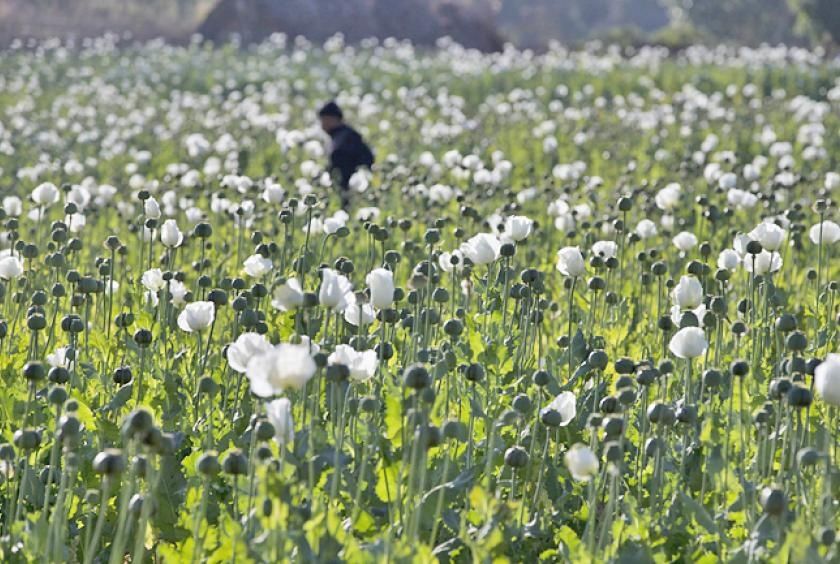
The significance of these seizures extends beyond Myanmar's borders, as the country remains a critical transit point for narcotics flowing throughout Southeast Asia. Heroin produced in the Golden Triangle—the opium-growing region spanning parts of Myanmar, Laos, and Thailand—typically moves southward through Thailand toward Malaysian ports and, increasingly, into international markets via maritime routes. Each successful interception disrupts these supply chains, though the scale of these seizures suggests they represent only a fraction of the total narcotics traffic flowing through the region.
For Malaysia and other Southeast Asian nations, Myanmar's drug interdictions carry direct implications. Malaysian authorities have long expressed concern about heroin supplies originating from Myanmar's production zones, with trafficking organizations exploiting porous border areas and inadequately supervised maritime corridors. The stimulant tablets seized here likely represent goods destined for entertainment districts and nightlife venues across the region, where synthetic drugs command premium prices among recreational users. Understanding Myanmar's enforcement capacity therefore becomes relevant to predicting future supply pressures that Malaysian customs and narcotics agencies will face.
The use of motorcycles as transport vessels reflects a common smuggling methodology in Myanmar and the broader region. Motorcycles offer speed, maneuverability, and the ability to traverse secondary roads that avoid major checkpoints—advantages that make them ideal for time-sensitive drug shipments. The fact that authorities specifically targeted motorcycles in Amarapura suggests growing intelligence sophistication and possibly information-sharing mechanisms between Myanmar's security apparatus and regional partners.
Since Myanmar's 2021 military coup, drug enforcement has become complicated by competing power structures and the gradual fragmentation of state authority in border regions controlled by armed ethnic organizations. Despite these challenges, the CCDAC has attempted to maintain anti-narcotics operations in central Myanmar where government control remains relatively intact. These seizures suggest that such efforts continue, though questions persist about enforcement consistency across the country and whether military leadership has prioritized drug control amid broader governance concerns.
The charges filed against the nine suspects invoke Myanmar's Narcotic Drugs and Psychotropic Substances Law, penalties that typically range from lengthy prison sentences to potential capital punishment depending on quantity and culpability determinations. These prosecutions signal Myanmar's official commitment to a supply-reduction strategy, though effectiveness remains debated by regional analysts who observe that supply availability in Southeast Asian markets has not materially declined despite periodic seizures.
The geographical spread of these operations—from Amarapura in Mandalay region to Lewe in the capital territory—indicates that trafficking attempts are not concentrated in border zones but extend into Myanmar's more urbanized central areas. This distribution pattern complicates enforcement efforts, as it requires sustained anti-narcotics capacity across diverse regions rather than allowing concentration at specific chokepoints. The involvement of multiple suspects across separate incidents also suggests organizational complexity, with different cells potentially operating under larger syndicate structures.
For Malaysian policymakers and enforcement agencies, these Myanmar seizures underscore the necessity of maintaining strong bilateral cooperation on narcotics control despite the complicated bilateral relationship arising from Myanmar's military government. Information-sharing about trafficking routes, transnational criminal networks, and emerging drug categories benefits both nations' security objectives. Understanding the scale and composition of narcotics moving through Myanmar remains essential intelligence for anticipating trafficking trends that will eventually reach Malaysian shores through transit routes via Thailand or maritime channels.

