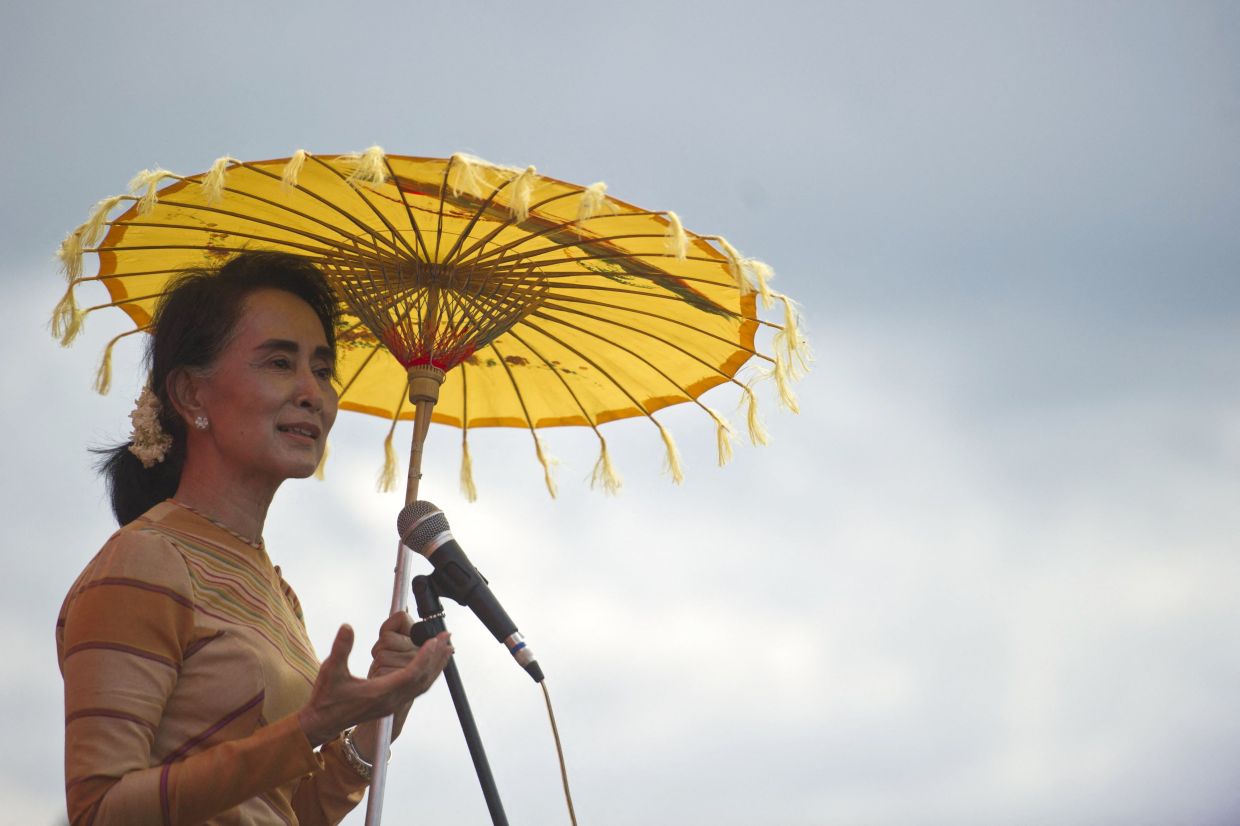
As Aung San Suu Kyi marked her 81st birthday, international calls for her release or at least access to the imprisoned Myanmar opposition leader have intensified, yet the military regime continues to reject these requests outright. The junta's latest rebuff came in late June when regime spokesperson Khaing Khaing Soe flatly refused a request from Philippine Foreign Secretary Maria Theresa Lazaro, who chairs Asean, to meet with the deposed leader. This marks the second time Lazaro has been denied access following an unsuccessful visit to Naypyitaw in January. Through its consistent stonewalling, the Myanmar military government is sending a calculated message to Southeast Asia's regional organisation—that it neither fears Asean pressure nor recognises the bloc's authority to scrutinise its political decisions.
The refusal to grant access to Suu Kyi operates as both a symbolic and strategic gesture of defiance. According to Hunter Marston, director of the South-East Asia programme at the Lowy Institute, the regime's actions reveal a fundamental imbalance in how Myanmar evaluates its relationship with Asean. "Asean needs Myanmar more than Min Aung Hlaing deems Myanmar needs Asean," Marston explained, highlighting how the junta leader assesses the regional bloc as dependent on Myanmar's participation rather than vice versa. This perception, whether accurate or not, embeds itself in the regime's decision-making process and determines how it responds to collective regional pressure.
Interestingly, the junta has proven willing to grant access to select foreign officials, and these exceptions are highly revealing. Former Thai Foreign Minister Don Pramudwinai secured a meeting with Suu Kyi during a July 2023 visit to Naypyitaw, while Chinese Foreign Minister Wang Yi reportedly met with her during his April visit this year. The selective nature of these permissions underscores which nations the regime actually trusts and views as strategically important partners. Thailand's historical ties to Myanmar's military establishment and China's long-standing economic and geopolitical interests in the country clearly matter more to the junta than maintaining cordial relations with the broader Asean consensus. This cherry-picking of diplomatic access effectively fractures Asean's collective stance and demonstrates the regime's skill at playing regional powers against one another.
The Myanmar military's treatment of Suu Kyi itself provides crucial context for understanding the regime's broader political strategy. Since her detention following the February 2021 coup, the former democratically elected leader has been convicted on charges including violating Myanmar's official secrets act and corruption—allegations that international observers and human rights organisations have widely condemned as fabricated and politically motivated. Originally sentenced to 33 years, her prison term has been gradually reduced through various regime decrees, leaving her with approximately 18 years remaining on her current sentence. Since April, reports suggest she has been placed under house arrest, and she has not been independently seen or heard since then. This enforced isolation has transformed Suu Kyi into a living symbol of the junta's unwillingness to tolerate any challenge to its authority.
Amara Thiha, a non-resident fellow at the Stimson Centre, characterises the regime's restriction of Suu Kyi's visitors as a carefully calculated diplomatic tool. "I see this largely as a diplomatic card the regime continues to hold," Thiha observed, suggesting that by controlling access to Myanmar's most prominent political prisoner, the junta maintains leverage in its dealings with both regional and international actors. Each refusal to grant access reinforces the message that the regime answers to no one and will not permit external actors—even fellow Asean members—to dictate the terms of Myanmar's internal governance. This approach transforms the very act of detention into an instrument of foreign policy.
The broader context involves Asean's attempts to manage the Myanmar crisis through its Five-Point Consensus, a peace plan developed immediately after the 2021 coup. The plan calls for an end to violence, humanitarian aid access, dialogue among all parties, and explicitly includes provisions for Asean's special envoy to meet with all relevant stakeholders. However, Min Aung Hlaing, who recently transitioned from military chief of staff to the ceremonial position of president in April, has largely disregarded these demands. The human toll of this defiance is staggering: independent conflict monitoring organisation Armed Conflict Location & Event Data estimates that at least 100,000 people have died since the coup as Myanmar descends into widespread violence and civil unrest.
Phyo Win Latt, an independent historian of Myanmar, articulates the deeper political significance of denying Asean access to Suu Kyi. "It rejects access to Aung San Suu Kyi precisely because such access would imply that Asean has some legitimate supervisory role over Myanmar's internal political settlement," Latt observed. The junta's position, as Latt frames it, accepts Asean's recognition and seat at regional forums but fundamentally rejects the notion that the grouping has any right to supervise or critique Myanmar's handling of its political crisis. This distinction reveals the regime's sophisticated understanding of sovereignty rhetoric—it wants the benefits of Asean membership while rejecting the collaborative responsibility that membership ideally entails.
From Naypyitaw's perspective, the demands placed upon Myanmar appear selectively punitive when compared to how Asean treats other member states' internal disputes. As Thiha pointed out, the grouping has notably refrained from intervening in other long-standing territorial disagreements, such as the ongoing Thailand-Cambodia border dispute. The regime views the pressure applied specifically to Myanmar as a double standard, arguing that if Asean does not enforce compliance from other members, it has no moral authority to demand Myanmar's adherence to the Five-Point Consensus. This argument, while strategically convenient for the junta, fundamentally misunderstands the distinction between territorial disagreements and the wholesale suspension of democratic governance and alleged crimes against humanity.
Kim Aris, Aung San Suu Kyi's 48-year-old son, has expressed both his disappointment and his unsurprise at the regime's continued intransigence. "They continue to isolate my mother from the world, raising serious questions about what they are trying to hide," Aris stated, highlighting how the regime's denial of access raises troubling implications about Suu Kyi's actual condition and treatment. The junta maintains that she remains in good health but has prevented Aris from visiting or communicating with his mother for five years, citing her status as a convicted prisoner ineligible for foreign visits. This position, though legally formalistic, rings increasingly hollow given the regime's willingness to permit visits from carefully selected foreign dignitaries.
For nearly five years, Asean has maintained a diplomatic sanction against the regime by excluding Min Aung Hlaing from the grouping's annual leaders' summits. This punishment, while symbolically meaningful, has failed to produce the desired behavioural change. The regime shows no signs of implementing the Five-Point Consensus conditions that would permit its reintegration into these forums. Instead, the junta appears to interpret continued exclusion not as a cost to be minimised but as an acceptable consequence of its commitment to consolidated authoritarian rule. The impasse reflects a fundamental crisis of Asean's consensus-based decision-making model, which lacks enforcement mechanisms and depends on members' willingness to comply with regional agreements.
The refusal to grant Asean access to Suu Kyi ultimately encapsulates a larger power struggle over the nature of regional governance and the limits of collective decision-making. The Myanmar regime is betting that it can outlast Asean's patience and that the regional bloc's internal divisions, combined with major powers' competing interests in Myanmar, will eventually force a normalisation of relations on the junta's terms. By denying access to Suu Kyi, the regime demonstrates its confidence that it can ignore regional pressure while maintaining its seat at the table. For Asean members, particularly those committed to democratic governance, the impasse represents a humbling reminder of the organisation's structural limitations and the challenges of enforcing regional norms against determined state actors who control territory and population.

