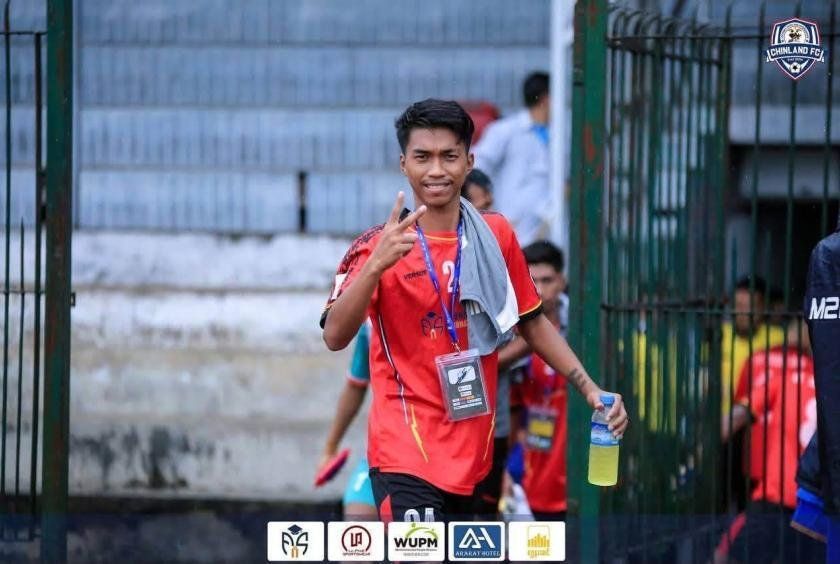
Yangon-based Chinland FC resolved a week-long search for missing player Pa Lung on August 29, announcing his safe recovery and return to the squad. The club disclosed through its Facebook statement that the athlete had urgently travelled to his hometown without prior notification to address a life-threatening medical situation affecting his mother, providing the first concrete explanation for his sudden disappearance that had triggered widespread concern across Myanmar's football community.
The circumstances surrounding Pa Lung's absence reveal the challenges athletes in developing nations face when confronted with family emergencies and inadequate communication infrastructure. His inability to contact the club stemmed from multiple compounding factors during his journey homeward—his mobile phone battery depleted and he encountered further connectivity difficulties that prevented him from reaching team officials. This combination of circumstances left Chinland FC without any explanation for nearly a week, raising alarms about the player's welfare and prompting increasingly urgent responses from the football fraternity.
The club's response demonstrated the seriousness with which the situation was treated at institutional levels. After determining that Pa Lung could not be reached despite repeated attempts over five days, Chinland FC escalated the matter by lodging an official missing-person report with the Myanmar Police Force. Simultaneously, club officials personally undertook an intensive search operation, exhausting their own investigative resources before turning to broader public assistance. This dual-track approach—formal legal channels paired with grassroots search efforts—reflected genuine anxiety about the athlete's safety rather than mere administrative concern.
When conventional search methods yielded no results, Chinland FC took the significant step of issuing a public appeal for information about Pa Lung's whereabouts. This decision to broadcast the situation across media and social platforms amplified pressure on the case and enlisted the wider Myanmar public as informal search participants. The public appeal transformed what might have remained an internal club matter into a nationally tracked incident, demonstrating how football's prominence in Myanmar society can mobilise community resources during crises.
The involvement of multiple state and sporting institutions underscores both the seriousness of the situation and Myanmar's hierarchical institutional response to missing-person cases. The Myanmar Football Federation and Myanmar National League coordinated with Chinland FC to assist the search, while relevant government authorities and media organisations contributed resources and publicity. This multi-institutional engagement reflects established protocols for handling athlete-related emergencies and highlights how football's administrative structure can facilitate broader community responses when individuals vanish unexpectedly.
For Malaysian and Southeast Asian readers, Pa Lung's case illuminates the vulnerability of professional athletes in the region, particularly those competing in lesser-developed leagues with minimal institutional safeguards. Myanmar's football infrastructure, while growing, remains substantially behind Thai and Vietnamese standards, and this incident reveals the potential consequences when players lack reliable communication networks or emergency protocols. The absence of systematic welfare checks or mandatory contact procedures meant that a one-week disappearance was required before authorities mobilised comprehensively.
The role of communication technology failures as a contributing factor deserves particular attention. Pa Lung's phone battery depletion during travel and subsequent inability to recharge or access alternative means of contact reflect the precarious nature of connectivity across Myanmar, where rural areas and inter-city routes frequently lack adequate infrastructure. For a young athlete travelling urgently to address a family medical crisis, this technological gap created a dangerous information vacuum that could have escalated into a far more serious situation had the search continued longer without resolution.
Chinaland FC's public statement emphasized the critical nature of his mother's medical emergency, framing the decision to leave without notification as unavoidable given circumstances. This detail humanises the situation beyond institutional football narratives, reminding observers that athletes across the region often occupy vulnerable socioeconomic positions where personal emergencies take absolute priority over professional commitments. The normalisation of such occurrences in Myanmar and other developing Southeast Asian economies suggests systemic issues requiring structural solutions rather than ad-hoc crisis management.
The relief expressed by the club upon Pa Lung's recovery carries implications for athlete welfare standards across Myanmar and the broader region. That a one-week disappearance triggered official police involvement and multi-institutional coordination suggests that the country's football authorities acknowledge their duty to protect players' safety, yet the initial delay in mobilising resources indicates these protective mechanisms remain reactive rather than preventative. Establishing proactive welfare systems—including mandatory emergency contact procedures, regular welfare check-ins, and support mechanisms for family medical crises—would prevent similar incidents.
Chinaland FC's public gratitude toward the Myanmar Football Federation, Myanmar National League, police, media, and contributing citizens illustrates the collaborative nature of crisis response within Myanmar's football ecosystem. This inclusive acknowledgment strengthens community bonds around the sport and validates the investment of resources from multiple sectors. For younger athletes observing the response, it reinforces the notion that institutional support exists when crises occur, potentially encouraging future transparency rather than the initial silence that characterised Pa Lung's emergency travel.
The conclusion of this incident without serious harm represents a fortuitous outcome that masked underlying vulnerabilities. That Pa Lung's mother's medical emergency motivated his departure without notification, combined with communication failures that prevented clarification, created a scenario where catastrophic outcomes remained possible. As Myanmar's football league develops infrastructure and professionalisation, establishing robust athlete support systems—including family emergency protocols, communication redundancies, and welfare counselling—should become priorities alongside competitive development and facility improvements.
Moving forward, Chinland FC's experience provides a cautionary template for other Myanmar clubs and Southeast Asian football organisations operating with similar resource constraints. The incident demonstrates that modern sport requires not merely playing talent and competitive structures, but comprehensive welfare ecosystems protecting athletes and their families during emergencies. Pa Lung's safe return closes this particular chapter, yet leaves open fundamental questions about how Myanmar's football community should evolve to prevent recurrence and protect vulnerable athletes facing simultaneous professional and personal pressures.

