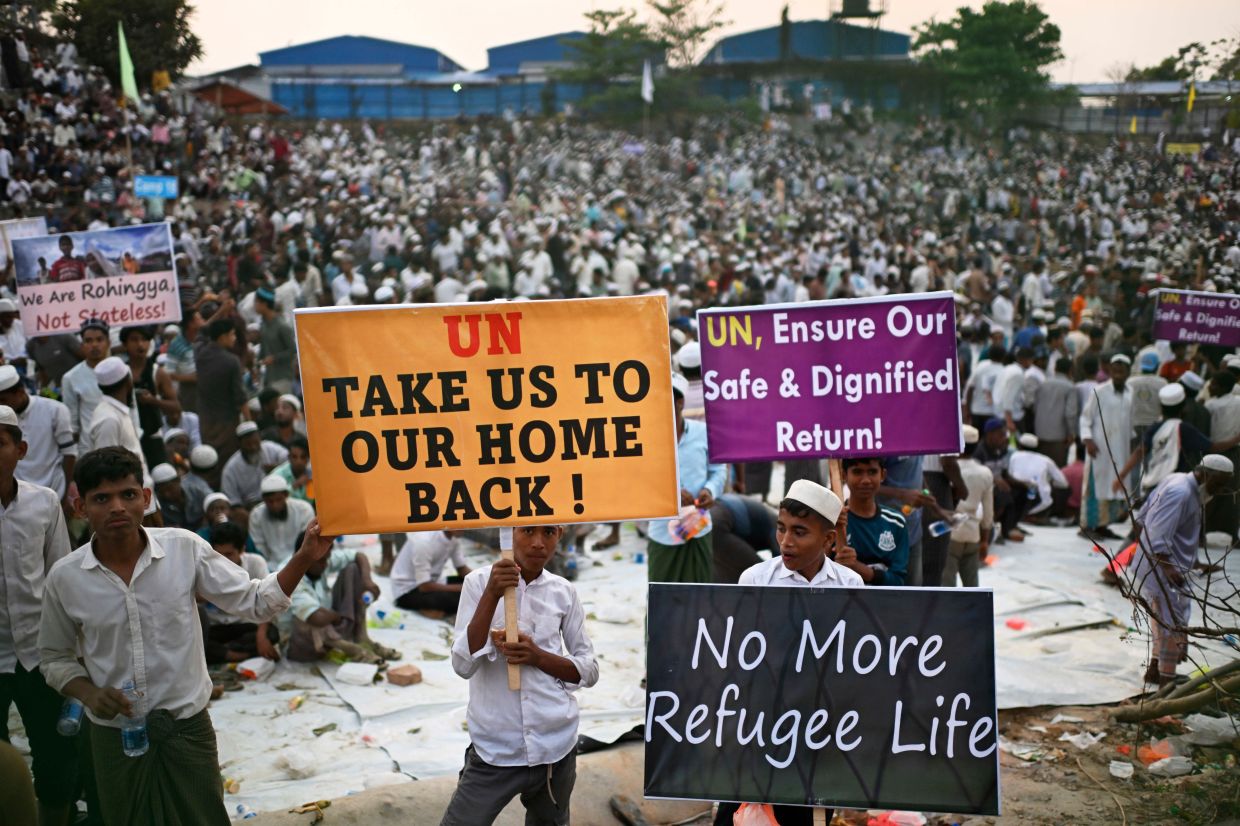
Myanmar's military-backed administration announced Saturday that verification efforts have confirmed more than 300,000 Rohingya refugees sheltering in Bangladeshi camps are indeed former inhabitants of Rakhine state in western Myanmar, with the government expressing readiness to facilitate their homecoming once the security situation improves. The statement from the Ministry of Foreign Affairs marks a significant moment in a humanitarian crisis that has now persisted for nine years, trapping hundreds of thousands of people in sprawling refugee settlements across the border while prospects for their return remain deeply uncertain and fraught with political complications.
The roots of this catastrophe stretch back to August 2017, when Myanmar's military orchestrated a sweeping crackdown in Rakhine following attacks on guard posts allegedly carried out by Rohingya insurgent fighters. The operation's scale proved devastating, displacing more than 700,000 Rohingya within a matter of weeks and sending them fleeing into Bangladesh, where they joined pre-existing populations who had accumulated in the country over preceding decades following earlier bouts of violence perpetrated by Myanmar's armed forces. International observers, including United Nations bodies, characterized the 2017 military campaign as systematic ethnic cleansing and genocide, allegations that Myanmar's government has consistently rejected.
According to Myanmar's official accounting, verification processes have examined 426,545 individuals from a comprehensive list of 828,824 refugees supplied by Bangladesh through the end of July. Of those assessed, the government determined that 308,797 qualified as former Rakhine residents eligible for eventual repatriation. However, verification also identified concerning figures: 113,507 people whom authorities could not verify through available documentation and demographic records, and 4,241 individuals flagged as having involvement in activities Myanmar characterizes as terrorist-related. These numbers underscore the complexity of managing return logistics while addressing security concerns that the Naypyidaw administration consistently cites as central obstacles to large-scale refugee movements.
Myanmar's relationship with the Rohingya population has been marked by systematic denial of their rights and status within the nation-state. The government refuses to recognize the Rohingya as one of Myanmar's 135 legally recognized ethnic minorities, instead employing the term "Bengalis" to suggest they are foreign migrants from Bangladesh with no legitimate claim to territory within Myanmar's borders. This nomenclatural stance reflects deeper political and ethnic tensions that have made repatriation efforts exceptionally fraught, as any meaningful return would require implicit acknowledgement of Rohingya claims to citizenship or at minimum permanent residence rights that the Myanmar government has shown no willingness to grant.
The diplomatic framework for addressing this crisis was ostensibly established in 2018, when Myanmar and Bangladesh negotiated a bilateral repatriation agreement envisioning a two-year process to facilitate refugee returns. However, that timeline proved hopelessly optimistic, as subsequent political upheaval destroyed whatever fragile momentum had been developing. A military coup in 2021 overthrew the elected government of Aung San Suu Kyi, installing a junta that triggered widespread armed resistance across Myanmar. That intervention fundamentally altered the country's security landscape, rendering any large-scale refugee movements logistically impossible and politically unviable.
The situation deteriorated further beginning in 2023 when fighting intensified between Myanmar's military forces and the Arakan Army, an ethnic militia group based in Rakhine province that has successfully captured significant territory from central government control. This renewed conflict generated additional displacement, compelling fresh waves of refugees to abandon their homes and seek sanctuary in Bangladesh or attempt perilous sea journeys to neighbouring countries. The Arakan Army's consolidation of control across much of Rakhine has created a governance vacuum that complicates any potential repatriation efforts, as returning refugees would face unclear authority structures and continued violence.
Deterioration of conditions within the camps themselves has become an increasingly acute concern, compounded by sharp reductions in international humanitarian assistance. Many refugees have concluded that prospects for timely or voluntary return to Myanmar have become negligible, prompting a surge in attempted sea crossings toward Malaysia and Indonesia aboard unseaworthy vessels. These journeys represent last-resort decisions born of desperation, as camps offer limited educational opportunities, minimal employment prospects, and confined living conditions that stretch across years with no visible endpoint. The humanitarian toll of confinement without hope has created a generation of youth growing up without meaningful futures.
Malaysia has emerged as an unintended destination in this regional crisis, with substantial Rohingya populations settling irregularly across the country despite legal restrictions on their presence. In late July, Malaysian Prime Minister Anwar Ibrahim announced that Myanmar had committed to accepting 5,000 Rohingya refugees currently residing in Malaysia, framing this as a bilateral repatriation initiative. Yet Myanmar's foreign ministry swiftly contradicted those characterizations, with official Han Win Aung clarifying to international media that any repatriation program would be restricted exclusively to verified Myanmar nationals detained in Malaysian facilities, explicitly rejecting suggestions that the government would accept broader Rohingya populations.
This discrepancy between Malaysian and Myanmar communications reflects deeper diplomatic tensions and fundamentally divergent interpretations of what repatriation might entail. Malaysia's interest in facilitating returns stems partly from domestic pressures regarding irregular migrant populations, while Myanmar's government appears focused narrowly on individuals who can be documented through identity verification processes rather than accepting wholesale refugee populations. The conflicting statements underscore how fragile any consensus remains regarding solutions to the crisis, with each government pursuing narrowly defined national interests rather than comprehensive humanitarian frameworks.
The continued entrenchment of this crisis carries profound implications throughout Southeast Asia, as the region increasingly grapples with displacement, irregular migration, and humanitarian challenges that transcend national boundaries. Malaysia, Indonesia, Thailand and Bangladesh have absorbed disproportionate responsibility for hosting displaced populations while international mechanisms for burden-sharing remain underdeveloped. Myanmar's announcement regarding verification, while superficially positive, offers little concrete progress toward actual returns and may primarily represent an attempt to manage international criticism rather than signal genuine policy shifts. Unless the security situation in Myanmar improves dramatically and the government demonstrates willingness to grant Rohingya meaningful citizenship or residency rights, the verification exercise will likely remain symbolic rather than transformative for the hundreds of thousands still languishing in limbo.

