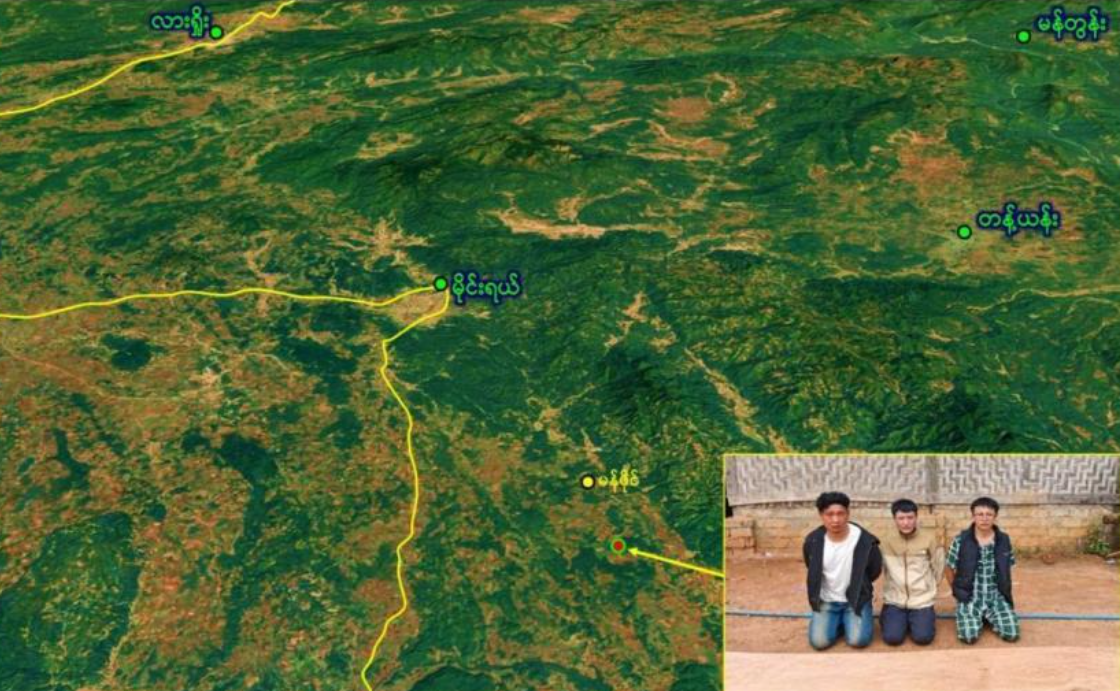
Myanmar's military has apprehended three Chinese nationals suspected of orchestrating an online gambling scam operation in the remote border region of Mongyai Township in northern Shan State. The August 26 arrest represents a significant development in Myanmar's expanding counter-fraud initiatives, which have grown increasingly ambitious in targeting cross-border criminal networks that exploit digital platforms to defraud victims across Asia. The three men, who allegedly entered the country illegally, were intercepted approximately 26 kilometres southeast of Mongyai township and roughly 5 kilometres south of Manphai Village, where the operation had established its base.
The discovery underscores a troubling pattern emerging across Southeast Asia: the establishment of semi-permanent criminal infrastructure in border zones where regulatory oversight remains fragmented and enforcement capacity is stretched thin. Myanmar's porous northern frontier with China has become an attractive staging ground for transnational scam operations, which exploit the region's geographic isolation, limited surveillance capabilities, and the presence of ethnic minority communities with limited state capacity. The sophisticated nature of the seized equipment—including satellite internet connectivity through Starlink devices, multiple computer terminals, and professional-grade communication infrastructure—suggests that this was not a ad-hoc criminal venture but rather part of a larger, well-capitalised network with substantial organisational resources.
The scale of seized materials reveals the operational scope of the enterprise. Authorities confiscated a primary corrugated iron-roofed structure measuring 50 by 20 feet, supplemented by five temporary tarpaulin shelters of varying dimensions. The electronics haul included 25 mobile phones, five all-in-one computers, two dedicated power stations, one Starlink satellite device, ten communication radios, and ancillary operational equipment. This inventory suggests a multi-shift operation capable of managing numerous simultaneous gambling transactions and victim interactions, likely targeting users across multiple countries through various online platforms and social media channels.
Myanmar's intensified campaign against online fraud represents a significant policy shift, driven partly by regional pressure and partly by recognition that unchecked scam operations damage the country's international reputation and create security vulnerabilities. The government has explicitly designated this crackdown as a national-level priority, with military and civilian law enforcement coordinating operations particularly in border districts where smuggling networks and criminal organisations have traditionally operated with relative impunity. This represents a departure from previous years when such operations received comparatively lower enforcement attention, often relegated to local authorities with insufficient resources.
The intelligence-gathering methodology employed in this case—relying on information provided by local residents—highlights both the success and the limitations of community-based reporting systems. Border populations, while distant from central authority, are often the first witnesses to criminal activities and can provide crucial ground-level intelligence. However, this reliance on local intelligence also suggests that systematic surveillance and reconnaissance capabilities in these remote areas remain underdeveloped, meaning authorities must depend heavily on tip-offs rather than proactive technological monitoring.
The targeting of border areas reflects a strategic understanding within Myanmar's security establishment that these zones represent critical chokepoints for transnational crime. Unlike domestic operations, which require recruitment and management of local personnel and thus carry higher detection risks, border-based facilities can rely on smaller, more insular teams while maintaining proximity to supply lines and escape routes. The presence of Starlink technology is particularly notable, as satellite internet infrastructure allows operators to maintain connectivity in areas with poor terrestrial telecommunications infrastructure and, critically, reduces reliance on local telecommunications companies that might otherwise flag suspicious activity to authorities.
The legal framework governing the treatment of these suspects remains standardised within Myanmar's existing legislation, with authorities indicating that prosecution will proceed according to established protocols. However, the specificity of charges, sentencing severity, and whether international extradition or diplomatic arrangements come into play remain undisclosed. This ambiguity reflects broader questions about how Myanmar coordinates with China on transnational crime, particularly given that the detainees are Chinese nationals and the operations likely targeted victims across multiple nations throughout Asia.
Beyond the immediate arrests, the broader enforcement strategy emphasises infrastructure destruction and prevention of recidivism. Myanmar authorities have announced systematic demolition of the temporary structures, signalling intent to deny future operators easy access to established operational bases. This approach mirrors strategies employed in neighbouring Thailand and Cambodia, where authorities similarly prioritise destroying the physical infrastructure that supports scam operations, recognising that such facilities represent significant capital investments that organised crime groups are reluctant to abandon once established.
For Malaysian readers and businesses, this development carries particular relevance. Malaysia has emerged as both a significant source of scam victims—particularly through romance fraud and investment schemes—and, in certain cases, a financial conduit for laundering proceeds from such operations. The interconnectedness of regional financial systems and the prevalence of Malaysian phone numbers and banking relationships in regional fraud networks mean that enforcement actions in Myanmar can have direct investigative value for Malaysian authorities. Cross-border cooperation and intelligence sharing between ASEAN nations on these criminal networks remain areas requiring substantial strengthening.
The broader implications extend beyond law enforcement optics. The existence of sophisticated, well-resourced scam operations in Myanmar's border regions suggests that organised crime syndicates have developed supply chains, recruitment networks, and victim-targeting systems of considerable complexity. These operations likely employ specialised roles—victim engagement specialists, money handlers, technical operators, security personnel—indicating that dismantling such networks requires sustained multi-agency efforts rather than isolated raids. The sophistication also suggests that perpetrators have access to significant capital, potentially sourced through earlier successful fraud campaigns or laundering of other illicit proceeds.
Myanmar's commitment to combating these operations will ultimately determine whether this arrest represents genuine progress toward eliminating cross-border scam infrastructure or merely a temporary disruption of networks capable of rapid reconstitution. The sustainability of enforcement efforts depends on whether Myanmar can transition from reactive raids based on local intelligence to more proactive surveillance and infiltration capabilities. It also depends on regional cooperation mechanisms that allow real-time intelligence sharing and coordinated enforcement across multiple jurisdictions where scam victims and perpetrators are geographically dispersed.
The seizure of equipment and detention of three operators is undoubtedly a tactical success for Myanmar's security forces. However, the strategic victory—permanent degradation of transnational scam infrastructure and meaningful deterrence against future operations—remains contingent on sustained enforcement effort, international cooperation, and continued investment in border security and digital crime investigation capabilities across Myanmar and the broader ASEAN region.

