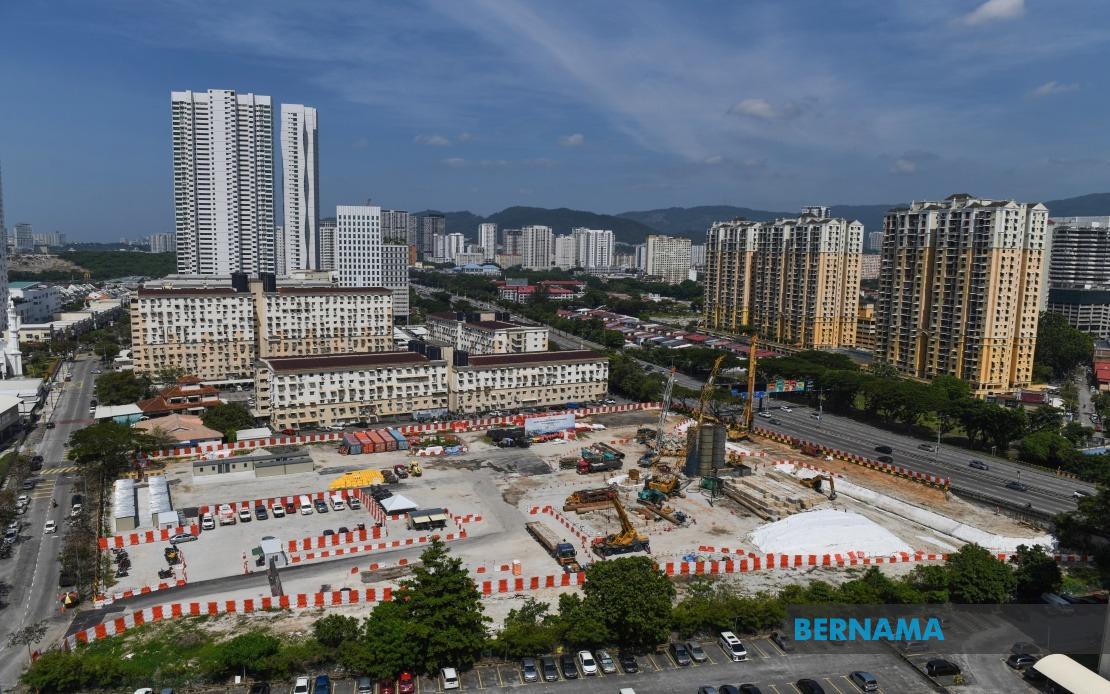
Construction of the Mutiara Line Light Rail Transit project in Penang has reached several defining moments, with Malaysia Rapid Transit Corporation Sdn Bhd (MRT Corp) formally appointing the Malaysian Resources Corporation Berhad (MRCB) and Theta Edge Berhad Joint Venture to oversee the RM3.028 billion System Turnkey Contract. This significant milestone represents a critical juncture in the project's development, establishing the framework through which core railway infrastructure and operational systems will be engineered and delivered across the broader Penang metropolitan corridor.
The appointment of the MRCB-Theta Edge JV introduces considerable strategic advantages to the project timeline. By enabling detailed engineering design activities to progress simultaneously with ongoing earthworks and structural construction, MRT Corp has created conditions for what specialists call a compressed delivery pathway. This dual-track approach minimises idle periods where construction teams would otherwise await finalised designs, thereby reducing overall project duration whilst maintaining quality assurance across both civil and systems integration components. For Malaysian infrastructure observers, this methodology demonstrates the evolving sophistication of major transit procurement strategies adopted in the country.
The System Turnkey Contract encompasses an extensive portfolio of railway infrastructure and operational technology. Seven major systems packages form the contract's core: procurement and installation of electric train units alongside depot support equipment; sophisticated signalling and train control architectures paired with automated platform screen doors designed for passenger safety; trackwork installation, conductor rail systems, and purpose-built maintenance vehicles; comprehensive power supply and distribution networks spanning the entire alignment. Additionally, the contract includes advanced supervisory control and data acquisition (SCADA) systems integrated with computerised maintenance management platforms, alongside telecommunications and information technology infrastructure and automatic fare collection mechanisms. This breadth reflects the technical complexity inherent in modern rapid transit systems operating in Southeast Asian urban environments.
In parallel, tender processes for the Civil Main Contract 2 (CMC2) package continue progressing, with this segment addressing the alignment extension from Komtar station to Penang Sentral. Current evaluations target contract award during November 2026, positioning this phase to commence whilst Civil Main Contract 1 activities mature. The staggered sequencing of major contract packages allows MRT Corp to manage both financial and resource deployment across a multi-year implementation framework, critical for a project of this capital intensity.
Civil Main Contract 1, currently managed separately, encompasses construction from Silicon Island through to Komtar station. This segment has expanded across fourteen of the nineteen planned construction sections, with crews completing forty-five pile caps and thirty-two pier columns to date. The contractor managing CMC1 continues issuing subcontracts for station construction and ancillary works as activity zones expand methodically across the corridor. This incremental advancement pattern, whilst appearing measured, reflects deliberate quality control protocols essential in transit infrastructure where safety margins carry non-negotiable importance.
Bumiputera participation within the CMC1 framework has surpassed the twenty percent threshold relative to total contract value. This achievement carries significance beyond mere numerical compliance, signalling substantive engagement of Malaysian-headquartered firms within supply chains and service delivery mechanisms. For policymakers tracking Bumiputera economic participation metrics, the Mutiara Line represents practical demonstration of how major infrastructure procurements can simultaneously achieve delivery objectives whilst building local industry capabilities across engineering, construction, and technical services sectors.
Land acquisition efforts have yielded substantial progress, with ninety-three percent of required land for CMC1 now formally made available. This accomplishment reflects coordinated action between federal authorities, the Penang State Government, and supporting agencies—a coordination challenge often underestimated in transit project discussions. Securing landholdings across densely populated urban environments frequently encounters delays stemming from boundary disputes, affected stakeholder negotiations, or administrative complexities. The achievement rate achieved here demonstrates effective inter-governmental collaboration, a prerequisite for infrastructure megaprojects operating across multiple administrative jurisdictions.
At Silicon Island, soil investigation activities have commenced in preparation for constructing the project's future depot facility. This maintenance and operational centre will house train units during off-peak periods, provide servicing capabilities, and accommodate staff facilities—components essential to daily transit operations yet often overlooked in public discourse emphasising passenger-facing infrastructure. Depot location decisions carry operational and financial ramifications extending across the system's operational lifespan, making careful site assessment critical.
The Penang State Government's April 2026 handover of the Tapak Pesta site marked a watershed moment for depot development. MRT Corp subsequently cleared existing structures and undertook site preparation activities, clearing pathways for construction commencement. This sequence—land transfer, site remediation, then construction initiation—follows established project management disciplines, though each phase introduces temporal and financial variables affecting overall schedules and budgets.
The Mutiara Line project positions Penang within an evolving Southeast Asian transit landscape where medium-sized metropolitan areas increasingly pursue rapid transit connectivity. Unlike Kuala Lumpur's established MRT and LRT networks, Penang's geographic and demographic characteristics demanded purpose-designed solutions. The project's strategic importance extends beyond passenger movement metrics; it represents infrastructure investment signalling confidence in Penang's economic trajectory and metropolitan development potential. For Malaysian urban planners, the Mutiara Line demonstrates how systematic project management across multiple contract packages, sustained governmental coordination, and progressive milestone achievement collectively advance major infrastructure development despite inherent complexities.
Looking forward, project success depends substantially on maintaining current delivery momentum through CMC2 tender award and subsequent mobilisation phases. The RM3.028 billion systems contract represents financial commitment requiring flawless execution across design, procurement, manufacturing, and installation stages. Stakeholders monitoring the project—including investors, commuters, and policy observers—have focused interest in whether parallel design-and-build methodologies deliver anticipated schedule compression whilst maintaining engineering standards expected within Malaysia's regulatory framework for rapid transit operations.

