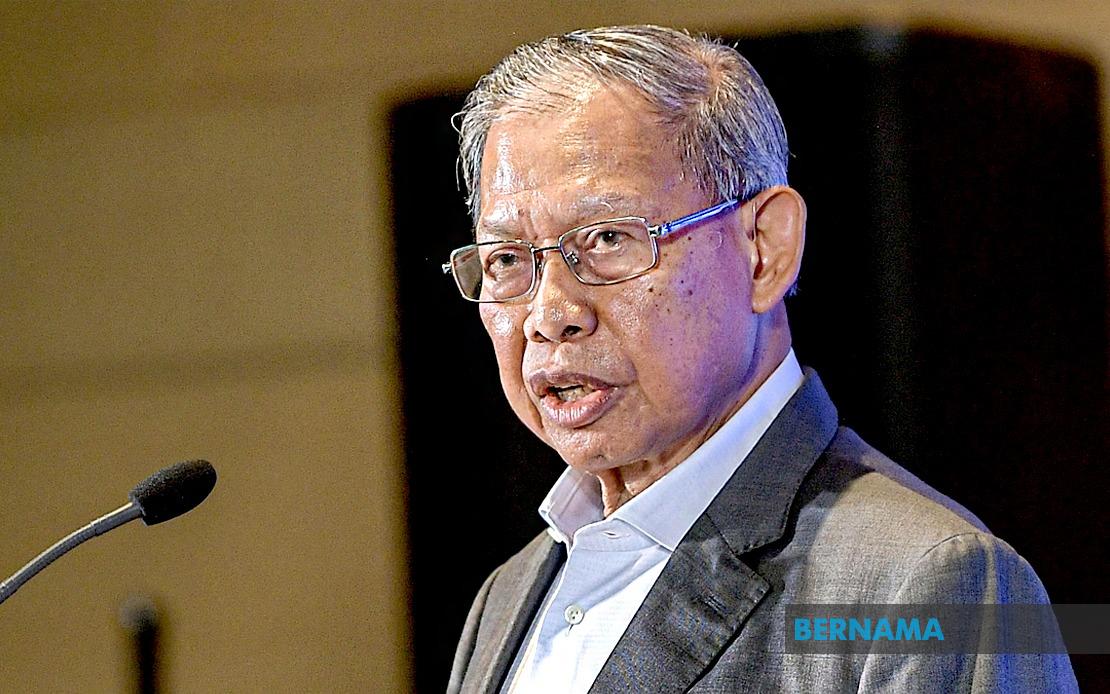
Datuk Seri Mustapa Mohamed has drawn a final line under his parliamentary ambitions, confirming at a celebration in Pasir Mas that he will not run in the 16th General Election. The former Jeli Member of Parliament, now 76 years old, made the declaration during a "Welcome Home" event and Independence Month celebration organised by the Council of Former Kelantan Elected Representatives, signalling a definitive generational shift within UMNO's leadership pipeline.
Mustapa's statement carries particular weight given his stature within the party hierarchy. As a former Minister of International Trade and Industry and a veteran of Malaysian politics, his decision to step back from electoral contestation represents more than a personal choice; it reflects a conscious effort by senior UMNO figures to create pathways for younger politicians to ascend to higher office. At an age where physical demands of campaigning and parliamentary duties become increasingly challenging, Mustapa acknowledged that continuing would be disservice both to himself and to the party's need for renewal.
The timing of this announcement matters significantly for UMNO's broader political strategy. Mustapa's return to UMNO in June, after departing for Bersatu in September 2018, had sparked speculation about whether he would seek a return to parliament. His explicit rejection of that possibility now removes uncertainty and reinforces UMNO's stated commitment to generational transition. The party faces mounting pressure to demonstrate that it is not merely a repository for ageing politicians but a vehicle capable of attracting and promoting talent from younger cohorts.
Mustapa's reasoning reflected practical consideration alongside principle. He noted that his physical strength has diminished with age, making the rigorous demands of electoral politics and parliamentary work less sustainable. This candid assessment contrasts sharply with the pattern in some Malaysian political circles, where senior figures cling to candidacies despite advancing years. By stepping aside voluntarily, Mustapa modelled the kind of graceful transition that analysts argue is necessary for Malaysian politics to refresh itself and restore public confidence in institutional renewal.
However, the former minister made clear that stepping back from electoral politics does not mean abandoning UMNO altogether. He articulated a reimagined role centred on mentorship and strategic guidance to younger colleagues, positioning himself as a source of institutional wisdom rather than a contender for office. This distinction is crucial, as it suggests a framework where senior figures can remain politically relevant without monopolising candidacies or positions that might otherwise go to aspiring younger politicians.
Mustapa's commitment to contributing through academic channels adds another dimension to his post-parliamentary trajectory. He pledged to share knowledge and experience with students at public and private institutions of higher learning, creating platforms for political education and ideas exchange outside the formal party apparatus. This approach recognises that expertise need not be confined to electoral politics but can be channelled into nation-building through intellectual and educational engagement.
For UMNO specifically, Mustapa's declaration signals that senior figures remain invested in the party's fortunes even after relinquishing electoral ambitions. His emphasis on helping strengthen the party's engagement with ordinary Malaysians, coupled with his commitment to offering strategic insights, positions him as a counsellor rather than a competitor. This model could potentially ease tensions within UMNO between senior and junior wings if more established figures adopt similar approaches.
The broader context of Malaysian politics suggests that deliberate generational succession planning remains underdeveloped across the political spectrum. While Mustapa's stance is commendable, systemic mechanisms to facilitate smooth leadership transitions are often absent. UMNO's need to convince voters that it is capable of renewal takes on added urgency given electoral pressures and the party's variable performance in recent polls. Voluntary retirement of senior figures who make way for younger candidates represents one modest but tangible gesture toward addressing public concerns about political stagnation.
Mustapa's emphasis on supporting younger colleagues reflects awareness that Malaysia's political future depends on cultivating the next generation of policymakers and leaders. The challenges confronting the nation—economic competitiveness, social cohesion, institutional reform—require fresh perspectives and energy. His willingness to mentor rather than monopolise opportunities creates space for new voices to emerge within UMNO's structures.
The decision also carries implications for Kelantan politics specifically. As a former Jeli representative and a respected figure in his home state, Mustapa's withdrawal from the electoral arena opens possibilities for newer candidates to contest that constituency or others in the region. This succession at the individual level can cascade through local party structures, potentially invigorating UMNO's presence at the grassroots.
Whether Mustapa's example catalyses broader patterns of generational succession within Malaysian politics remains to be seen. His age and experience make his voluntary stepping back noteworthy, but systemic change would require similar moves from other senior figures across parties. The challenge for UMNO and Malaysian politics more broadly is translating sentiment about the need for renewal into concrete institutional practices that genuinely empower younger leaders rather than simply creating nominal opportunities while actual power remains concentrated in older hands.
As GE16 approaches, Mustapa's declaration removes speculation about his candidacy while reaffirming his commitment to UMNO's long-term interests. Whether this approach becomes a template for other parties and senior figures, or remains a notable exception, will help determine whether Malaysian politics can genuinely refresh itself for the challenges and opportunities that lie ahead.

