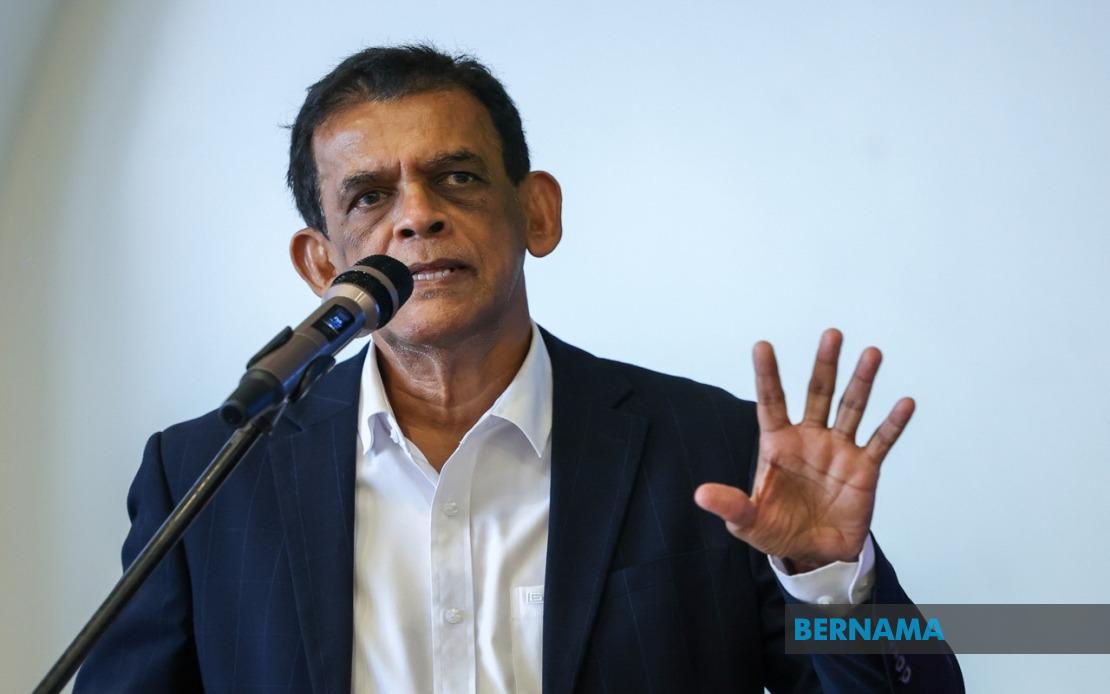
Malaysia's music sector faces mounting pressure to overhaul its fragmented royalty system, with the Malaysian Artistes Association (Karyawan) formally urging the government to assume direct management of music rights collection and payments. The call comes after years of complaints about opacity in how artists are compensated for their work, with the industry now recognizing that piecemeal reforms have failed to address systemic problems plaguing the profession for over two decades.
Datuk Freddie Fernandez, Karyawan's president, outlined the proposal at the association's recent annual general meeting, where members unanimously endorsed a comprehensive restructuring plan. The initiative draws inspiration from Indonesia's approach, where the National Collective Management Institution operates a centralized system that streamlines public performance royalty collection across the archipelago. Indonesia adopted this model after its own music sector faced comparable challenges—a precedent that Freddie believes demonstrates the viability of government intervention in resolving industry deadlocks.
The scale of Malaysia's music royalty economy underscores the urgency of reform. With public performance royalties alone approaching RM200 million annually, the current framework's inefficiencies represent a substantial loss to artists and creators. The existing structure relies on competing collective management organizations that operate independently, creating overlapping administrative costs, inconsistent distribution practices, and frequent disputes over how money flows from venues, broadcasters, and digital platforms to rights holders. Small and mid-tier artists, in particular, report difficulty tracking their earnings or understanding why their expected payments fail to materialize.
Karyawan's proposal envisions a unified digital platform operating under government supervision that would serve as Malaysia's national music rights registry and automated royalty distribution engine. This system would consolidate music registration, usage tracking, rights ownership verification, and payment calculation into a single auditable database accessible to all stakeholders. Every time a song is performed publicly, streamed, or broadcast, the platform would automatically match that usage to its verified rights holder and calculate payments based on agreed tariffs. Such transparency would eliminate the opacity that currently plagues the sector, allowing artists, record labels, venues, and regulators to see exactly where money is being collected and how it is allocated.
The proposed centralized approach addresses multiple failure points in Malaysia's current ecosystem. Administrative duplication—where multiple organizations perform overlapping functions at considerable expense—would be eliminated through consolidation. The absence of a comprehensive audit trail, which currently enables both intentional concealment and simple administrative confusion, would be replaced by permanent, verifiable records. Most critically, the system would enforce accountability by creating an transparent record that any stakeholder could review, reducing opportunities for funds to disappear into bureaucratic gaps or corporate inefficiencies. For artists seeking to understand why their earnings fall short of expectations, this transparency would provide concrete evidence to support claims or renegotiations.
The timing of Karyawan's push reflects deepening frustration over royalty disputes that have captured public attention. The case of late music legend Sudirman Arshad exemplifies the system's dysfunction—his family received RM367,000 in accumulated royalties only recently, decades after those payments should have reached him. This single high-profile instance prompted multiple Karyawan members to report similar shortfalls from album sales and streaming platforms, suggesting a pattern rather than isolated error. Record labels, whose responsibility it is to remit artist shares of streaming and sales revenue, allegedly retain these funds indefinitely or dispute calculation methodologies, leaving creators unable to access earnings they are contractually owed.
The proposed digital platform would help address these collection failures by establishing a unified mechanism that bypasses traditional record label intermediaries for certain payment streams. By creating a centralized database of ownership rights and licensing records, the government-managed system would enable direct verification of who is legally entitled to royalties from any given usage, reducing opportunities for labels to obscure payments or delay distributions. This shift would represent a significant power realignment in Malaysia's music industry, potentially constraining label discretion over artist compensation—a reality that explains why some industry players may resist the proposal despite its apparent benefits to creators.
An additional concern motivating the reform is the emergent challenge of artificial intelligence-generated music. As AI tools become capable of creating commercially viable compositions without human authorship, Malaysia's existing royalty framework provides no mechanism to distinguish between human-created and machine-generated works, nor does it address how payments should be distributed when AI systems reference or build upon copyrighted material. A centralized digital platform would facilitate the regulation and tracking necessary to address this novel problem before AI-generated content destabilizes traditional music industry economics and artist incomes.
The proposed system aligns with principles outlined in the Copyright (Collective Management Organisation) Guidelines 2025, which establish standards for governance, transparency, and accountability in royalty management. Karyawan's proposal essentially calls for the government to implement these principles through direct management rather than relying on private collective management organizations to police themselves. This approach acknowledges that market forces and self-regulation have proven insufficient to ensure fair distribution, and that government intervention is necessary to protect creative professionals from exploitation or neglect.
The proposal emerges against a backdrop of ongoing legal disputes involving Karyawan, MyIPO (Intellectual Property Corporation of Malaysia), the Ministry of Domestic Trade and Cost of Living, and the three existing royalty collection bodies—Music Authors' Copyright Protection, Public Performance Malaysia, and Recording Performers Malaysia. These organizations have taken legal action against the government, suggesting tensions between industry players and regulators over the direction of reform. Karyawan's formal proposal attempts to move beyond litigation by offering a constructive path forward that would satisfy creator interests while establishing a more rational framework for industry participants.
Implementing such a system would require substantial upfront investment in technology infrastructure, extensive coordination among existing collecting societies, and careful legislative drafting to define the government's role and authority. International experience suggests that transition periods can be contentious, as incumbent organizations defend their market positions and stakeholders worry about disruption. Yet Malaysia's music sector appears willing to embrace significant structural change given the status quo's demonstrated failures. If the government accepts Karyawan's proposal, it would position Malaysia as a Southeast Asian leader in applying digital solutions and transparency mechanisms to creative industry governance—a model that might eventually influence the region's broader approach to cultural commerce.

