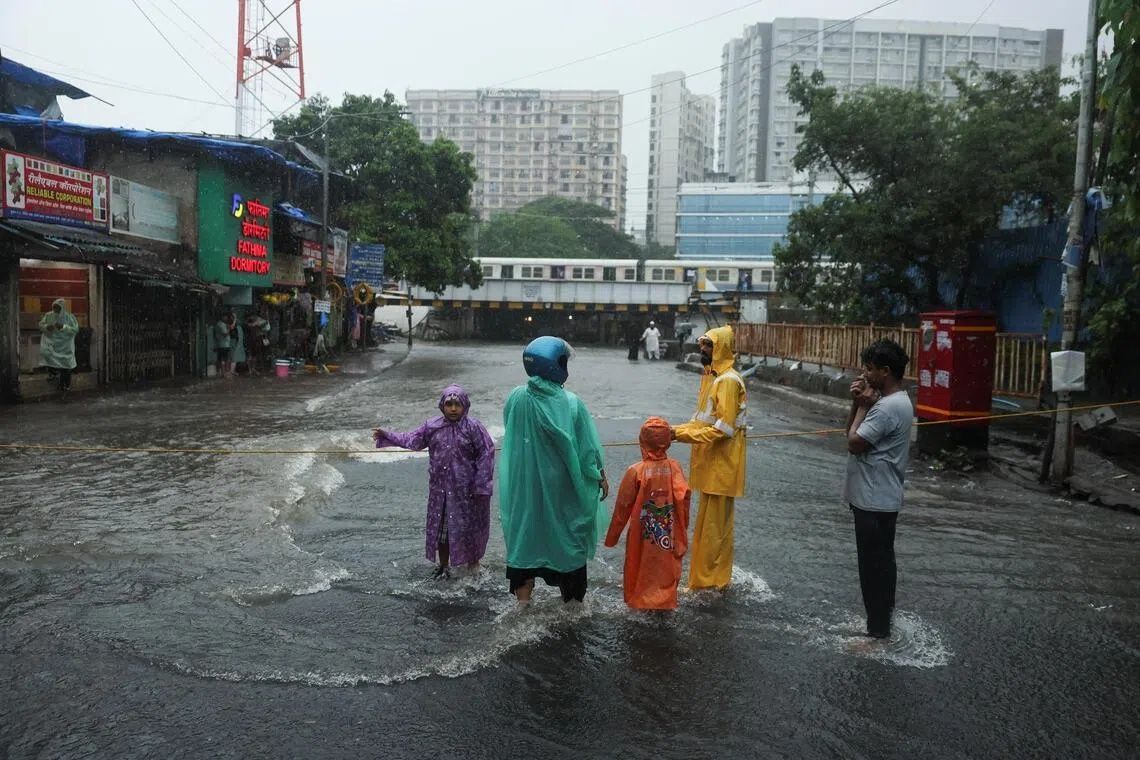
The ongoing monsoon assault on Mumbai has exposed critical weaknesses in the city's civic preparedness, claiming at least two lives and paralysing traffic across multiple neighbourhoods as the India Meteorological Department issued an orange alert for July 3. The convergence of natural disaster and administrative negligence has sparked fierce political debate about accountability, with senior lawmakers demanding that responsibility extends beyond lower-level officials to those in positions of genuine authority.
The tragedy began on June 30 when Chembur witnessed a heartbreaking incident that would galvanise public outcry. A massive tree, weakened by strong monsoon winds, came crashing down onto a school bus transporting students from Universal High School and Tilak Nagar School. The impact trapped children inside the vehicle, necessitating emergency teams to deploy specialised cutting equipment to extract them. Among the injured was 11-year-old Vihan Shrivastav, who despite receiving medical care at Zen Hospital, succumbed to his injuries. Other students were hospitalised, and the incident immediately became a flashpoint for discussions about environmental management and safety protocols during the monsoon season.
The political response was swift but revealed underlying tensions about how responsibility should be distributed. Maharashtra minister Ashish Shelar acknowledged the incident as unfortunate and outlined that both the state government and the Brihanmumbai Municipal Corporation bore responsibility for supporting the grieving family. His statement indicated that action would be directed at officers culpable in the failure, suggesting some form of disciplinary process was underway. However, this initial response did not satisfy elected representatives closer to the ground.
MLA member Rohit Pawar, after meeting with Vihan's bereaved parents, articulated a more pointed critique. He emphasised that the child was the couple's only son, lending tragic weight to the loss, before arguing that punishing junior staff alone would represent an inadequate response. Pawar contended that senior officials responsible for overseeing pre-monsoon inspections of roads, drains, and civic infrastructure must also face consequences, suggesting that a pattern of preventable incidents pointed toward systemic negligence rather than isolated mistakes. His intervention highlighted how elected representatives, particularly those with direct constituency connections, often push bureaucratic accountability to levels that initial government statements do not encompass.
Just three days later, on July 2, an equally preventable tragedy struck in Sakinaka, where 60-year-old Aslam Isak Shaikh fell into an open manhole during the deluge. The circumstances proved damning: civic maintenance crews had removed the drainage cover without implementing proper barricading or warning systems. Shaikh, engaged in a mobile phone conversation at the moment of catastrophe, was swept away by the torrential flow of water. The subsequent search operation consumed three hours before his body was recovered, compounding the trauma for his family and onlookers.
This second incident ignited a more aggressive political response. MLA member Vijay Wadettiwar demanded criminal investigation into the officials responsible, framing the uncovered manhole as a clear dereliction of duty during a weather emergency when such infrastructure became particularly hazardous. Wadettiwar's call for an FIR represented an escalation beyond administrative action, suggesting that criminal negligence rather than mere administrative mistake might be the appropriate legal framework. His statement underscored how elected representatives, confronted with preventable deaths, increasingly invoke law enforcement mechanisms to signal the gravity of civic failures.
MLA Speaker Rahul Narwekar acknowledged the incident had been raised in the legislative assembly and requested a detailed report, though his characterisation of the event as "very unfortunate" seemed measured relative to the severity of the circumstances. Meanwhile, Mumbai Mayor Ritu Tawde took a somewhat different tack, labelling the manhole incident an "administrative mistake" while announcing a compensation package of 10 lakh rupees for Shaikh's family. The terminology difference—from potential criminal negligence to administrative error—revealed how municipal authorities attempt to frame such incidents differently than representatives further removed from civic infrastructure responsibilities.
Beyond the fatal incidents, the monsoon spell has created cascading disruptions across Mumbai's already-stressed transportation network. The Sion-Panvel Highway experienced a major truck overturning near Kharghar Toll Plaza, blocking multiple lanes and triggering substantial congestion as emergency teams worked to clear the wreckage. Simultaneously, waterlogging persisted in neighbourhoods including Dadra East and Sion Gandhi Market, where commuters found themselves stranded in protracted traffic jams during morning hours. These systemic transport disruptions compound the human cost of the monsoon, affecting livelihoods and economic activity across the metropolis.
The underlying issue driving political anger concerns the efficacy of pre-monsoon civic preparations. Mumbai's civic authorities conduct inspections of roads, drains, and related infrastructure supposedly before the monsoon season begins, ostensibly to prevent precisely the types of incidents that unfolded. Rohit Pawar's questioning of these inspection regimes proved particularly pointed, suggesting that their recurrence indicates systemic negligence rather than unforeseen circumstances. This critique implies that the city's civic machinery may lack either the resources or institutional discipline to execute its stated protective mandate, a particularly serious charge for India's financial capital.
For Malaysian readers, Mumbai's monsoon crisis offers sobering parallels and contrasts worth considering. Southeast Asian cities including Kuala Lumpur and George Town experience similarly intense monsoon precipitation, yet experience considerably fewer fatalities from fallen trees or uncovered infrastructure. This difference may reflect variations in tree management practices, drainage maintenance protocols, or civic enforcement mechanisms. The rapid politicisation of Mumbai's incidents also highlights how elected representatives can intensify pressure on bureaucratic accountability when constituents perceive systemic failure, a dynamic relevant to Malaysian municipal governance discussions.
The India Meteorological Department's orange alert signalled that heavy rainfall would persist over the next 24 hours following July 3, prompting civic authorities to urge residents to avoid unnecessary travel. This advisory reflected both meteorological reality and implicit acknowledgement that civic systems remained overwhelmed by the precipitation volume. The combination of ongoing natural disaster and demonstrated administrative vulnerability created a period of genuine public risk, when infrastructure failures could translate rapidly into further fatalities.
The twin tragedies reveal how monsoon season, whilst a predictable annual phenomenon in the Indian subcontinent, continues to expose vulnerabilities in urban systems supposedly designed to withstand it. The deaths of a child from a falling tree and a middle-aged man from an uncovered manhole might appear as isolated accidents, yet the political response correctly identified them as symptoms of institutional failure. Whether compensation payments and selective disciplinary action will meaningfully alter civic practices remains uncertain, but the public pressure demonstrated that such incidents now carry genuine political cost for those in authority.

