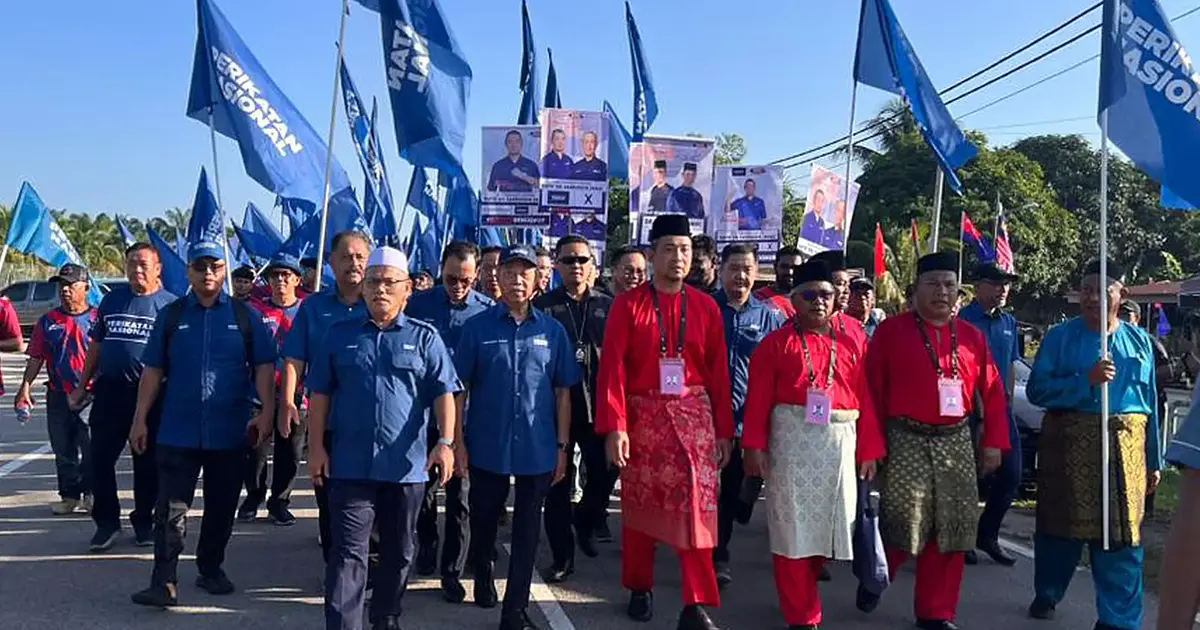
Perikatan Nasional chairman Muhyiddin Yassin demonstrated the coalition's backing for its Bukit Kepong candidate by leading a substantial rally of party supporters through the constituency. The former prime minister's public endorsement underscored the importance of the seat to the opposition alliance, particularly as the electoral environment in Malaysia remains fluid with shifting political allegiances across the peninsula.
Dr Sahruddin Jamal, the incumbent assemblyman serving his second term, carries the Bersatu banner into the contest. His renomination reflects the party's confidence in his grassroots standing and legislative record. Bersatu, as a core component of Perikatan Nasional, has positioned itself as a credible alternative to the ruling Pakatan Harapan coalition, and securing this seat would provide momentum for the broader alliance's electoral prospects.
The scale of the rally involving hundreds of supporters signals internal cohesion within Perikatan Nasional at a moment when political fragmentation has weakened opposition movements. Muhyiddin's personal involvement carries symbolic weight, as his ability to command such gatherings remains central to the coalition's claim of substantial grassroots organisation. For party members and observers, the turnout demonstrates mobilisation capacity that competing coalitions must account for in their strategic planning.
Bukit Kepong's electoral profile matters within the broader Malaysian political landscape. As a state constituency, contests here reflect whether traditional strongholds remain consolidated or whether voter sentiment has shifted toward competing visions of governance. The constituency's demographic composition—encompassing urban and semi-urban populations—makes it representative of swing territories where election outcomes often crystallise wider national trends.
Dr Sahruddin's incumbency provides tactical advantages in the race. Two terms represent established relationships with constituents, demonstrated institutional knowledge, and visibility through legislative committees and local development initiatives. However, incumbency can also invite scrutiny of performance and grievances accumulated over previous terms. Candidates in his position must balance defending their record with articulating a forward-looking agenda that resonates with voters concerned about economic pressures, education quality, and local infrastructure.
Perikatan Nasional's strategy of deploying senior leaders like Muhyiddin for candidate support serves multiple purposes beyond Bukit Kepong itself. Such rallies generate local media coverage, reinforce party messaging to grassroots activists who amplify messages within their networks, and project an image of united leadership that appeals to undecided voters wary of political instability. In Malaysia's multi-party environment, perceptions of organisational coherence and leadership stability influence voter calculations significantly.
Bersatu's position within Perikatan Nasional reflects its evolution since the party's formation. Originally emerging from UMNO dissidents and Muhyiddin's faction, Bersatu has cultivated an identity as a Malay-Muslim voice within the broader opposition coalition. Its performance in state-level contests like Bukit Kepong shapes its relevance within national coalition negotiations and its bargaining power in future government formation discussions should Perikatan Nasional gain electoral advantage.
The rally also reflects intensifying campaign activity as Malaysian electoral cycles approach. Political parties across the spectrum are mobilising supporters, sharpening messaging, and positioning candidates strategically across constituencies. For Perikatan Nasional, visible leadership involvement signals that the coalition intends to contest vigorously in state and federal elections, challenging the current government's claim to represent Malaysia's electoral mandate.
Voter dynamics in constituencies like Bukit Kepong increasingly hinge on factors beyond party machinery. Economic hardship, cost-of-living concerns, healthcare access, and education quality have displaced traditional ethnic and religious appeals as primary voting considerations for many Malaysians. Candidates must address these material concerns authentically while maintaining party discipline and coalition coherence—a balancing act that determines electoral success in contemporary Malaysia.
The presence of hundreds of supporters accompanying the candidate signals that grassroots enthusiasm exists within Perikatan Nasional networks, though translating rally attendance into actual votes remains a persistent challenge for political organisations. Effective campaigns require sustained voter contact, addressing local grievances, and building trust that party promises will materialise if elected. Dr Sahruddin's task involves converting incumbency benefits and party support into electoral victory that strengthens Perikatan Nasional's hand in any future coalition government formation.
For Malaysian political observers, such displays of opposition unity carry significance beyond individual seats. Perikatan Nasional's coherence—and whether it can sustain the alliance Muhyiddin has constructed—remains central to Malaysia's political trajectory. Each contest becomes a test case for whether the coalition can execute disciplined campaigns while managing internal tensions and competing agendas among constituent parties seeking their share of power.

