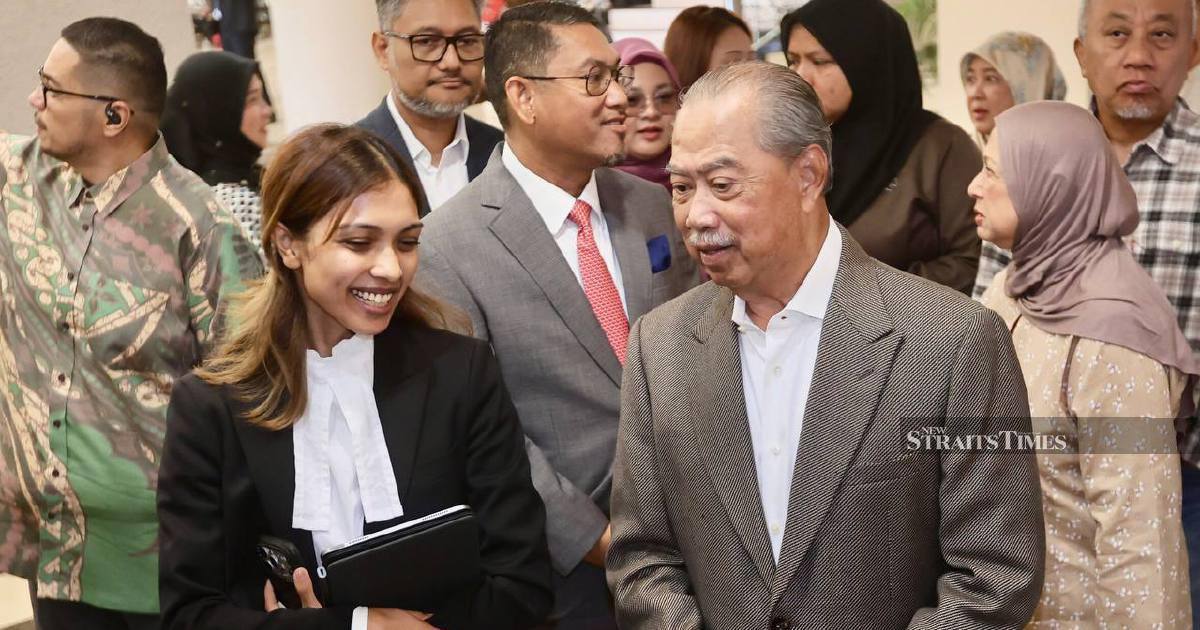
The High Court in Kuala Lumpur heard testimony today that contradicts allegations central to the Jana Wibawa case against former prime minister Tan Sri Muhyiddin Yassin. A witness brought forward by the defence stated unequivocally that Muhyiddin made no requests for financial contributions, either in his personal capacity or on behalf of his political party, Bersatu. This account forms a critical piece of evidence as the trial progresses into its examination of the circumstances surrounding the contentious transaction.
The Jana Wibawa matter has drawn considerable public attention given Muhyiddin's prominence in Malaysian politics and his tenure as Prime Minister from 2020 to 2021. The case hinges on questions regarding the nature and legality of financial dealings, making witness testimony about the intentions and communications of the key figures involved particularly significant. The defence strategy appears to focus on establishing that Muhyiddin did not actively solicit funds, thereby challenging the prosecution's narrative.
Muhyiddin's political trajectory has been marked by considerable controversy since his time in office. His government, which emerged from the collapse of the Pakatan Harapan administration, faced persistent criticism over its composition and legitimacy. The subsequent judicial proceedings against him reflect the intense political divisions that characterise Malaysian public life, where legal battles frequently become proxies for broader factional conflicts within the political establishment.
The specific allegations in the Jana Wibawa trial relate to financial transactions that occurred during a period of significant political instability in Malaysia. The circumstances surrounding these dealings require careful examination of communications, intentions, and the actual flow of money involved. Witness accounts therefore become crucial in establishing the subjective elements of any alleged wrongdoing, particularly in cases involving public figures where the distinction between legitimate political fundraising and improper conduct becomes legally and morally significant.
Bersatu, the Malay-Muslim focused party that Muhyiddin leads, has been central to Malaysian coalition politics in recent years. The party's formation and subsequent political manoeuvres have reshaped the landscape of Malaysian governance, making questions about its funding mechanisms a matter of broader concern to Malaysians interested in political integrity and transparency. Investigations into major party leaders invariably spark discussions about standards of accountability across the political spectrum.
The trial's progress reflects the Malaysian legal system's handling of high-profile cases involving senior political figures. Such proceedings attract considerable scrutiny from civil society organisations, international observers, and the general public, each bringing different perspectives on questions of justice, political neutrality, and the rule of law. The detailed examination of witness testimony in open court serves an important function in maintaining public confidence in judicial processes, provided the proceedings are conducted transparently and free from political interference.
Muhyiddin's defence team appears to be constructing an argument that emphasises his passive role in any financial transactions that occurred. By presenting witnesses who can testify that he neither initiated nor explicitly requested contributions, the defence aims to shift focus away from issues of knowledge and intent towards establishing that others may have acted independently or on their own initiative. This approach, if successful, could substantially alter how the court views the evidence presented by the prosecution.
The Jana Wibawa case sits within the broader context of post-2020 Malaysian politics, when multiple power transitions and government formations created opportunities for legal challenges to various political actors. Former government officials from multiple administrations now face various investigations and trials, creating an impression among some observers that legal processes have become entangled with factional political competition. Whether courts can maintain impartiality while handling such sensitive cases remains a question that resonates beyond this single trial.
For Malaysian readers, particularly those interested in political accountability, the case raises fundamental questions about what constitutes improper financial conduct in politics and how standards of behaviour are enforced across different parties and individuals. The principle of equal treatment under law becomes paramount when legal systems are called upon to address the activities of powerful political figures. The Jana Wibawa trial outcomes may influence public perceptions of judicial integrity and the government's commitment to holding all politicians to consistent standards.
As the trial unfolds through examination and cross-examination of witnesses, the court must weigh competing narratives and assess credibility. Today's testimony, with its clear assertion that Muhyiddin made no requests for donations, represents one piece of a larger evidential puzzle. The trial's ultimate conclusions will depend on the totality of witness accounts, documentary evidence, and the judge's assessment of what actually transpired during the period in question.

