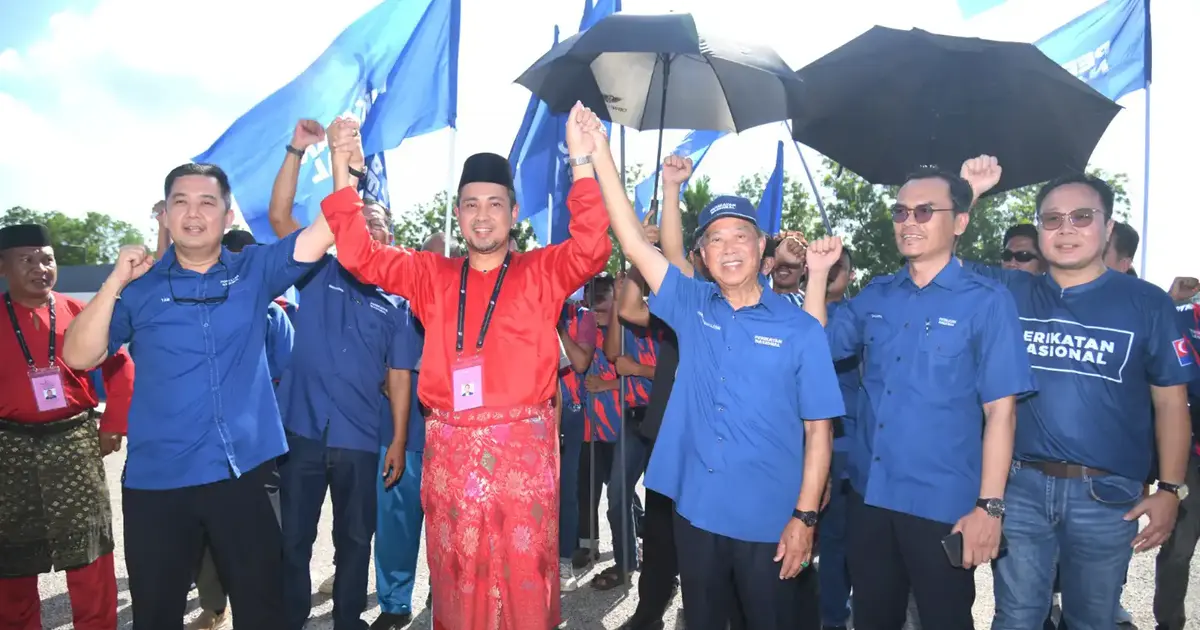
The leadership of Bersatu has adopted a measured stance toward PAS's apparent reluctance to mobilise its ground network in support of Bersatu candidates and campaigns, with party president Muhyiddin addressing the matter through the lens of principle rather than complaint. His intervention signals that while the Perikatan Nasional coalition remains committed to its foundational ideals of mutual assistance and coordinated political action, the arrangement does not presume obligations that override individual party autonomy.
Muhyiddin's characterisation of the situation reveals an important nuance in how the PN alliance operates in practice. Although the coalition framework theoretically binds its constituent parties—Bersatu, PAS, and other members—around common electoral and governance objectives, the reality of coalition politics in Malaysia involves considerable flexibility regarding the deployment of party resources. The Bersatu president's refusal to frame PAS's decision as a breach or betrayal underscores a pragmatic understanding that forcing participation would ultimately weaken rather than strengthen the coalition's internal cohesion.
This development occurs within a broader context of shifting electoral dynamics in Malaysia. The PN coalition, formed in the aftermath of the 2020 general election, has undergone multiple recalibrations as its member parties navigate divergent interests and constituency pressures. PAS, as the largest and most electorally potent component of the alliance, operates from a position of relative strength, which grants the party considerable discretion in deciding how and where to deploy its grassroots machinery. The Islamic party's calculation regarding resource allocation inevitably reflects its own strategic priorities, which may not always align seamlessly with those of smaller partners such as Bersatu.
For Bersatu, which has occupied a precarious position within Malaysian politics since its establishment, maintaining coalition relationships while preserving its own organisational integrity remains a delicate balancing act. The party's historical experience as a breakaway faction from the United Malays National Organisation has left it acutely aware of the dangers of over-reliance on larger partners or of allowing itself to be subsumed within broader political structures. Muhyiddin's measured response to the PAS machinery question thus reflects both diplomatic calculation and defensive positioning designed to protect Bersatu's interests and reputation.
The question of party machinery deployment carries substantial electoral implications. In Malaysia's first-past-the-post system, ground-level campaign infrastructure—encompassing door-to-door canvassing, grassroots mobilisation, and local networking—can prove decisive in closely contested seats. When a coalition partner declines to activate such resources, it effectively signals either confidence in the candidate's prospects or lack thereof, and it inevitably influences the overall campaign's momentum and reach. PAS's restraint thus carries material consequences for Bersatu's electoral performance in constituencies where both parties might otherwise have collaborated.
However, the implications extend beyond mechanics of campaigning. The refusal to deploy machinery might also reflect PAS's internal reassessment of the PN coalition's future viability or desirability. The Islamic party has historically maintained multiple political options and coalition alignments, and its reluctance to commit resources could signal hedging behaviour or preparation for alternative arrangements. For Bersatu, interpreting such signals requires careful attention to avoid both overreaction and complacency about the coalition's durability.
Muhyiddin's public positioning also serves important communicative functions within Bersatu's own membership and among the party's supporters. By emphasising voluntary cooperation as a cardinal principle of the PN alliance, he frames the situation as evidence of principled governance rather than coalition dysfunction. This narrative management becomes particularly important when coalition partners fail to deliver expected assistance, as it allows party leaders to maintain morale and organisational unity without admitting vulnerability or miscalculation in coalition strategy.
The interaction between Bersatu and PAS reflects broader patterns of coalition dynamics across Southeast Asia. In regional democracies characterised by multiple parties and weak natural alignments, coalitions typically operate through continual negotiation and mutual adjustment rather than through binding, enforceable commitments. Malaysia's experience demonstrates that even parties formally allied within a single coalition structure frequently pursue divergent tactical strategies, and that acknowledged autonomy in decision-making may ultimately prove more stable than rigid hierarchical arrangements.
Looking forward, the question of how PN's constituent parties distribute their campaign resources will likely shape electoral outcomes in key contested seats. Bersatu's apparent acceptance of PAS's position, rather than escalating the disagreement, suggests an understanding that temporary asymmetries in support do not necessarily undermine long-term coalition viability. This pragmatic approach may reflect confidence in Bersatu's own campaigning capacity or recognition that forcing greater involvement from PAS might prove counterproductive to overall coalition objectives.
Muhyiddin's remarks ultimately encapsulate the inherent tensions within multi-party coalitions operating within Malaysia's competitive political environment. The balance between maintaining alliance coherence and respecting constituent party autonomy requires continuous calibration, and public statements about such matters carry significance beyond their immediate content, serving to shape expectations, assert positions, and manage impressions among multiple audiences including coalition partners, members, and the broader electorate.

