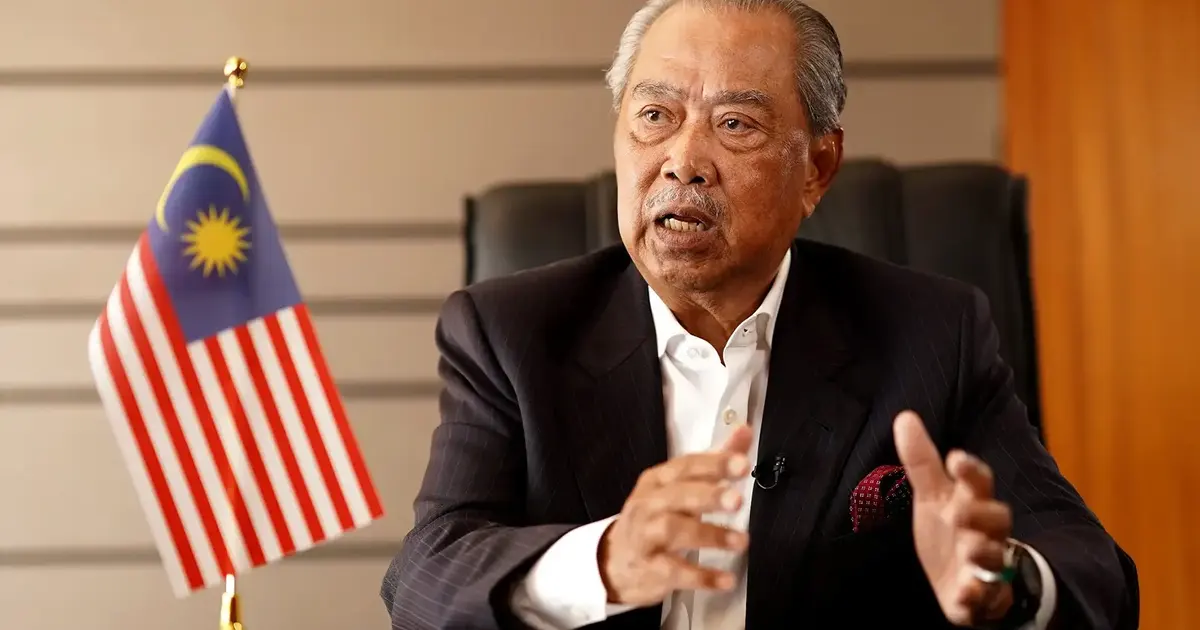
Bersatu president Muhyiddin Yassin has pushed back against assertions made by party colleague Annuar Musa concerning the reasons and context of Bersatu's departure from the Perikatan Nasional alliance, with the conflict exposing underlying tensions within the party and the broader coalition landscape that has reshaped Malaysian politics over recent years.
The disagreement centres on Muhyiddin's characterization of Bersatu as a founding member of Perikatan Nasional that was subsequently marginalized by the very political arrangement it helped establish. This allegation strikes at the heart of how coalitions function in Malaysian electoral politics, where member parties navigate competing interests, resource allocation, and strategic positioning while maintaining nominal unity.
Muhyiddin's framing of Bersatu's status within Perikatan Nasional highlights a common challenge in multi-party coalitions: the tension between formal membership and practical influence. As a founding member, Bersatu held a claim to foundational legitimacy within the bloc, yet this standing appears insufficient to guarantee meaningful decision-making power or equitable treatment in the coalition's operations and policy direction.
The dispute carries implications beyond internal party dynamics. Perikatan Nasional emerged as a significant political force in Malaysian politics, particularly following the 2020 general election and its aftermath. The coalition's stability and coherence depend partly on member parties feeling adequately valued and consulted. When prominent figures publicly contest the treatment their parties have received, it signals potential fractures that could impact the bloc's electoral prospects and parliamentary effectiveness.
Annuar Musa's position within this disagreement requires contextual understanding. As a senior figure within Bersatu, his statements presumably reflect broader party sentiment or specific grievances within the leadership structure. The fact that Muhyiddin felt compelled to respond directly suggests the allegations carried sufficient weight to demand clarification, indicating these are not trivial organisational matters but substantive questions about the coalition's functioning.
Bersatu's trajectory within Malaysian politics has been notably volatile. The party's formation, its shifting alliances, and its subsequent repositioning have all reflected the fluid nature of Malaysian coalition politics, where pragmatism often outweighs ideological consistency. Against this backdrop, Bersatu's experience within Perikatan Nasional—whether as a sidelined member or a fully engaged partner—represents a crucial chapter in the party's organizational history.
The question of marginalization within coalition structures is particularly relevant for Malaysian readers given the country's pattern of governing through multi-party arrangements. The Barisan Nasional model, the various federal-level coalitions since 2018, and now Perikatan Nasional all demonstrate that holding formal coalition membership does not guarantee substantive influence. This reality confronts smaller or newer parties that join larger blocs, often forcing difficult choices between maintaining face through continued membership or withdrawing to preserve party autonomy.
Muhyiddin's response to Annuar appears designed to establish his narrative regarding Bersatu's exit—framing it not as a party failure or leadership mistake, but as a necessary step to escape an arrangement that had become constraining. This narrative management matters considerably for Bersatu's internal morale and external perception, particularly among supporters who must understand whether their party chose to leave or was effectively pushed out.
The broader Southeast Asian context adds another dimension to this internal Malaysian political dispute. Regional observers monitor coalition stability in Malaysia as an indicator of democratic health and political maturity. Public disputes over treatment within coalitions, while not uncommon, can reflect deeper governance challenges if member parties lack confidence in the decision-making structures and dispute resolution mechanisms within their alliances.
For Malaysian voters and political observers, this exchange underscores how coalition politics operates beneath the surface of formal arrangements. The public statements from Muhyiddin and Annuar represent only the visible portion of what are likely more extensive internal discussions, negotiations, and disagreements about Bersatu's positioning within Perikatan Nasional and the broader political ecosystem.
The implications for Perikatan Nasional itself warrant consideration. The alliance requires stability among its member parties to function effectively as a parliamentary force and electoral unit. When prominent members engage in public disputes about how they have been treated, it necessarily raises questions about the coalition's governance structures and whether they adequately protect member interests and ensure fair representation in decision-making processes.
Looking forward, this dispute may influence how other smaller parties evaluate their participation in coalition arrangements. The experience of Bersatu—whether accurately characterized as sidelined or reasonably disputed—sends signals to other potential coalition members about what membership actually entails and whether the security of belonging to a larger bloc outweighs the constraints that coalition discipline and hierarchy impose on individual party autonomy and strategic direction.

