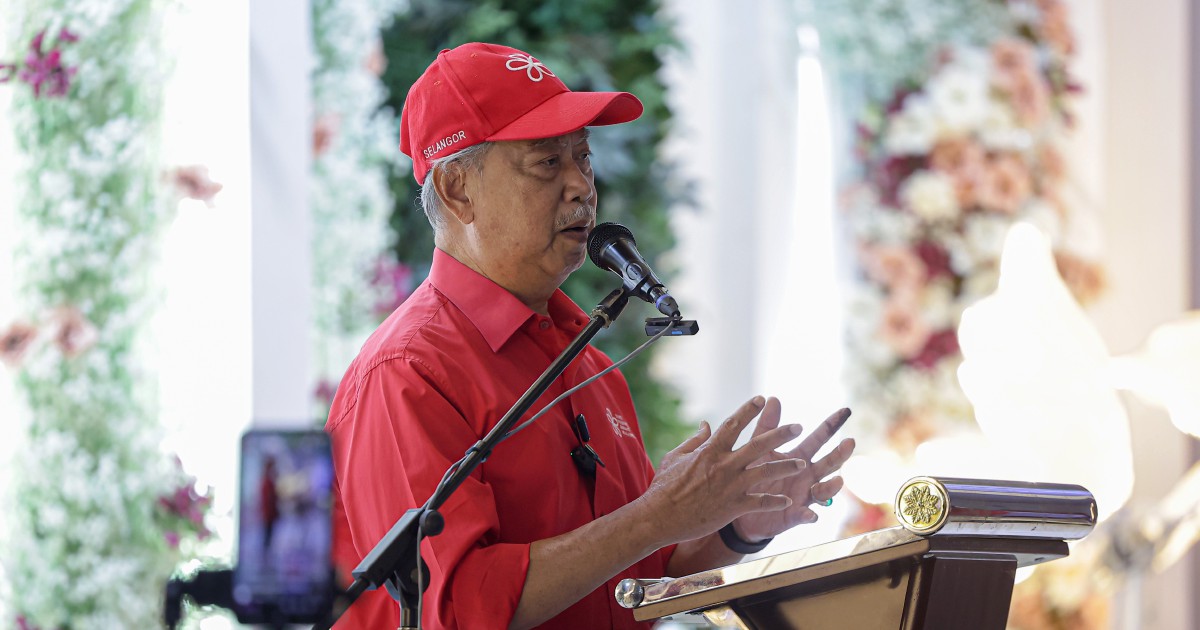
Seremban has become the latest flashpoint in Malaysia's ongoing political tensions, as Bersatu president Tan Sri Muhyiddin Yassin publicly challenged Umno vice-president Datuk Seri Mohamed Khaled Nordin over comments labelling his party a political spoiler in the Negri Sembilan election contest. The exchange underscores persistent friction within the broader coalition landscape, even as parties maintain formal alliance arrangements at national and state levels.
Muhyiddin's sharp rebuttal signals Bersatu's determination to stake its own electoral territory independently, rather than function as a subordinate partner within the Umno-dominated framework. The Bersatu chief rejected the characterisation that his party's participation somehow diminishes the broader coalition's election prospects or fragments the Malay-Muslim voting bloc. This defensive posture reflects growing apprehension among Bersatu leadership that the party risks political marginalisation if confined to a limited roster of parliamentary seats and constituency allocations.
The dispute carries particular weight in Negri Sembilan, a state where coalition dynamics have historically proven volatile and where no single component maintains unchallenged dominance. Competition between Umno and Bersatu in the state represents a microcosm of broader tensions within Barisan Nasional structures, where seat allocations and campaign prominence frequently generate grievances among coalition members jostling for resources and visibility.
Khaled's 'spoiler' characterisation appears rooted in concerns that Bersatu's separate candidacies could split non-opposition votes in marginal constituencies, potentially gifting seats to opposition parties. This logic has governed intra-coalition negotiations for decades, driving agreements to avoid three-way contests that might disadvantage both Barisan components. However, Bersatu's leadership increasingly contests this zero-sum framework, arguing that the party merits recognition as a distinct political force with its own voter base rather than merely as an adjunct to Umno.
From a strategic perspective, Bersatu's refusal to accept subordinate positioning reflects lessons learned from recent electoral cycles where the party failed to gain meaningful traction through accommodation arrangements. Party strategists evidently calculate that independent candidacies, even if producing mixed results, better serve long-term organisational development than accepting a diminished role within coalition hierarchies. This calculation mirrors dynamics observable across Southeast Asian coalition politics, where smaller partners frequently resist marginalisation pressures.
For Malaysian readers, this intra-Barisan tension carries implications extending well beyond Negri Sembilan's state assembly seats. The underlying conflict between Umno's presumption of coalition primacy and Bersatu's insistence on autonomous political space touches fundamental questions about the trajectory of Malaysian coalition politics. Whether the Barisan system can accommodate multiple substantial Malay-Muslim components, or whether it gravitates toward Umno-dominated subordination of junior partners, remains an open question with ramifications for future electoral outcomes.
The Negri Sembilan contest thus becomes a crucial testing ground for these competing visions. Muhyiddin's forceful rejection of the spoiler label represents a calculated bet that Bersatu possesses sufficient grassroots organisation and voter loyalty to stand independently without crippling its coalition partners' overall performance. Whether this gamble enhances or undermines Barisan's competitive position will considerably shape internal coalition discussions regarding future state elections and the crucial 2025 parliamentary contest.
Regionally, Malaysia's coalition management challenges offer relevant reference points for neighbouring democracies navigating similar multi-party alliance structures. The capacity of Malaysian political actors to resolve such tensions through negotiation rather than rupture has generally distinguished the system from more brittle arrangements elsewhere in Southeast Asia, though recent years have tested those mechanisms substantially.
Muhyiddin's public stance also reflects evolving party membership expectations, particularly among Bersatu grassroots activists who expect their party to contest meaningful races rather than accept token participation. Coalition partnership requires delicate balancing between maintaining overarching unity and satisfying internal constituencies demanding substantive electoral involvement. The Negri Sembilan dispute crystallises these competing pressures that characterise contemporary coalition politics in Malaysia.
Looking forward, the resolution of such disagreements will significantly influence whether Barisan can effectively consolidate Malay-Muslim support or whether fragmentation within coalition structures continues providing opposition forces with opportunities to advance. The Negri Sembilan election thus carries symbolic weight beyond the state itself, functioning as a barometer for coalition cohesion during a period of considerable political fluidity and voter volatility.

