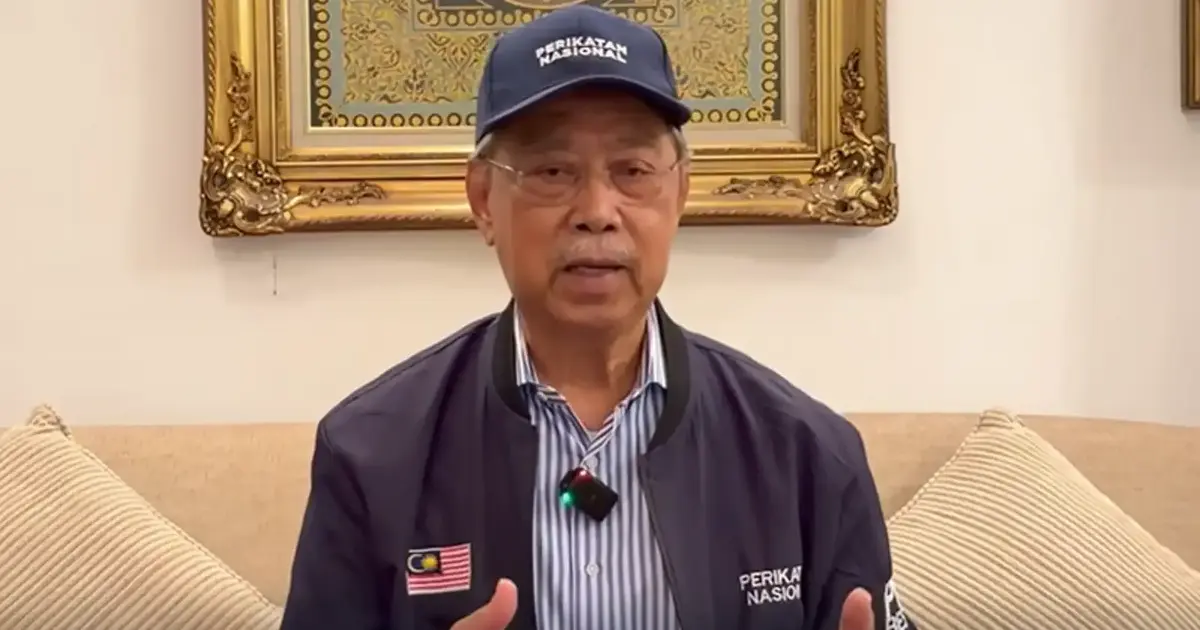
Muhyiddin Yassin, the Bersatu president and former menteri besar of Johor, has launched a direct appeal to voters across his home state, positioning himself and Perikatan Nasional as deserving of renewed electoral support. Speaking with the authenticity of a political figure with deep roots in Johor's administration, Muhyiddin framed his political trajectory as fundamentally anchored in service to the ordinary people, rather than personal advancement or factional interest.
The timing of this appeal reflects the intensifying competition for Johor's political allegiance. Malaysia's second-largest state by population remains strategically vital to any coalition seeking federal dominance, and control of Johor's state government has historically proven instrumental in broader national political contests. Perikatan Nasional's recent electoral performance has varied significantly across different regions, making targeted outreach to stronghold areas increasingly essential for the coalition's prospects.
Muhyiddin's invocation of his identity as a son of Johor carries particular weight in a state where local pride and familiarity with administrative track records influence voter behaviour significantly. His tenure as menteri besar from 2008 to 2018 provides him with a concrete platform from which to appeal for support, allowing him to reference specific policies, development initiatives, or administrative decisions that may resonate with long-term residents. This localism strategy contrasts with appeals based purely on national rhetoric or party ideology, instead grounding political legitimacy in demonstrable engagement with Johor's specific concerns and development priorities.
The broader context of Perikatan Nasional's positioning in Malaysian politics suggests a coalition attempting to consolidate support among voters who may feel disconnected from or dissatisfied with other political formations. By having Muhyiddin personally campaign in Johor—and by emphasising his personal connection to the state—Perikatan is signalling that leadership within the coalition remains genuinely invested in regional governance rather than merely using state politics as a stepping stone to federal power.
Johor's political landscape has undergone significant shifts in recent electoral cycles. The state has experienced competition between multiple coalitions, and voter preferences have demonstrated responsiveness to both national trends and local leadership qualities. Muhyiddin's strategy of emphasising continuity with his previous administrative experience suggests an attempt to appeal to voters who may prioritise stable, predictable governance and familiarity with potential leaders' governing philosophies and capabilities.
The framing of political struggle as fundamentally about serving the people rather than pursuing partisan advantage represents a rhetorical strategy designed to position Perikatan Nasional above purely factional competition. In Malaysian politics, where voters frequently express frustration with perceived self-serving behaviour among political elites, appeals rooted in public service ideology and personal sacrifice carry substantial persuasive weight. Muhyiddin's language suggests an attempt to reconstitute his public image around consistent service rather than the more controversial aspects of his political career.
For Malaysian voters in Johor and beyond, Muhyiddin's appeal raises substantive questions about what constitutes genuine accountability in political leadership. His argument implicitly rests on the premise that previous administrative performance and local knowledge should weigh significantly in electoral decisions. This contrasts with alternative emphases on ideological consistency, anti-corruption credentials, or visionary policy proposals as the proper basis for political choice. Each framework appeals to different voter priorities and values.
The regional implications of Johor's political trajectory extend beyond the state itself. Electoral outcomes in Malaysia's major states increasingly influence the broader balance of power and the formation of federal coalitions. Johor's alignment with either the Perikatan Nasional coalition or alternative groupings affects not only resource allocation to the state but also the configuration of national government and the relative influence of different political personalities and movements within Malaysia's complex political ecosystem.
Peering forward, Muhyiddin's campaign activities will likely intensify ahead of the next election cycle. His capacity to mobilise grassroots support in Johor, combined with Perikatan Nasional's organisational reach, will determine whether this direct appeal to voters proves electorally decisive. The success of such localised appeals depends partly on whether Perikatan can demonstrate tangible governance improvements or contrasting vision compared to competing coalitions, and partly on whether voters in Johor believe that returning to leadership under Muhyiddin would serve their material interests and political preferences.
Ultimately, Muhyiddin's address to Johoreans reflects a broader competition for legitimacy within Malaysian democracy, where appeals to local identity, personal leadership track records, and service-oriented governance frameworks vie with national narratives and ideological positioning. How Johor voters respond to his particular combination of personal history, political positioning, and promises of continued commitment will reverberate through Malaysia's political system and help determine the coalition configurations and leadership personalities that shape the nation's governance in coming years.

