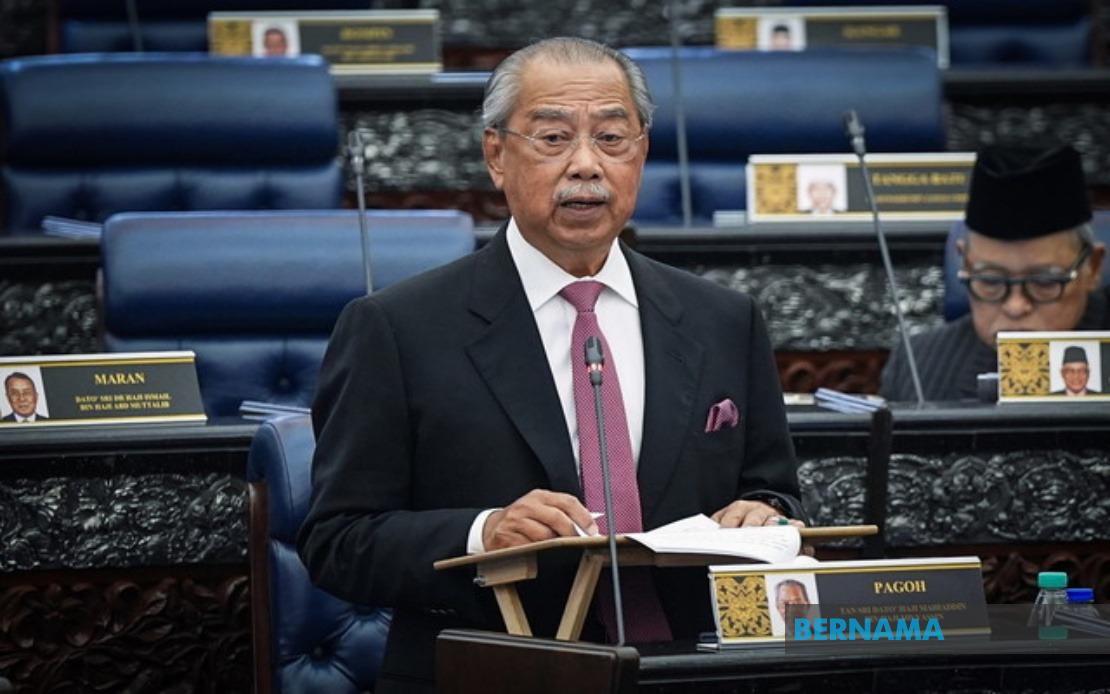
Former Prime Minister Tan Sri Muhyiddin Yassin has demanded that the government launch an immediate forensic audit of Lembaga Tabung Haji (TH), with the investigation to be concluded within twelve months. Speaking during parliamentary debate on the Royal Commission of Inquiry report into the institution on August 11, the Pagoh MP and Bersatu president emphasised that such a probe must be independent and transparent, reflecting the seriousness of governance failures uncovered in the inquiry.
The RCI findings, made public on July 29, paint a troubling picture of TH's stewardship between 2014 and 2020. The report documents estimated cumulative losses ranging from RM10 billion to RM12.6 billion over this period, a revelation that Muhyiddin insisted must be treated with absolute gravity. Rather than allowing the matter to fade from public attention, he stressed that the findings must trigger decisive action, with no room for half-measures or institutional foot-dragging.
Muhyiddin's core argument centres on the investigative power of forensic auditing. Such an examination, he contended, would enable authorities to trace the complete pathway of fund movements, pinpoint instances of fraud, document abuses of authority, and establish where negligence contributed to financial deterioration. The former premier articulated a clear expectation that anyone culpable for depleting TH's resources—whether through deliberate wrongdoing, misuse of position, or careless oversight—must ultimately face judicial consequences.
The parliamentary sitting provided a platform for multiple voices to articulate overlapping concerns about accountability. Syed Saddiq Syed Abdul Rahman, the MUDA representative for Muar, proposed establishing a Multi-Agency Task Force dedicated specifically to the fourteen investments identified in the RCI as deeply problematic. His position reflects growing frustration with fragmented investigations conducted in isolation by individual agencies, each operating within its own institutional silos without coordinated strategy or information-sharing.
Syed Saddiq's proposal envisions meaningful cooperation between the Malaysian Anti-Corruption Commission, the police force, and the Inland Revenue Board. By consolidating investigative resources under unified command, this approach promises more thorough examination of the circumstances surrounding each problematic investment and a clearer understanding of accountability chains. He further advocated extending the investigation's scope beyond TH itself to encompass related entities including Felda, FGV, and Eagle High, suggesting that governance weaknesses may form a broader pattern across government-linked institutions managing substantial public resources.
The MUDA legislator also advocated forensic auditing of the individual investments themselves, not merely their selection and governance. This granular approach would expose precisely how funds were deployed, what returns were realised or lost, and whether investment decisions adhered to established protocols and fiduciary standards. Such detailed analysis becomes essential for establishing concrete evidence of financial loss and the decisions that precipitated it.
Datak Seri Hasni Mohammad, representing Simpang Renggam for Barisan Nasional, advanced a complementary initiative designed to maintain public pressure on implementation. He proposed that enforcement agencies—MACC, police, and other relevant bodies—furnish regular progress reports within specified timelines regarding all investigations stemming from the RCI recommendations. This mechanism would prevent investigations from languishing in bureaucratic processes beyond public visibility, a common phenomenon in Malaysia where sensitive inquiries sometimes disappear from media attention and parliamentary scrutiny.
Hashni additionally recommended that the special parliamentary sitting inaugurate a sustained model of oversight. Rather than treating the RCI report as a discrete event to be debated and archived, he urged the Dewan Rakyat to establish continuous, cross-party, and institutionally-grounded parliamentary monitoring of RCI recommendation implementation. Regular reporting to parliament would create formal accountability structures where progress—or lack thereof—remains subject to legislative examination and public record.
The RCI itself identified twenty-five recommendations for institutional reform, with TH confirming implementation of approximately seventy-five percent of these proposals as of late July. However, parliamentary debate suggests this compliance rate provides limited reassurance without independent verification that reforms genuinely address root causes of previous governance failures. Implementation of procedural recommendations means little if the culture of accountability, transparency, and fiduciary responsibility remains superficial.
For Malaysian citizens, particularly the millions holding Tabung Haji accounts accumulated through years of modest contributions for hajj pilgrimage purposes, these parliamentary interventions carry profound significance. Tabung Haji functions as a savings institution serving predominantly lower and middle-income Malaysians, many of whom have entrusted the organisation with substantial portions of their retirement savings. The revelation that between RM10 billion and RM12.6 billion evaporated through mismanagement, questionable investments, and inadequate oversight strikes at the economic security of vulnerable constituencies.
The political responses from Muhyiddin, Syed Saddiq, and Hasni reflect a recognition that forensic investigation and multi-agency coordination represent prerequisites for meaningful accountability. Forensic auditing particularly offers advantages over conventional financial audits by deploying investigative techniques oriented toward detecting fraud and establishing intentionality—critical factors when determining whether losses resulted from honest miscalculation or culpable misconduct. The one-year timeframe Muhyiddin proposed provides a definite deadline against which progress can be measured, preventing indefinite延续ion of investigations that produce no prosecutorial outcomes.
Beyond immediate justice considerations, these initiatives address broader governance questions affecting Malaysia's large portfolio of government-linked institutions managing public wealth. If TH's substantial losses proceeded unchecked for years despite formal governance structures, audit functions, and board oversight, systemic vulnerabilities likely extend across similar entities. The parliamentary debate thus carries implications extending well beyond Tabung Haji itself, raising fundamental questions about institutional accountability mechanisms in Malaysia's public administration.

