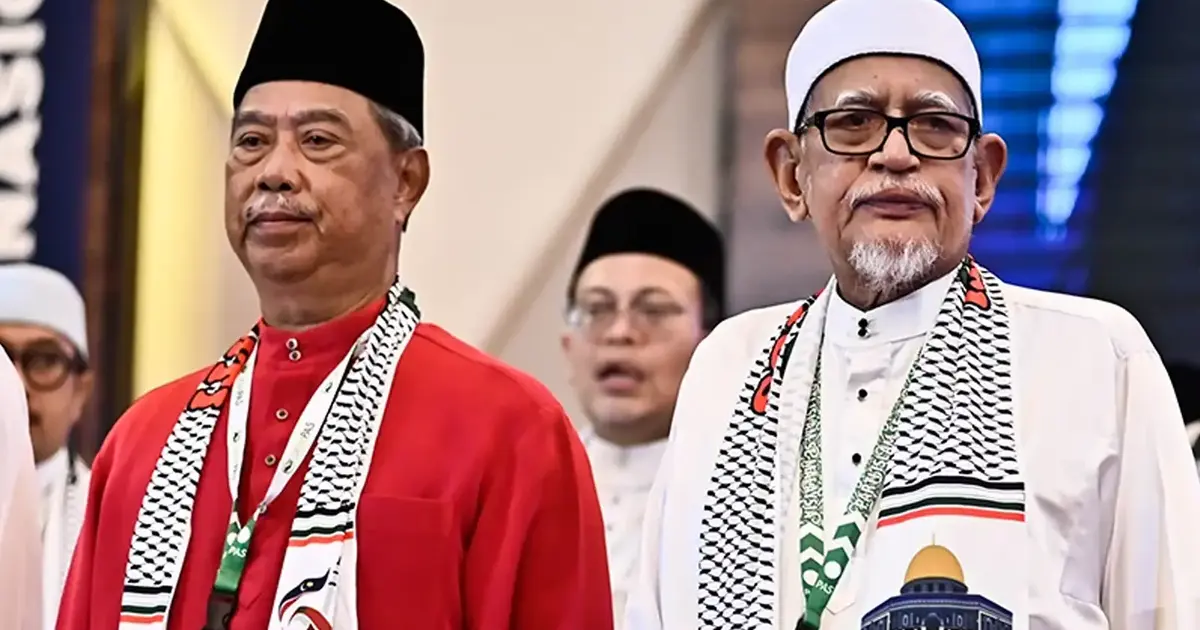
Muhyiddin Yassin, the president of Bersatu, has launched a sharp rebuke of PAS for engaging in separate alliance discussions with Barisan Nasional, accusing the Islamic party of making autonomous decisions that undermine Perikatan Nasional's strategic interests. The dispute represents a significant strain on the coalition that currently props up Malaysia's government, highlighting deep fissures within the ruling alliance just as the political landscape enters a critical period ahead of potential state elections and the next general election.
The core grievance articulated by the Bersatu leader centres on what he characterises as PAS's violation of coalition discipline and established protocols. Within any ruling alliance, coordination on major political moves is typically essential to maintain unity and project strength. By pursuing separate negotiations with Barisan Nasional—itself a powerful political force—without apparent consultation with Bersatu or other Perikatan Nasional members, PAS has apparently crossed a line that Muhyiddin regards as fundamental to keeping the coalition functional. The accusation suggests that such talks were conducted without the knowledge or approval of fellow coalition partners.
The implications of this breach extend well beyond a mere disagreement between two parties. Perikatan Nasional comprises multiple political entities, each with distinct ideological positions and organisational interests. When one major component acts unilaterally on matters of coalition strategy, it creates uncertainty about the stability of the entire arrangement. For a government coalition that has already faced numerous internal pressures and reshuffles since its formation, this kind of public dispute raises questions about whether the current configuration can survive intact until the next election cycle.
PAS's position as an Islamic party within Malaysian politics gives it considerable leverage with a significant voter base, particularly in states like Kelantan and Terengganu where it maintains strong electoral support. This influence may embolden the party to pursue independent political initiatives, including exploring relations with Barisan Nasional. However, such moves necessarily affect Perikatan Nasional's negotiating position and could shift the balance of power within government structures. Muhyiddin's public criticism appears designed to reassert the importance of collective decision-making within the alliance.
The Barisan Nasional connection is particularly significant given its own complex position in Malaysian politics. Once the dominant coalition for decades, Barisan Nasional has undergone substantial reorganisation and realignment since the 2018 general election. Its attempts to rebuild political relevance and influence often involve cultivating relationships with various parties and political figures. If PAS is indeed exploring closer ties with Barisan Nasional, this could reflect changing calculations about which coalition offers better long-term prospects for the Islamic party's political advancement.
Muhyiddin's intervention suggests that Bersatu views such unauthorised talks as a threat to the stability of the current governing arrangement. As the party he leads depends on Perikatan Nasional's coalition status for government positions and policy influence, any weakening of the alliance directly affects Bersatu's own standing and leverage. His willingness to publicly criticise PAS indicates the severity with which Bersatu views this matter and his determination to enforce coalition discipline through public pressure if necessary.
For Malaysian voters and observers, this dispute underscores a recurring pattern in the country's post-2018 political environment: the relative fragility of ruling coalitions constructed from ideologically diverse components. Perikatan Nasional was itself born from a realignment in 2020 and has never commanded the same degree of internal cohesion or voter mandate that characterized earlier governing coalitions. Such structural vulnerabilities become exposed when individual parties pursue interests that diverge from collective coalition strategy.
The broader question facing all parties involved concerns the sustainability of the current governing model. If major coalition partners cannot maintain discipline on critical matters like high-level political negotiations, the entire structure becomes vulnerable to sudden shifts or collapse. This creates potential opportunities for opposition parties while simultaneously increasing uncertainty about governance and policy continuity. For businesses, civil society, and the public, such instability translates into less predictable policy environments and potentially reactive rather than strategic decision-making at the government level.
Regionally, Malaysia's political stability affects investor confidence and the nation's diplomatic relationships. Coalition instability can signal weakness to external observers and potentially complicate Malaysia's positioning in international affairs. Countries in Southeast Asia closely monitor Malaysian political developments, particularly regarding government composition and policy direction on critical regional issues. Persistent internal coalition tensions may therefore have consequences extending beyond domestic politics.
How Muhyiddin and other Perikatan Nasional leaders respond to this impasse will likely determine whether the coalition can recover its footing or whether it faces further fracturing. The incident serves as a reminder that Malaysian politics remains highly fluid, with shifting alliances and strategic calculations constantly reshaping the political landscape. The coming weeks will be crucial in determining whether this dispute can be managed through private negotiations or whether it signals the beginning of more fundamental realignments within the ruling coalition.

