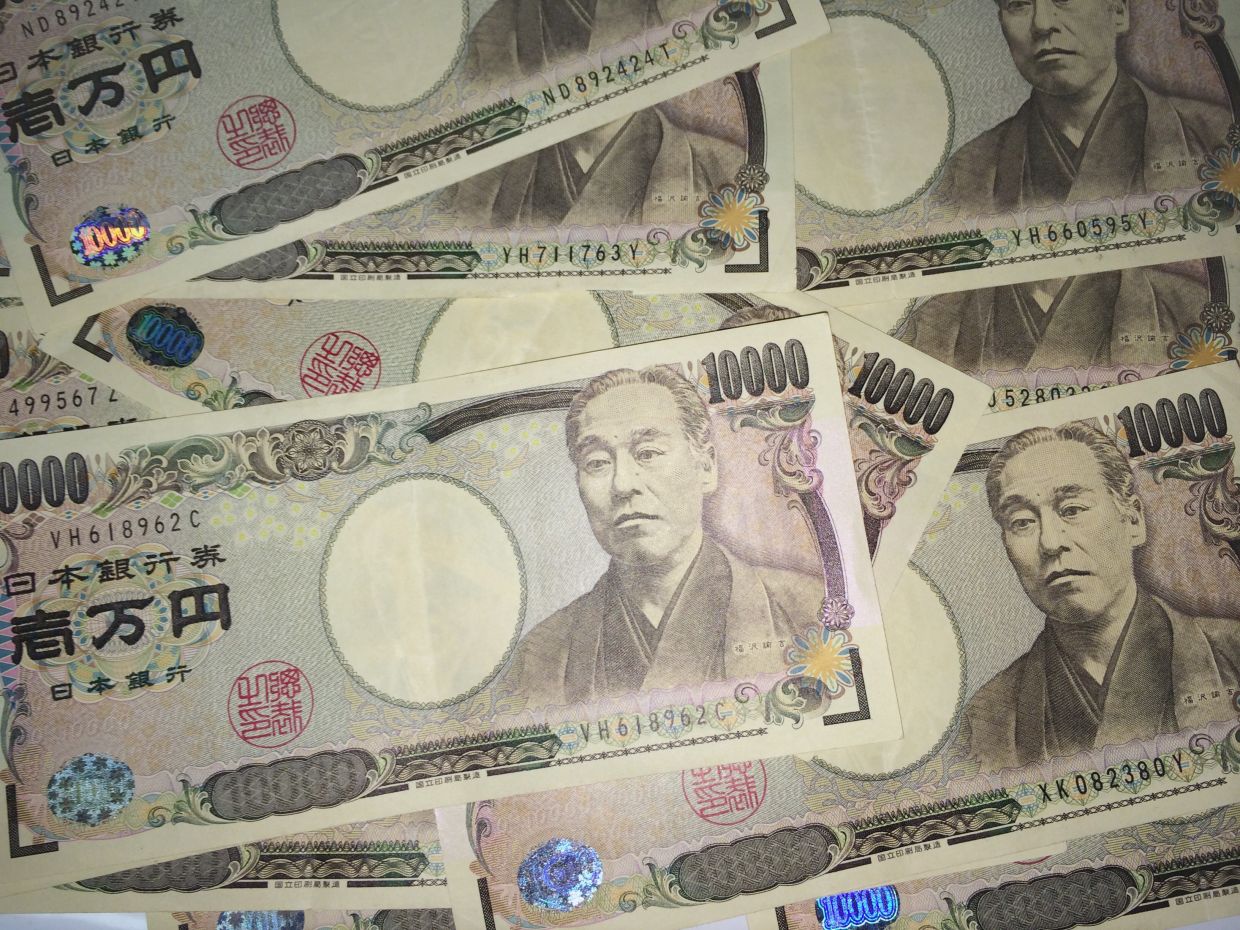
The Japanese yen continues its stubborn descent against the U.S. dollar, trading near levels not seen in four decades and testing the resolve of policymakers struggling to stabilize the currency. On Friday, the yen held at 161.205 against the greenback, merely marginally stronger than its two-year nadir reached the previous day, reflecting the limited impact of conventional policy tools and market interventions that have failed to reverse the relentless depreciation trend.
What makes the yen's weakness particularly striking is that it has persisted even after significant policy actions that would ordinarily be expected to support the currency. The Bank of Japan lifted its benchmark interest rate to a 31-year high just recently, a notable tightening move that typically attracts foreign investors seeking better returns and props up a currency. Yet this hawkish signal from the central bank has barely registered with markets. Earlier this year, the Ministry of Finance also conducted direct dollar-selling intervention, a more aggressive tool deployed when other measures prove inadequate, yet the yen has continued grinding lower despite these efforts.
Market observers attribute this disconnect to growing doubts about Japan's broader policy direction. Concerns surrounding the spending ambitions of Prime Minister Sanae Takaichi have eroded investor confidence in the government's fiscal discipline and its ability to support the yen over the medium term. When markets worry about a government's budgetary trajectory, they tend to discount currency appreciation, even if the central bank is tightening monetary policy. This tension between tightening monetary policy and expansionary fiscal plans creates uncertainty about Japan's long-term economic health, undermining the currency's appeal.
Analysts at IG in Sydney expect the Ministry of Finance to mount a defensive stand around the 161.95 level, the first major psychological barrier as the yen continues weakening. According to their assessment, Japanese authorities deployed approximately 11.7 trillion yen in intervention during April and May combined. If officials repeat this scale of intervention to defend the current level, they would have exhausted roughly 11 to 12 percent of Japan's total foreign exchange reserves over a relatively compact timeframe. Such aggressive deployment raises questions about sustainability and whether the authorities possess sufficient firepower for prolonged intervention without undermining their credibility.
This calculus creates a strategic dilemma for the Ministry of Finance. After repeatedly intervening and seeing limited lasting impact, Japanese officials face mounting pressure to preserve their remaining ammunition and avoid overextending themselves. Market participants recognize that authorities must eventually become far more judicious in their approach, picking and choosing moments to intervene rather than attempting to defend every level. Squandering reserves on failed interventions could leave Japan vulnerable to future currency crises when intervention capacity truly matters. The challenge lies in communicating resolve without appearing to lack conviction when interventions fail to stick.
On the inflation front, data released Friday showed Japan's core consumer prices remained below the Bank of Japan's 2 percent target for the fourth consecutive month in May, a disappointment for policymakers who have been raising rates partly in response to inflation concerns. Government fuel price subsidies have dampened the pass-through of rising energy costs, keeping a lid on observable inflation even as underlying cost pressures accumulate. This mismatch between measured inflation and underlying price pressures has created a peculiar environment where the central bank is tightening policy to head off future inflation risks rather than current ones.
Capital Economics' analysts project that as government fuel price controls expire or ease, inflation could accelerate substantially over the coming years. Their forecasts suggest inflation could reach approximately 3.5 percent by early 2027, more than one and a half times the central bank's target. This outlook validates the Bank of Japan's preemptive rate increases, as officials want to establish credibility in fighting inflation before it becomes entrenched in expectations. Minutes from April's central bank meeting revealed that some board members explicitly advocated for quicker rate increases if Middle East geopolitical tensions persist and drive up global energy costs. Deputy Governor Ryozo Himino reinforced this stance on Friday, signalling continued determination to raise rates if underlying inflation risks overshooting targets.
The broader currency landscape showed relative stability despite various cross-currents. The U.S. dollar index, which measures American currency strength against a basket of six major currencies, held steady at 100.81 after climbing 0.5 percent to a one-year high on Thursday. Shipping through the Strait of Hormuz, a critical global trade chokepoint, resumed normal operations following the signing of a U.S.-Iran peace deal earlier in the week, easing geopolitical risk premiums that had temporarily supported the dollar. However, uncertainty persists about whether the ceasefire will prove durable, leaving markets cautious rather than fully confident.
Among other major currencies, the British pound remained flat at $1.3205 despite the Bank of England's decision to hold interest rates steady at 3.75 percent on Thursday. The central bank's caution reflected uncertainty about whether recent inflation moderations will prove sustained, making policymakers reluctant to cut rates prematurely. In Australia, the dollar slipped marginally to $0.7011, while the New Zealand dollar held stable. Cryptocurrency markets showed muted movements, with bitcoin down 0.2 percent and ether flat, suggesting institutional participants remain cautious amid broader macro uncertainties.
For Malaysia and Southeast Asia, the yen's extended weakness carries important implications. Japanese investors and corporations facing unfavourable exchange rates may become more selective with foreign direct investment, potentially affecting regional projects. Conversely, exporters competing with Japanese companies may enjoy temporary cost advantages, though this could prove temporary if the yen stabilizes. The currency volatility also highlights how persistently weak exchange rates can challenge monetary policy effectiveness, a cautionary tale for emerging market central banks. As Japan navigates between supporting growth and containing inflation expectations, the yen's trajectory will remain a key barometer of confidence in Japanese policymaking and the resilience of its economic fundamentals.