Lawmakers have stressed the critical importance of conducting any investigation stemming from the Royal Commission of Inquiry report on Lembaga Tabung Haji through transparent and independent channels, arguing that such rigour is essential to protect the interests of depositors and safeguard public confidence in Malaysia's haj management authority. The renewed focus on investigative integrity reflects mounting parliamentary pressure to ensure that the findings presented in the RCI report, released publicly on July 29, translate into meaningful accountability rather than devolving into political finger-pointing.
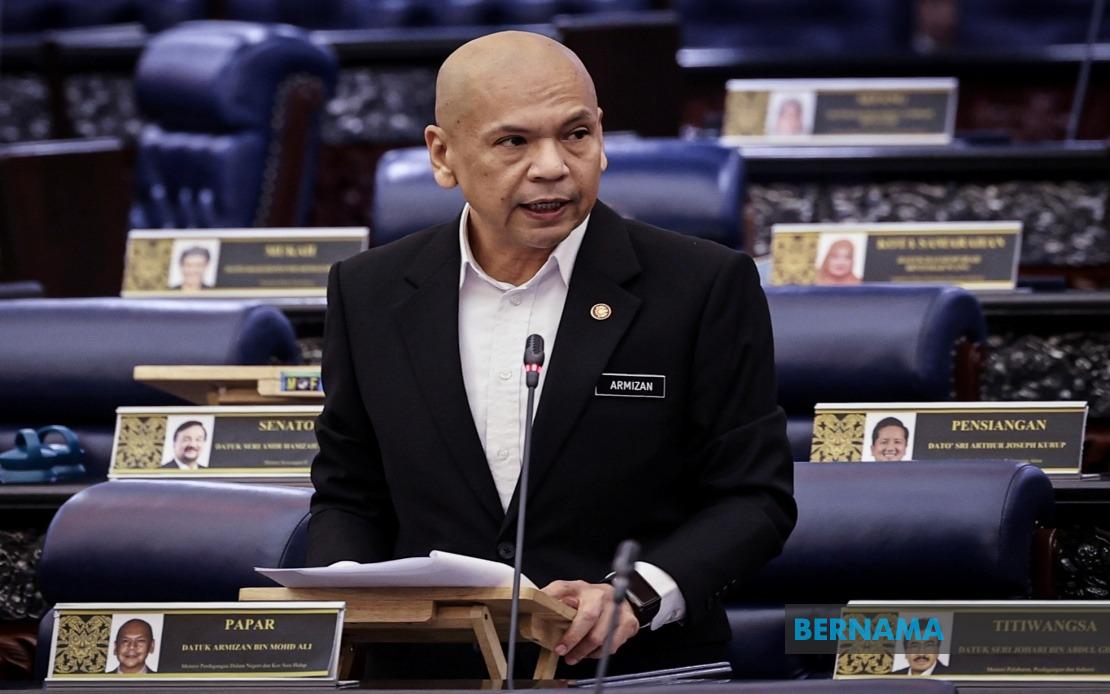
During a special sitting of the Dewan Rakyat dedicated to examining the commission's conclusions, Minister of Domestic Trade and Cost of Living Datuk Armizan Mohd Ali articulated the broader challenge confronting Malaysian institutions: the RCI inquiry has become mired in dispute and competing accusations among stakeholders, with allegations of slander and defamation proliferating across public discourse. This muddied environment has left ordinary Malaysians confused about which claims hold merit and who genuinely bears responsibility for governance failures. Armizan's observation underscores a troubling pattern in Malaysian public administration where institutional investigations, rather than clarifying accountability, sometimes amplify polarization.
Armizan, representing the Papar constituency, contended that professional enforcement agencies should step in to disentangle fact from accusation through rigorous investigative work grounded in legal standards and factual assessment. His call reflects a wider recognition that parliamentary debate alone cannot resolve disputes of this magnitude; the apparatus of criminal investigation and financial scrutiny must complement legislative scrutiny. The minister emphasized that transparency in such investigations ultimately serves the depositors whose savings have been affected by Tabung Haji's operational challenges and investment decisions made during the 2014-2020 period covered by the RCI.
Beyond immediate investigative measures, Armizan highlighted the necessity of systematically examining the 25 recommendations contained in the RCI report to construct a durable recovery framework for the institution. As of July 30, Tabung Haji had already implemented 75 percent of these recommendations, demonstrating administrative responsiveness to the commission's findings. However, the remaining 25 percent of recommendations require equally thorough evaluation to ensure that governance improvements address root causes rather than applying cosmetic fixes. Armizan noted that completing this recovery process would strengthen Tabung Haji's operational direction and institutional governance structures that had been weakened during the period under investigation.
The minister also commended Tabung Haji's existing recovery initiatives, acknowledging that the institution has navigated back toward financial stability despite the serious operational deficiencies identified in the RCI report. This acknowledgement serves an important function: it distinguishes between condemning institutional failures and recognizing current management efforts to prevent recurrence. For Malaysian depositors contemplating the security of their haj savings, such balanced assessment matters considerably, signalling that corrective action is underway even as accountability mechanisms activate.
Minister of Women, Family and Community Development Datuk Seri Nancy Shukri contributed a complementary perspective by defending the existing institutional division of responsibilities, particularly the placement of haj affairs administration under the Minister in the Prime Minister's Department (Religious Affairs) while finance and investment matters remain under the Finance Ministry. She characterized this arrangement as a rational specialization of duties based on sectoral expertise, contending that such compartmentalization reduces redundancy and ensures decisions are made by officials with appropriate technical knowledge. For Malaysian Muslim pilgrims and the broader taxpaying public, this institutional logic suggests that religious affairs and financial stewardship can be effectively balanced through clear jurisdictional boundaries.
Nancy directly confronted a contentious issue in the RCI's findings: the role of political appointees to Tabung Haji's board of directors. Rather than advocating for a blanket prohibition on political figures occupying board seats, she reframed the central question as one of individual competence and integrity. Her position reflects pragmatism recognizing that Malaysia's political economy inevitably involves political actors in governance roles; the legitimate concern should focus on whether these individuals possess requisite qualifications, experience, and demonstrated capability to discharge their responsibilities effectively. This distinction between political background and professional suitability represents an important nuance in governance debates frequently oversimplified as simple anti-corruption rhetoric.
Nancy advocated for establishing explicit merit-based criteria and transparent selection methodologies for board appointments, stipulating that decisions should prioritize suitability for specific responsibilities over political affiliation or labels. She argued that fairness demands recognition of qualified political appointees' contributions while simultaneously preventing political positioning from substituting for actual competence. This balanced approach acknowledges the reality of Malaysian governance while establishing guardrails against pure patronage. The minister's emphasis on defined expertise requirements and clear selection processes speaks to international best practices in corporate governance that Malaysia increasingly seeks to emulate.
The special parliamentary sitting examining the Tabung Haji RCI report reflects broader institutional concerns about fiduciary responsibility and stakeholder protection in Malaysia's faith-based financial institutions. The RCI documented significant governance weaknesses spanning the 2014-2020 period, encompassing management decisions, investment strategies, and oversight failures that undermined depositor confidence. The fact that 75 percent of recommendations had been implemented within weeks of the public report's release indicates administrative urgency in addressing identified deficiencies, though the remaining quarter warrants equally rigorous attention.
For Malaysian depositors and the broader haj community, the parliamentary focus on investigation transparency and governance improvements carries substantial implications. The emphasis on professional, fact-based inquiry rather than politically-motivated accusations should theoretically insulate the investigative process from partisan pressures that might otherwise compromise accountability. Simultaneously, the stress on merit-based board appointments and institutional specialization suggests that improvements may extend beyond reactive investigations to preventive governance strengthening.
The debate also illuminates how Malaysia's institutional design grapples with inherent tensions between political governance and technocratic management. While political appointees inevitably shape institutional directions, mechanisms ensuring professional competence and transparent decision-making become essential safeguards. For Malaysian governance more broadly, the Tabung Haji discussion models how these tensions might be productively navigated through explicit criteria, clear processes, and emphasis on individual capability rather than partisan positioning alone. The coming months will reveal whether these parliamentary commitments translate into enforcement action and sustained institutional improvement that ultimately protects Malaysian depositors and restores public confidence in haj administration.

