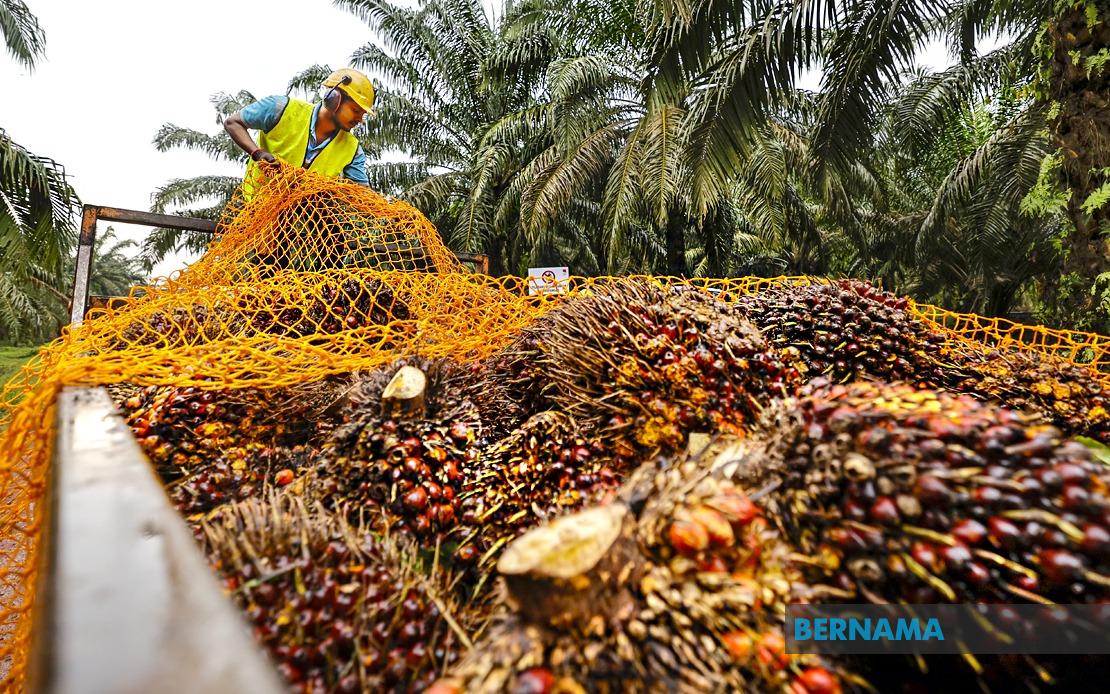
Melaka's commodity sector is poised for significant transformation through a major research and development initiative that reflects the state government's commitment to modernising its agricultural base. The Malaysian Palm Oil Board will establish a comprehensive research station on a 40.47-hectare plot in Seri Mendapat, Sungai Rambai, with an investment ranging from RM20 million to RM25 million. Chief Minister Datuk Seri Ab Rauf Yusoh unveiled the project during a community engagement in Kampung Seri Mendapat, positioning it as one of three cornerstone initiatives designed to elevate Melaka's palm oil industry beyond its traditional role as a commodity producer into a knowledge-driven, high-value economic engine.
The facility represents a strategic response to evolving market demands and the need for technological advancement in Malaysia's palm oil sector, which faces increasing global scrutiny over sustainability practices and productivity improvements. Rather than serving as a basic experimental site, the research station will function as a comprehensive ecosystem encompassing multiple operational and educational components. The planned infrastructure includes a demonstration plantation showcasing best practices in cultivation, a dedicated research and development centre staffed with technical expertise, state-of-the-art laboratory facilities for quality assessment and innovation, and a formal training academy. Beyond these core facilities, the complex will provide residential accommodation for TUNAS advisory officers and enforcement personnel, recognising that ongoing field support and compliance monitoring are essential to translating research outcomes into practical improvements across the broader industry.
The strategic location in Sungai Rambai carries particular significance for the region's economic future. By consolidating knowledge infrastructure, advanced training capabilities, and innovation resources in one accessible hub, the project aims to catalyse the transformation of Sungai Rambai into a recognised centre of excellence within Malaysia's palm oil ecosystem. This clustering effect should generate multiple layers of economic benefit extending well beyond the research station itself. Local farming communities gain access to cutting-edge agronomic knowledge and technical advisory services without requiring travel to distant institutions. The training facility creates employment opportunities for educators, technicians, and support staff. Smallholder farmers and plantation operators benefit from proximity to research findings, extension services, and skill development programmes specifically calibrated to their operational challenges.
For Sungai Rambai's predominantly agricultural population, nearly 45 per cent of whom engage in farming or smallholding activities, these complementary investments address long-standing infrastructure gaps that have constrained productivity and market access. The state government has approved a separate RM400,000 allocation to construct a five-kilometre private farm road serving Ladang Lembah Kesang in Mukim Semujuk. While rural road infrastructure might appear unglamorous compared to research facilities, its economic impact on smallholder communities is tangible and immediate. Improved road connectivity accelerates the delivery of fresh produce to markets, reducing spoilage and transit costs that disproportionately burden small-scale producers. Enhanced mobility allows farmers to access input suppliers, equipment, and services more efficiently, effectively lowering their operational expenses. Direct benefits are anticipated to reach over 200 smallholders across the area, many of whom have historically faced disadvantages in marketing perishable products.
Complementing these infrastructure initiatives, the Malaysian Palm Oil Board has deployed enhanced financial mechanisms designed to address one of smallholding agriculture's persistent challenges: the capital requirements for productivity improvement. The Smallholder Oil Palm Replanting Financing Incentive Scheme 2.0 offers eligible farmers support of up to RM14,000 per hectare to replace ageing or underperforming palm trees with superior seedling varieties. The scheme's financial structure demonstrates awareness of smallholders' cash flow constraints, with repayment schedules deferred until the fifth year following tree maturation. This graduated payment approach acknowledges that replanted palms require a multi-year establishment period before generating sufficient income to service debt obligations, addressing a critical barrier that previously deterred many smallholders from undertaking necessary productivity improvements.
Beyond the palm oil sector's direct advancement, the integrated approach to agricultural development reflects recognition that rural economic transformation requires attention to foundational challenges alongside sectoral investments. Melaka's Chief Minister also announced efforts to address environmental and livelihood concerns raised by local fishing communities dependent on coastal water systems. The state government has requested RM200,000 from federal authorities to rehabilitate an ageing watergate facility at Jeti Sebatu, infrastructure essential to managing tidal and freshwater flows critical to both maritime activities and aquatic productivity. Simultaneously, drainage improvement works along a 300-metre stretch of Sungai Sebatu outlet, already underway with allocated funds, target flood vulnerability that has periodically disrupted fishing operations and broader economic activity throughout the area.
These complementary investments in flood mitigation and infrastructure upgrade demonstrate understanding that agricultural and maritime communities share common environmental vulnerabilities requiring coordinated policy responses. For coastal fishing communities, flood frequency and intensity directly threaten livelihoods and safety, while inadequate water management infrastructure can compound seasonal challenges and compromise both productivity and resource sustainability. The integrated approach combining palm oil sector modernisation with fisheries infrastructure improvement reflects evolving governance understanding that successful rural economic development cannot be compartmentalised into isolated sectoral initiatives.
From a developmental perspective, Melaka's multifaceted investment strategy offers instructive implications for other Malaysian states pursuing agricultural modernisation. The framework prioritises knowledge and technology transfer through dedicated research infrastructure while simultaneously addressing the practical constraints limiting smallholder participation in productivity improvement. By combining research facilitation, physical infrastructure development, targeted financing mechanisms, and environmental management, the state government has constructed a more comprehensive pathway to agricultural transformation than sectoral approaches alone would provide. This integrated methodology acknowledges that research breakthroughs require complementary investments in farmer education, market access, capital availability, and environmental stability before generating meaningful productivity gains across broader farming populations.
The initiative also reflects Malaysia's broader strategic position within global palm oil markets characterised by intensifying competition and escalating sustainability expectations. As producing nations compete for market share against pressures from environmental advocacy and consumer preference shifts, investments in research, knowledge dissemination, and productivity improvement become increasingly central to maintaining international competitiveness. Malaysia's historic dominance in global palm oil production faces ongoing challenges from producer nation consolidation and technological advancement elsewhere. Melaka's commitment to establishing a research hub signals recognition that future competitiveness depends not merely on land availability but on technological sophistication, operational efficiency, and demonstrable environmental stewardship embedded within production methodologies.
The research station project also carries implications for Malaysia's wider rural development policy discourse. The 13th Malaysia Plan's inclusion of this initiative indicates federal acknowledgment that agricultural commodities remain essential to rural prosperity in states like Melaka, contradicting any assumption that commodity sectors represent outdated economic models unsuitable for contemporary development strategies. Rather, the policy direction emphasises transforming commodity production through technological upgrading, value chain integration, and skills development. This represents neither nostalgic attachment to historical economic patterns nor uncritical continuation of existing practices, but rather deliberate repositioning of commodity agriculture within a modernised framework emphasising productivity, sustainability, and market competitiveness.
For Southeast Asian observers, Melaka's comprehensive agricultural development model offers comparative perspectives on rural economic strategy. The integration of research infrastructure, smallholder financing, physical connectivity, and environmental management within a coordinated framework addresses challenges common across the region where agricultural populations often remain disadvantaged despite sectoral importance to national economies. The emphasis on knowledge dissemination and farmer education acknowledges that technological advancement generates limited benefit if adoption mechanisms remain inaccessible to intended beneficiary populations. Similarly, the recognition that small-scale farmers require targeted financial products and infrastructure support reflects evidence-based understanding that market forces alone inadequately address the investment and connectivity barriers constraining smallholder productivity and competitiveness.

