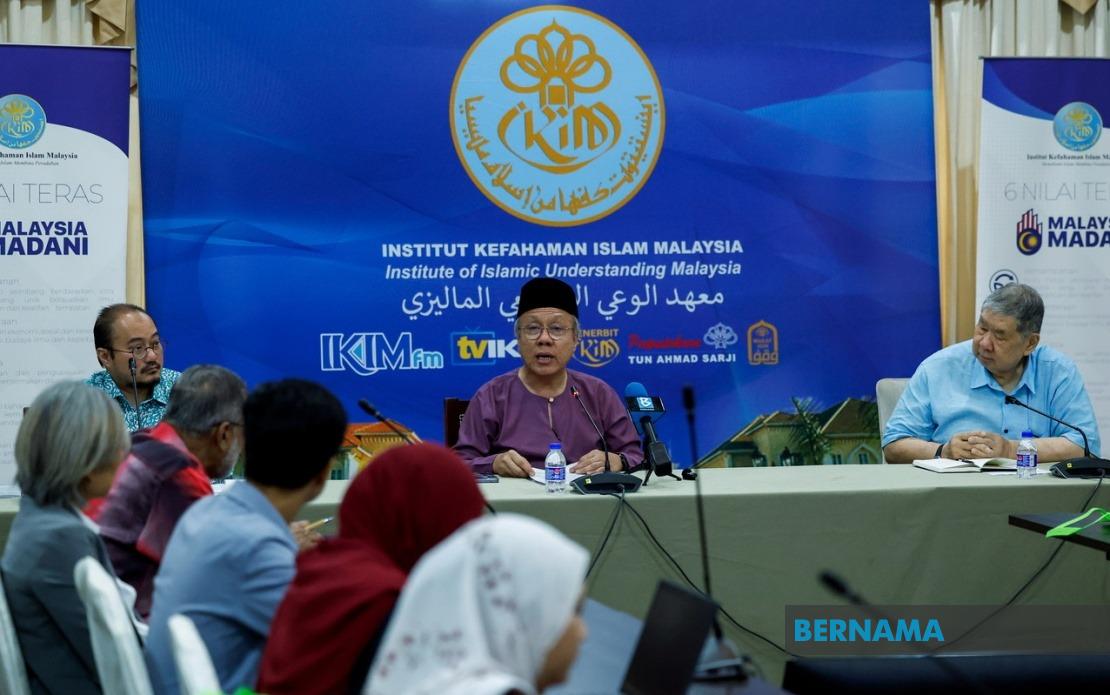
Three prominent Malaysian institutions—the Malaysian Press Institute, the Institute of Islamic Understanding Malaysia and Lembaga Tabung Haji—convened a specialised briefing session in Kuala Lumpur to deepen media practitioners' comprehension of the Tabung Haji Royal Commission of Inquiry. The closed-door gathering, held at IKIM headquarters, brought together Tabung Haji Group Managing Director and Chief Executive Officer Mustakim Mohamad alongside senior officials from the partner organisations and over 20 accredited journalists, establishing a direct channel for accurate dissemination of information regarding one of Malaysia's most significant financial institutions.
The nearly two-hour session represented an attempt to bridge the communication gap between Tabung Haji's management and the fourth estate at a critical juncture in the institution's history. Mustakim provided comprehensive briefings on the RCI's scope and proceedings, whilst fielding detailed questions from assembled media representatives about the inquiry's findings, the institution's operational challenges and the broader implications for Malaysia's Islamic finance sector. This direct engagement underscored the urgency with which Tabung Haji's leadership views the need for informed, contextualised reporting on the matter.
Malaysian Press Institute President Datuk Yong Soo Heong characterised the initiative as a vital mechanism for journalists to access reliable information about Tabung Haji's remedial strategies and stakeholder confidence-restoration efforts. Yong emphasised that such collaborative platforms serve the dual purpose of equipping media practitioners with substantive knowledge whilst ensuring that public communication reflects an accurate understanding of institutional reforms and governance improvements. He suggested that expanding such programmes across Malaysia's states through town halls and dialogue sessions could amplify the reach and impact of coordinated messaging.
Tabung Haji occupies an exceptionally sensitive position within Malaysia's financial and religious landscape. As the custodian of hajj savings for millions of Muslim Malaysians and administrator of Islamic endowment funds, the institution carries both fiscal responsibility and spiritual significance. The Royal Commission of Inquiry, initiated to examine institutional failings and governance lapses, has attracted substantial public scrutiny—much of it centred on questions about fiduciary duty, investment decisions and internal accountability mechanisms. Media coverage therefore carries outsized influence in shaping public perception and depositor confidence.
Associate Professor Datuk Dr Mohamed Azam Mohamed Adil, the Director-General of IKIM, articulated a crucial reframing of the RCI proceedings. He cautioned against interpreting the inquiry through sectarian or identity-based lenses, positioning the matter instead as fundamentally concerning management integrity and institutional accountability. This narrative distinction carries significant implications for Malaysia's social cohesion, as it redirects discourse from potentially divisive communal dimensions toward universal principles of governance and fiduciary responsibility applicable across religious and ethnic boundaries.
IKIM's emphasis on framing the RCI as a governance and trust issue rather than a religious or racial controversy reflects broader Malaysian concerns about maintaining institutional credibility across diverse communities. By centering the discussion on accountability mechanisms and restoration of depositor confidence, the institute seeks to depoliticise what might otherwise become a flashpoint for intercommunal tension. This framing acknowledges that Tabung Haji's legitimacy rests upon transparent, competent management rather than communal affiliation.
The literacy programme itself addresses a gap in media capacity regarding complex institutional and financial matters. Journalists covering financial institutions, regulatory affairs and Islamic finance sectors require specialised knowledge to accurately convey technical information and contextual significance to general readerships. The briefing provided opportunity for practitioners to move beyond surface-level coverage toward more sophisticated analysis of institutional reform mechanisms, governance restructuring and the long-term implications of the RCI's recommendations.
Tabung Haji's unique status as both a financial institution and guardian of Islamic religious practice creates distinctive challenges for institutional communication and reputation management. The fifth pillar of Islam—the hajj—represents one of Islam's foundational obligations, and Tabung Haji's role in facilitating this spiritual obligation endows the institution with profound cultural significance beyond conventional financial considerations. Any erosion of public confidence carries implications not merely for depositors' financial security but for the institution's capacity to fulfil its religious-social mission.
The collaboration between MPI, IKIM and Tabung Haji signals recognition among institutional leaders that media literacy constitutes a necessary component of stakeholder confidence restoration. Rather than attempting unilateral control of messaging, the three organisations have adopted a transparency-oriented approach predicated on equipping journalists with authoritative information and contextual understanding. This strategy acknowledges that credible journalism requires substantive engagement with institutional actors rather than reliance upon secondary sources or speculative reporting.
For Malaysian readers and regional observers, the initiative carries broader significance regarding institutional accountability and media responsibility. As Southeast Asian countries grapple with challenges of institutional credibility and managing complex financial scandals, the approach adopted by MPI, IKIM and Tabung Haji offers a model for constructive institutional-media engagement. The emphasis on accuracy, contextual understanding and narrative framing suggests sophisticated recognition that institutional crises demand coordinated communication strategies anchored in transparent disclosure and access to authoritative information.
The success of such initiatives ultimately depends upon media practitioners' ability to synthesise institutional briefings with independent investigative capacity and critical analysis. While literacy programmes enhance understanding of official perspectives, robust journalism requires journalists to maintain analytical distance and interrogate institutional claims through multiple evidentiary lenses. The balance between access, accuracy and independence remains the central tension animating media-institution relationships, particularly in contexts involving public trust and fiduciary responsibility.

