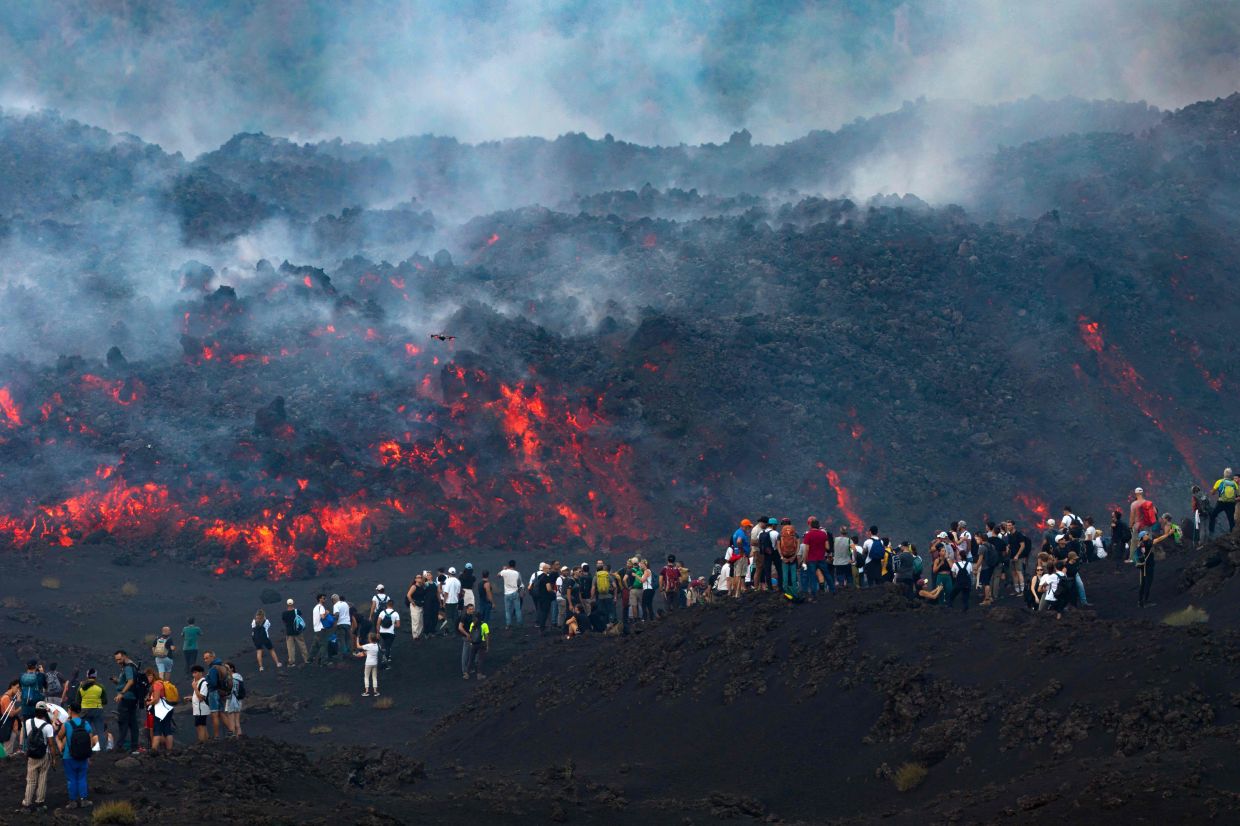
The ongoing eruption of Mount Etna in Sicily has triggered an unexpected tourism surge, with thousands of visitors flocking to witness the volcano's spectacular display of lava and ash. Europe's most active volcano has been performing dramatically over recent days, ejecting molten material down its slopes in visually arresting scenes that have captivated audiences worldwide and sparked an exponential spike in enquiries from travellers keen to experience the phenomenon firsthand.
The eruption's impact extends well beyond tourism interest. Catania International Airport, which serves the eastern portion of Sicily and sits in close proximity to Etna, has been forced to suspend operations repeatedly as thick ash clouds blanket the region. Since Saturday, hundreds of flights have faced cancellation, disrupting travel plans for tens of thousands of passengers. The airport handles approximately 12 million travellers annually and functions as a critical gateway for visitors heading to one of Italy's premier holiday destinations, making the disruptions particularly consequential for the regional tourism economy.
Tour operators specialising in volcanic experiences have found themselves overwhelmed by demand. Guide Etna, a company that conducts evening expeditions to allow visitors to observe the eruption from close vantage points, typically fields around 100 requests during peak summer season. The eruption has transformed this considerably. Daniele Perricelli, the 41-year-old founder, reports that his company now receives approximately 300 booking enquiries daily—a threefold increase that reflects the magnetism of witnessing such raw geological force in action. Other local guides characterise the phenomenon as a "touristic eruption" that possesses particular appeal because visitors can approach the volcanic activity with reasonable assurance of personal safety, at least in designated lower-altitude zones where lava has already solidified.
Yet this surge in visitation has created tangible complications for both guides and authorities. Perricelli estimates that as many as 2,000 climbers ascend the mountain each evening, transforming traditional trekking pathways into congested corridors where safety protocols become difficult to enforce. Many visitors, keen to experience Etna but unwilling or unable to pay for professional guidance, venture up independently—a practice that Perricelli characterises as potentially hazardous. The mountain's volatile nature demands experienced judgment about safe routes and conditions; without professional accompaniment, visitors expose themselves to unexpected hazards ranging from unstable ground to rapid changes in volcanic activity.
The issue gained further prominence when high-profile visitors generated social media criticism for what appeared to be recklessly close proximity to active lava flows. Italian television personality Diletta Leotta came under scrutiny for photographs taken near glowing molten material, highlighting how celebrity actions can inadvertently normalise risky behaviour among the general public. However, guides maintain that approaching within metres of volcanic flows is feasible in lower-altitude regions where material has cooled sufficiently, provided visitors understand their limitations and receive proper instruction.
Current regulations attempt to manage access through altitude-based restrictions. Visitors may independently climb to approximately 2,400 metres, above which professional guide accompaniment becomes mandatory. This tiered framework theoretically balances accessibility with safety, though implementation challenges have become apparent as visitor numbers surge. Perricelli has publicly urged authorities to enhance enforcement and vigilance, noting that some climbers arrive in wholly inappropriate attire—flip-flops feature in his examples of footwear unsuitable for volcanic terrain.
Local residents themselves have contributed to overcrowding pressures. Many Sicilians have also been drawn upslope to witness the eruption, occasionally gathering in disorganised clusters around active lava without proper precautions. This internal demand compounds the external tourist influx, creating cumulative pressure on the mountain's infrastructure and safety management systems that were never designed to accommodate such concentrated numbers.
Etna's eruption status reflects its position as an extraordinarily active volcano rather than an exceptional occurrence. Italy's Civil Protection Agency maintains a yellow alert—the second tier on a four-step warning scale—indicating frequent eruptions with potential for explosions. This characterisation of Etna as a regular performer rather than a crisis situation has arguably contributed to the somewhat casual approach some visitors adopt toward safety protocols. The volcano's predictable volatility, paradoxically, may create a false sense of security among those unfamiliar with volcanic hazards.
For Southeast Asian readers and tourism operators, Mount Etna's situation offers pertinent lessons regarding the management of adventure tourism at naturally hazardous sites. The region boasts multiple volcanic attractions—from Mount Kinabalu's geothermal features to Indonesia's active volcanoes—where similar tensions between tourism development and visitor safety emerge. The pressures evident on Etna reflect broader global trends toward experiential tourism centred on extreme natural phenomena, where the visual drama attracts visitors regardless of infrastructure readiness or personal preparation.
The economic implications for Sicily's tourism sector remain complex. While the eruption generates short-term visitor interest and revenue for guiding services and accommodation, the airport closures impose genuine costs on the broader tourism economy through flight cancellations and travel delays. Ground operators must balance capitalising on volcanic tourism interest against the operational chaos that ash creates throughout regional infrastructure.
Moving forward, local authorities face mounting pressure to establish clearer frameworks governing volcanic tourism. Enhanced enforcement of altitude restrictions, mandatory guide requirements for larger segments of the mountain, and public education campaigns about appropriate preparation may become necessary. The fundamental challenge remains balancing Etna's irresistible draw—that unique combination of beauty, power, and accessible danger—against the practical difficulties of managing thousands of visitors on an unstable mountainside.

