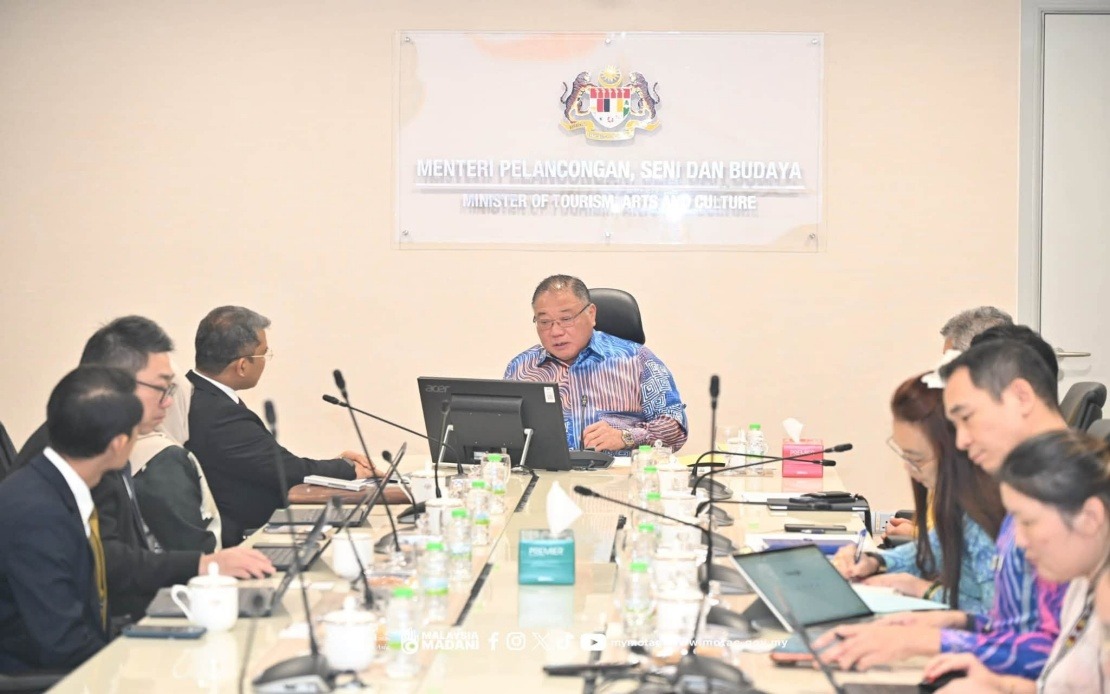
The Ministry of Tourism, Arts and Culture (MOTAC) and Malaysia Aviation Group (MAG) have moved to deepen their working relationship in a bid to elevate the country's profile as a premier tourism destination and ensure the momentum of the Visit Malaysia Year 2026 campaign carries forward as the initiative was extended into 2026. The reinforced partnership was formalised through recent discussions between Tourism, Arts and Culture Minister Datuk Seri Tiong King Sing and MAG Group president and chief executive officer Captain Nasaruddin A Bakar, signalling a coordinated push across government and private sectors to capitalise on growing international travel demand.
Central to the expanded collaboration is MAG's commitment to widen its aviation footprint across strategically important markets, particularly in the Indian subcontinent, China, and Europe—regions that represent significant untapped potential for inbound tourism to Malaysia. The partnership also encompasses exploration of emerging destinations such as Fukuoka, reflecting a deliberate strategy to diversify connectivity options and tap into secondary city markets that may offer less saturated but equally valuable tourist flows. This geographic expansion represents a fundamental shift in how Malaysia positions itself within global aviation networks, moving beyond reliance on traditional hubs to build direct connectivity with growth markets.
The timing of this reinforced partnership carries particular significance for Malaysia's tourism recovery trajectory. The extension of the VM2026 campaign itself indicates that tourism authorities recognised the campaign's effectiveness in building brand awareness and driving visitor numbers, necessitating a continuation of promotional momentum. By aligning aviation capacity expansion with tourism marketing efforts, MOTAC and MAG are creating a coherent ecosystem where supply and demand can be managed in tandem, avoiding the pitfall of promoting destinations without corresponding flight availability—a constraint that has historically limited tourism growth in the region.
A critical component of the partnership involves tackling the persistent challenge of seasonal tourism volatility. Both institutions have prioritised the development of joint marketing and promotional strategies specifically designed to stimulate travel demand during traditionally slower periods. This low-season focus addresses a fundamental inefficiency in Malaysia's tourism economy, where hotels, attractions, and service providers experience significant underutilisation outside peak months. By coordinating flight promotions with destination marketing campaigns, the partners hope to redistribute tourist flows more evenly throughout the year, improving overall utilisation rates and economic returns across the tourism ecosystem.
Beyond headline figures on visitor arrivals, the partnership reflects a broader commitment to qualitative improvements in how Malaysia receives international guests. MOTAC and MAG have identified cabin facilities, in-flight catering standards, and crew training as areas warranting investment and enhancement. These operational refinements directly influence the customer experience at a critical touchpoint—the journey itself—recognising that traveller satisfaction begins before arrival. Enhanced cabin crew training, in particular, represents an investment in human capital that extends Malaysia's hospitality standards into the air, reinforcing the country's positioning as a service-conscious destination.
The domestic tourism sector also features prominently in the partnership framework, with both parties committed to identifying ways to distribute the benefits of international tourism growth more equitably among local industry participants. This approach acknowledges that sustainable tourism development depends not solely on visitor numbers but on ensuring that generated revenues permeate through hotels, restaurants, tour operators, attractions, and cultural institutions. By designing the partnership with explicit attention to supporting local stakeholders, MOTAC and MAG signal an understanding that tourism serves broader development objectives beyond airline passenger statistics.
From a competitive perspective, this collaboration positions Malaysia advantageously within the Southeast Asian tourism landscape. Regional competitors including Thailand, Vietnam, and Indonesia have similarly pursued aviation-tourism partnerships, yet Malaysia's approach—emphasising both volume and quality improvements—offers a distinctive positioning. The emphasis on expanding underserved markets like India and China, combined with infrastructure improvements, suggests a strategy aimed at capturing higher-value market segments that increasingly prioritise service quality alongside affordability.
The partnership also reflects recognition that Malaysia's aviation infrastructure, while historically competitive, requires active management and investment to maintain relevance in an increasingly crowded marketplace. By committing to network expansion and route development, MAG signals confidence in long-term tourism growth projections while demonstrating willingness to allocate capital toward supporting national tourism objectives. This alignment between commercial airline interests and government tourism goals creates powerful synergies that individual actors could not achieve independently.
For Malaysian tourism stakeholders—from heritage site operators to hospitality workers—the partnership's emphasis on passenger experience improvements carries material implications. Training investments, service enhancements, and flight availability expansions directly translate into increased visitor flows and extended stays, generating employment and revenue throughout the sector. The initiative thus functions not merely as a marketing campaign but as a structural intervention designed to enhance Malaysia's competitive position within global tourism markets. Looking ahead, the success of this partnership will likely shape how Malaysia calibrates future tourism development strategies and the role aviation connectivity plays in achieving ambitious visitor targets.

