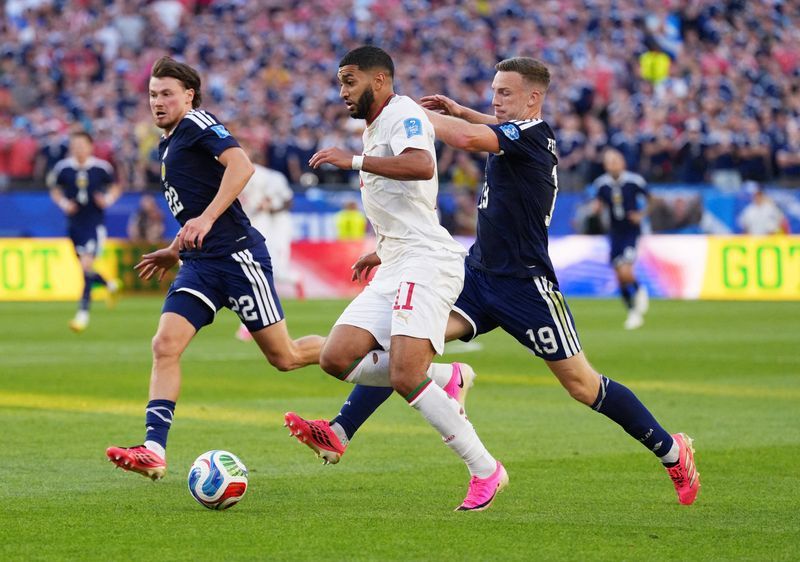
Morocco moved atop Group C at the World Cup after dismantling Scotland with a 1-0 triumph in Foxborough on Friday, demonstrating the ruthless efficiency that made them semi-finalists in Qatar. The visitors overwhelmed their opponents from the opening whistle, with Ismael Saibari's clinical finish just 71 seconds into the match establishing not only the scoreline but also the tournament's fastest goal to date. With four points from two matches and Haiti awaiting on Wednesday, the North Africans are now well-positioned to advance from the group stage, while Scotland faces an increasingly difficult situation despite collecting three points from their opening two games.
The Moroccan assault began almost immediately. Brahim Diaz's cross found Saibari in space behind the Scottish defence after central defender Grant Hanley misjudged his positioning and stepped out prematurely. The 23-year-old midfielder, who had already netted against Brazil in their previous encounter, controlled the ball and unleashed a powerful shot that gave goalkeeper Angus Gunn no opportunity to react. This lightning-quick breakthrough set the tone for an utterly one-sided affair that saw Scotland struggling to impose themselves on the proceedings throughout the opening 45 minutes.
Saibari's early strike carries particular significance for African football. By scoring in his first two World Cup appearances, the midfielder joined an exclusive club with Egypt's Mohamed Salah as only the second player from the continent to achieve this feat. The midfielder's trajectory has accelerated rapidly, with reports indicating he has successfully completed a medical examination ahead of a move to Bayern Munich, one of Europe's elite institutions. His performances in this tournament, combined with his club-level prospects, underscore Morocco's ability to develop talent capable of competing at the highest levels of international and club football.
Beyond the scoreline, Morocco's control was suffocating. The Scots failed to register a single shot on target until deep into stoppage time of the first half, instead spending the majority of their time defending and attempting to break up Moroccan attacks. Bilal El Khannouss tested Gunn with a glancing header shortly after the interval, while Saibari himself came agonisingly close to a second goal when his deflected effort struck the post. The Moroccan pressure remained relentless, with Azzedine Ounahi orchestrating attacks from the left flank and forcing Scotland into a reactive posture throughout.
Scotland's pre-match confidence appeared justified following their opening victory over Haiti, their first World Cup win in 36 years. That success had generated genuine optimism within the camp and among supporters. However, the Moroccans administered a harsh reminder that World Cup football demands consistent excellence, not merely one positive result. The Scottish side could muster only sporadic counterattacking opportunities late in the match, never genuinely threatening the Moroccan goalkeeper with a sustained spell of pressure. Their defensive vulnerabilities, particularly in the opening moments, proved costly against opponents clinical enough to punish such lapses immediately.
The Moroccan captain Achraf Hakimi drew particular attention from the crowd, receiving boos from Scottish supporters given his involvement in an ongoing legal matter. Nevertheless, the defender and his teammates maintained their composure and focus, continuing to execute their game plan without distraction. This mental resilience, combined with their superior technical execution and tactical discipline, highlighted the quality within the Moroccan squad that surprised many observers with their remarkable run to the semi-finals at Qatar.
Azzedine Ounahi's pre-match declaration that Morocco aimed to reach the final now carries added credibility following this performance. While such statements might ordinarily invite scepticism, the team demonstrated sufficient quality and cohesion to suggest their ambitions are grounded in realistic assessment. Their control of possession, movement between the lines, and clinical finishing contrasted starkly with Scotland's disjointed approach, suggesting Morocco possesses the necessary ingredients to compete effectively against higher-ranked opponents in the knockout stages.
The group dynamics have shifted considerably following this result. Brazil and Haiti compete later Friday, creating potential scenarios that will clarify the path ahead for all four participants. Scotland now faces five-time champions Brazil on the final matchday, a fixture that appears increasingly crucial to their qualification prospects. The Scots' path to the last 32 remains viable but considerably narrower than it appeared before kickoff, making their midweek preparation absolutely critical to their tournament survival. Morocco, conversely, will approach their remaining fixture against Haiti with confidence, knowing that a positive result virtually guarantees their progression.
From a Southeast Asian perspective, this encounter offers instructive lessons about the importance of mental preparation and tactical discipline at the World Cup. The efficiency with which Morocco converted their early advantage, combined with their sustained dominance thereafter, demonstrates that tournament success often depends less on individual moments of brilliance and more on consistent execution and defensive solidity. For regional teams harbouring ambitions of future World Cup qualification, Morocco's measured approach—focused on possession control, positional discipline, and taking opportunities when they arise—provides a useful blueprint for competing against more celebrated opponents.