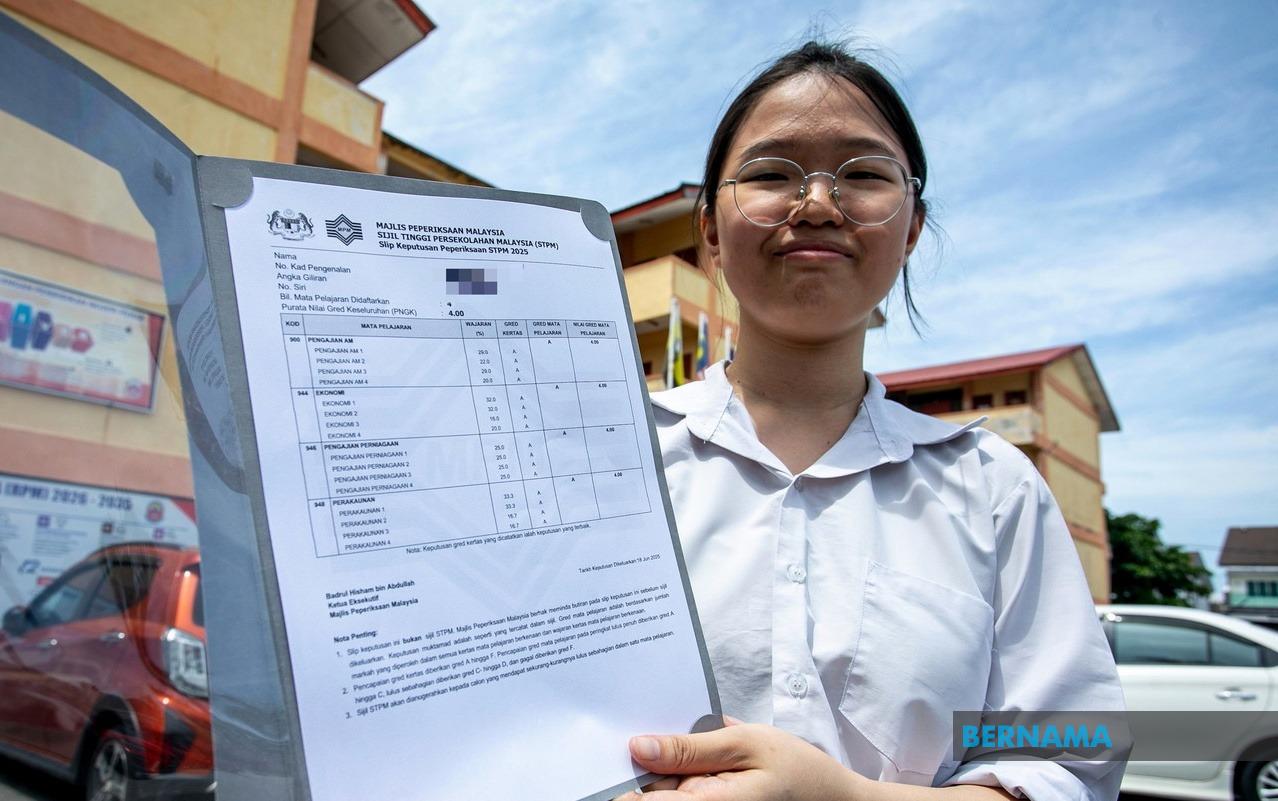
Yong Xin Yi, a 20-year-old student from SMK Jalan Tasek in Ipoh, has emerged as one of the standout performers in this year's STPM examinations, earning a flawless four A grades with a cumulative grade point average of 4.00. Her achievement in General Studies, Principles of Accounting, Business Studies and Economics represents not merely academic excellence but the tangible results of systematic discipline and strategic time management — lessons that resonate particularly strongly with Malaysian secondary school students navigating the demanding pre-university qualification.
The cornerstone of Xin Yi's success lay in her unwavering commitment to a structured revision regimen conducted between 5:00 pm and 10:00 pm each evening following school hours. This consistent five-hour allocation provided her with dedicated space to consolidate learning, work through practice problems, and reinforce concepts introduced during classroom instruction. Rather than treating revision as a reactive response to upcoming examinations, she embedded it into her daily routine as a non-negotiable component of her academic life, transforming what many students perceive as tedious repetition into a habitual practice that gradually built comprehensive subject mastery.
However, Xin Yi's approach extended beyond the mere accumulation of study hours. She placed equal emphasis on maximising the quality of her classroom engagement, recognising that focused attention during lessons directly reduced the cognitive load during evening revision sessions. By absorbing explanations directly from her teachers and clarifying concepts in real time, she circumvented the frustration and confusion that often plague students who attempt to decode complex material independently at home. This synergistic relationship between attentive classroom participation and structured home study created a multiplier effect, where each component strengthened the other.
Completion of assigned homework formed another pillar of her academic strategy. Rather than viewing homework as an administrative burden or a box-ticking exercise, Xin Yi recognised its pedagogical value as a tool for practising application of theoretical knowledge and identifying knowledge gaps before examinations. This methodical approach to assignments ensured that she maintained continuous reinforcement of topics and avoided the fragmentation of learning that occurs when studying occurs in sporadic bursts rather than through sustained engagement.
General Studies emerged as her most formidable challenge, demanding not only content knowledge but sophisticated writing capabilities and acute sensitivity to examination format and assessment criteria. Rather than avoiding this demanding subject, Xin Yi strategically allocated additional attention to it, treating it as an area requiring specialised remediation. This approach of identifying weaknesses early and dedicating proportionately greater effort to overcome them demonstrates a maturity of academic self-awareness often lacking in younger students who distribute study time equally across all subjects regardless of demonstrated proficiency.
Beyond the mechanics of study technique, Xin Yi attributes her accomplishment to the psychological and emotional scaffolding provided by her parents. Growing up as an only child to a clerk mother and mobile phone salesman father, she benefited from family encouragement that sustained her motivation through the rigorous demands of upper-secondary education. This support system proved particularly valuable during periods of academic struggle or diminished confidence, providing the emotional resilience necessary to persist through difficulty. Her explicit gratitude for parental backing underscores a truth often overlooked in achievement narratives: exceptional academic performance emerges not from individual effort in isolation but from interconnected systems of institutional, familial and personal support.
Xin Yi's success carries particular significance within the broader context of Malaysian educational outcomes. SMK Jalan Tasek produced five students who achieved four A grades in this examination cycle, suggesting that institutional quality and pedagogical effectiveness at the school level contribute substantially to student outcomes. Her achievement is not an isolated anomaly but part of a cohort success, indicating that systematic approaches to teaching and learning within the school have bearing on individual student trajectories.
Looking forward, Xin Yi intends to pursue tertiary education in economics at Universiti Putra Malaysia, a decision grounded in deliberate assessment of her interests and perception of career prospects within the economic sector. Her ambition to become an economist reflects both personal inclination and practical consideration of employment opportunities and earning potential. More significantly, she frames her educational trajectory explicitly in relation to improving her family's material circumstances, articulating a desire to reward her parents' sacrifices through future professional achievement.
The pathway she has charted — from disciplined daily revision through to university admission and career aspiration — offers instructive lessons for Malaysian students confronting similar academic pressures. Her success demonstrates that STPM excellence is achievable through sustained effort, strategic time allocation, and integration of multiple learning channels rather than exceptional innate ability alone. In an educational landscape where high-stakes examinations often dominate discourse around achievement, Xin Yi's example provides a grounded, replicable model of how structured discipline, classroom attentiveness, and family support can combine to produce outstanding results that position students for subsequent educational and professional advancement.