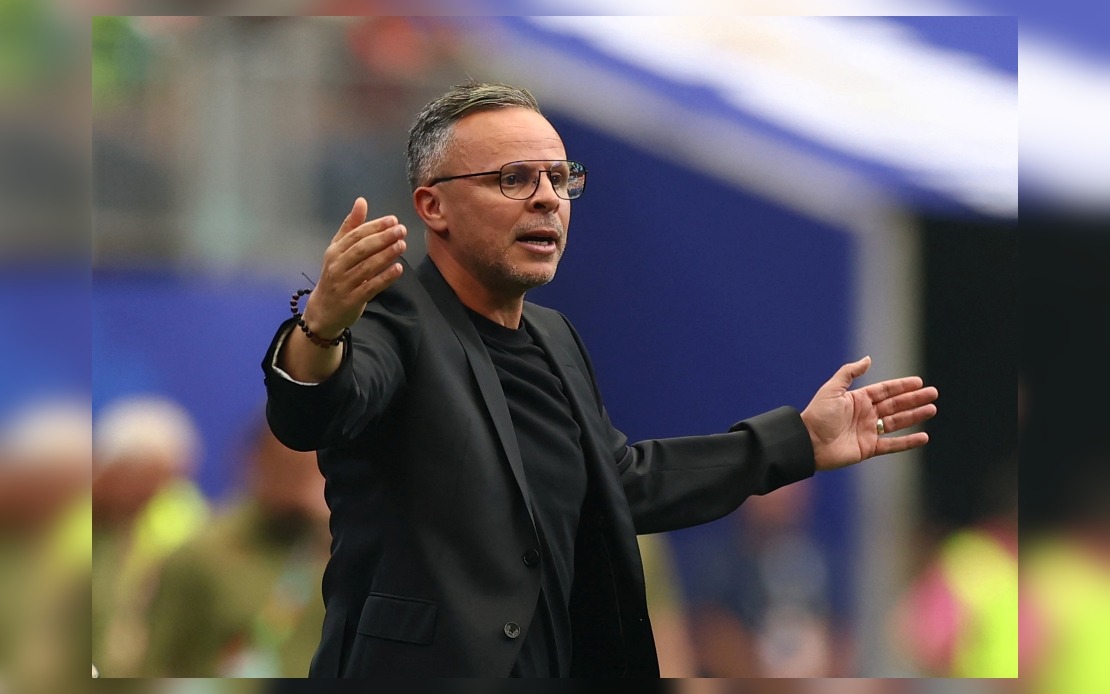
Morocco has crossed a psychological threshold at the World Cup, moving beyond being perceived as a plucky underdog to claiming status as a genuine major footballing power. This transformation became evident following the Atlas Lions' commanding 3-0 demolition of Canada in the Round of 16, a performance that head coach Mohamed Ouahbi seized upon to reframe international perceptions of his nation's footballing credentials. In remarks at the post-match press conference, Ouahbi stressed that Morocco's rise represents far more than a fleeting moment of tournament success, but rather signals the emergence of a sustained competitive force on the global stage.
The significance of Morocco's progression extends beyond the immediate victory. By advancing to the quarterfinals for a second consecutive tournament, and following on from their historic semifinal appearance in 2022 when they became the first African nation to reach that stage, Morocco has fundamentally altered the narrative around African football at elite competitions. Ouahbi's assertion that his team is no longer a "surprise" but a "real contender" reflects a philosophical shift in how the squad views itself and how the international football community now regards Moroccan football. The coach articulated a vision of permanence rather than a one-off achievement, emphasizing that the team's ambitions extend far beyond mere participation.
Canada entered the match as a co-host with legitimate aspirations, yet the first half revealed a tactical mismatch that would define the encounter. The North Americans deployed aggressive pressure throughout the opening 45 minutes, maintaining constant possession and forcing Morocco into uncharacteristic lapses. Canada's tactical blueprint centred on exploiting transitions and attacking with pace whenever they regained possession, a strategy that initially created problems for the Moroccan defence. However, the Atlas Lions' response in the second half demonstrated both technical superiority and tactical acumen, qualities that Ouahbi attributed to calculated adjustments made during the interval.
Outside proved to be the turning point. Ouahbi identified the halftime modifications as decisive in shifting momentum decisively in Morocco's favour. The coach explained that despite Canada maintaining comparable intensity levels in the second period, the tactical recalibration fundamentally altered the match's complexion. Morocco shifted to a more controlled possession-based approach, with deliberate passing movements designed to expose Canadian defensive vulnerabilities. By threading passes behind Canada's defensive line, Morocco forced the hosts into reactive defending rather than proactive attacking, a subtle but crucial reversal that stripped Canada of their primary attacking advantage.
The goalscoring sequence reflected this newfound control. Azzedine Ounahi opened Morocco's account with a double, demonstrating the predatory instinct of a team now operating within its optimal tactical framework. Soufiane Rahimi subsequently added a third goal in the closing stages to complete the rout, a scoreline that somewhat flattered the difference between the sides despite the comprehensive nature of the performance. Ouahbi's interpretation of the victory acknowledged Canada's competitive qualities while emphasizing that a 3-0 result in knockout football remains relatively uncommon, suggesting the scalp carried particular significance.
Ouahbi's pre-match assessment had proven prescient regarding the difficulty of the encounter. The coach had publicly predicted that Canada would present Morocco's toughest challenge to date at the tournament, a forecast validated by the opening 45 minutes of sustained pressure. His readiness for such adversity, combined with the in-game tactical flexibility demonstrated, illustrated the maturity of Morocco's tournament campaign. This stands in contrast to the surprise element that characterized their 2022 campaign, when their semifinal run was largely unexpected by global observers despite strong internal conviction within the squad.
The implications for regional football development are substantial. Morocco's sustained excellence at World Cup level provides validation for investment in African football infrastructure and player development pathways. The success reflects not merely individual talent but systematic progress in tactical sophistication, physical conditioning, and mental resilience. For Southeast Asian football observers, Morocco's trajectory offers instructive lessons regarding the timeline required to build sustainable competitive structures capable of challenging traditional European and South American powers.
Morocco's reward is a quarterfinal encounter with France, who dispatched Paraguay 1-0 at Boston Stadium. The matchup carries significance beyond immediate tournament considerations, as it pits established European machinery against an ascending African football nation. Ouahbi's strategic objective remained fixed on maximizing Morocco's potential rather than harbouring revenge motivations against previous opponents. The coach articulated that reaching the final represented the fundamental ambition, with championship glory the ultimate expression of national pride.
The narrative shift articulated by Ouahbi extends beyond sporting achievement to touch upon national identity and continental representation. Morocco's established credentials as a "major footballing nation" represent not merely tactical accomplishment but cultural and institutional development. This positioning carries implications for youth engagement with the sport, professional infrastructure development, and the nation's global soft power projection through athletic excellence. Ouahbi's confidence that the team would "keep going" rather than rest upon current achievements suggests Morocco has internalized the psychological prerequisites for sustained championship-level competition.
Looking ahead, Morocco's quarterfinal assignment against France will test whether the team's tactical sophistication can withstand the particular challenges posed by a defending champion nation. France's defensive organization and attacking quality represent substantially different parameters than those presented by Canada. Yet Ouahbi's evident confidence in the team's fundamental quality and the demonstrated capacity for halftime adjustments suggest Morocco enters the fixture with genuine aspirations of advancement. The coach's repeated emphasis on maintaining "the same ambition and the same confidence" indicates psychological preparation focused on treating France as a surmountable opponent rather than an insurmountable obstacle.
For Moroccan supporters, the journey already represents extraordinary achievement. The opportunity to compete at championship level rather than merely participate, combined with the genuine prospect of reaching the final, elevates expectations considerably. Ouahbi's stewardship has evidently established a sustainable model beyond the previous campaign, with tactical flexibility, player quality, and psychological resilience converging to create a genuinely competitive force. Whether Morocco can overcome France and advance further will ultimately determine whether Ouahbi's vision of national footballing establishment proves durable or whether the 2022 semifinal finish remains the tournament's high-water mark.

